Another Day, Another Crypto Crash: The 'Official' Reasons vs. The Actual Truth
So, the big banks are finally crashing the crypto party. Goldman Sachs, Bank of America, Deutsche Bank... all the usual suspects are suddenly very interested in launching their own stablecoins. Color me absolutely, completely, and utterly unsurprised.
For years, these pinstriped titans looked down on crypto as a digital freak show, a playground for anarchists and nerds. I remember the sneering headlines and the dismissive quotes from CEOs who wouldn't know a blockchain from a block of cheese. Now, after watching from the sidelines as Tether and others built a multi-billion dollar market, they want in.
And how are they framing this grand entrance? According to their joint statement, it’s all about bringing "the benefits of digital assets" and enhancing "competition across the market." Give me a break. This isn't about competition; it's about colonization. They saw an untamed wilderness of finance, and now they want to pave it over, build a strip mall, and put up a toll booth.
This whole move is like the music industry giants suddenly deciding to launch their own "indie" record label after Napster already changed the game. They don't want to innovate; they want to co-opt. They want to take the raw, chaotic energy of decentralized finance and slap their corporate logo on it, wrapping it in so much "regulatory compliance" and "best practice risk management" that it becomes indistinguishable from the broken system it was meant to replace. Are we really supposed to believe their version of a stablecoin will be anything more than a digital IOU with a Goldman Sachs watermark?
The Wolves of Wall Street Discover Sheep's Clothing
Let's be real about what's happening here. The banking cartel's plan to launch stablecoins pegged to G7 currencies is a power play, plain and simple. They're not building a better mousetrap; they're building a bigger cage. Their statement is a masterclass in corporate doublespeak. They talk about "full compliance with regulatory requirements" which, translated from PR-speak, means "we'll make sure the government has a backdoor to everything."
This isn't an embrace of crypto's ideals. It's an attempt to domesticate them. They're looking at the success of USDT and seeing a market they don't control, and that drives them absolutely insane. The GENIUS Act, which sounds like something an intern named after a cartoon character, is their golden ticket. It gives them the regulatory framework to build their walled garden, making sure their stablecoins are the "safe," government-approved option.
It’s a classic move. First, they mock. Then, they fight. Then, they try to build a slightly worse, infinitely more restrictive version of the thing they fought and sell it back to you as an "upgrade." But will the crypto-native crowd even bite? The people who have spent a decade building a parallel financial system precisely to escape these institutions... are they just going to roll over and accept a CitiCoin or a BofA Buck? I have my doubts.
Then again, maybe I'm the crazy one here. Maybe the allure of "safety" and the comfort of a familiar brand name will be enough to lure people away from the wild, messy world of actual DeFi. But what's lost in that transaction? What happens to the core principle of decentralization when the centralizers take over?
And Now For The Two-Front War
While the banks are plotting their corporate takeover, the other shoe is dropping in Washington. A group of Democratic senators, apparently terrified of financial freedom, have floated a proposal that can only be described as a legislative kill switch for DeFi. This isn't regulation; it's strangulation.
They want to impose KYC rules on the frontends of crypto apps—including non-custodial wallets. This is a bad idea. No, "bad" doesn't cover it—this is a five-alarm dumpster fire of a policy. It fundamentally misunderstands the entire point of self-custody. It’s like demanding a background check every time you use a twenty-dollar bill. Crypto lawyer Jake Chervinsky nailed it: "It doesn't regulate crypto, it bans crypto." He’s not being hyperbolic. The proposal would allow the Treasury to create a "restricted list" of DeFi protocols, making it a crime to even interact with them. Think about that. The goverment gets to decide which software is legal for you to run on your own computer.
This is the kind of thing that pushes innovators offshore and guarantees America loses its edge in what could be the next evolution of the internet. It's a panicky, ignorant response to a technology they clearly don't comprehend, and honestly...
Meanwhile, in the venture capital fantasyland, prediction market Kalshi just raised another $300 million at a staggering $5 billion valuation. They're expanding to 140 countries, promising a "unified global prediction market." It all sounds very grand and futuristic. But what is it, really? Is it a tool for hedging risk and aggregating wisdom, or is it just a slicker, more complex global casino? When you have that much money flying around from giants like a16z and Sequoia, you have to ask: are they investing in a revolutionary technology, or are they just placing a massive, leveraged bet that they can make gambling on world events look respectable enough to go mainstream? I'm not sure even they know the answer.
It's All About Control, Isn't It?
When you zoom out and look at the whole ugly picture, it becomes painfully clear. The banks, the politicians, the VCs—they're all playing the same game with different jerseys. It's a mad scramble to seize control of a decentralized world. The banks want to be the new toll collectors. The politicians want a switch they can flip off. The VCs want to be the new kingmakers. Every single one of them is trying to put the genie back in the bottle, to re-centralize the revolution. And the original promise of a permissionless, open financial system for everyone? That's getting lost in the noise. Offcourse, that was probably the point all along.

-

The Business of Plasma Donation: How the Process Works and Who the Key Players Are
Theterm"plasma"suffersfromas...
-
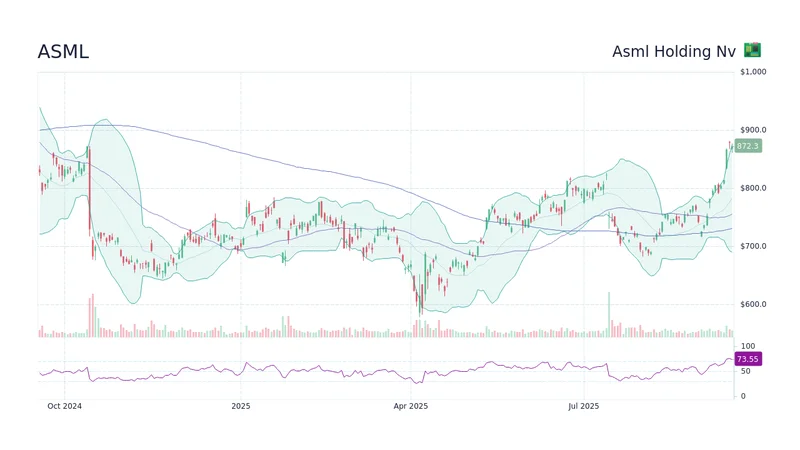
ASML's Future: The 2026 Vision and Why Its Next Breakthrough Changes Everything
ASMLIsn'tJustaStock,It'sthe...
-

The Manyu Phenomenon: What Connects the Viral Crypto, the Tennis Star, and the Anime Legend
It’seasytodismisssportsasmer...
-

The Nebius AI Breakthrough: Why This Changes Everything
It’snotoftenthatatypo—oratl...
-

Secure Crypto: Unlock True Ownership - Reddit's HODL Guide
Alright,folks,let'stalkcrypto....
- Search
- Recently Published
-
- Misleading Billions: The Truth About DeFi TVL - DeFi Reacts
- Secure Crypto: Unlock True Ownership - Reddit's HODL Guide
- Altcoin Season is "here.": What's *really* fueling the latest altcoin hype (and who benefits)?
- The Week's Pivotal Blockchain Moments: Unpacking the breakthroughs and their visionary future
- DeFi Token Performance Post-October Crash: What *actual* investors are doing and the brutal 2025 forecast
- Monad: A Deep Dive into its Potential and Price Trajectory – What Reddit is Saying
- MSTR Stock: Is This Bitcoin's Future on the Public Market?
- OpenAI News Today: Their 'Breakthroughs' vs. The Broken Reality
- Medicare 2026 Premium Surge: What We Know and Why It Matters
- Accenture: What it *really* is, its stock, and the AI game – What Reddit is Saying
- Tag list
-
- Blockchain (11)
- Decentralization (5)
- Smart Contracts (4)
- Cryptocurrency (26)
- DeFi (5)
- Bitcoin (30)
- Trump (5)
- Ethereum (8)
- Pudgy Penguins (5)
- NFT (5)
- Solana (5)
- cryptocurrency (6)
- XRP (3)
- Airdrop (3)
- MicroStrategy (3)
- Plasma (4)
- Zcash (7)
- Aster (10)
- qs stock (3)
- mstr stock (3)
- asts stock (3)
- investment advisor (4)
- morgan stanley (3)
- ChainOpera AI (4)
- federal reserve news today (4)