Trump Pardons Binance Founder Changpeng Zhao: The 'Official' Reason vs. The Obvious Truth
Let’s get one thing straight. When a president pardons a billionaire who pleaded guilty to federal money laundering charges, you don’t ask if it’s a swampy deal. You just ask how deep the mud is.
Trump pardons convicted Binance founder Changpeng Zhao. You know, the guy they call "CZ." When asked about it, Trump played dumb, referring to him as the "crypto person" and claiming he'd never even met the guy. He said he did it because "a lot of very good people" told him to, and that what CZ did "is not even a crime."
Give me a break.
This is the political equivalent of a magician telling you to look at his left hand while his right hand lifts your wallet. Pleading guilty to willfully violating the Bank Secrecy Act—the very laws designed to stop terrorists and criminals from washing their money through the financial system—is very much a crime. But in Trump's orbit, "crime" is a flexible term, seemingly defined by whether you're on his side or not.
And who are these "very good people" whispering sweet nothings about CZ's innocence into the president's ear? Does anyone seriously believe this was just a group of concerned citizens fighting for justice? The whole thing stinks, and if you follow the stench, it leads you right back to the Trump family's own pockets.
The "War on Crypto" Is Over, Long Live the Grift
The White House press secretary, Karoline Leavitt, put out a statement that was a masterclass in political spin. She framed this as Trump ending the "Biden Administration's war on cryptocurrency." She painted CZ as a victim, a tech innovator persecuted by a vengeful state with "no allegations of fraud or identifiable victims."
Let's translate that from PR-speak into English. "War on crypto" means "enforcing federal anti-money laundering laws." "No identifiable victims" is a classic dodge when you're talking about systemic financial crime. The victim is the integrity of the entire financial system, the one that's supposed to prevent cartels and rogue states from moving money around. But that's a boring, abstract concept. It's much easier to just say "no victims" and hope nobody thinks too hard about it.
This is just cynical politics. No, 'cynical' doesn't cover it—this is a five-alarm dumpster fire of self-interest dressed up as populist policy. The administration is trying to sell this as a victory for the little guy, the crypto enthusiast who just wants freedom from big government. But the only person who won here is a billionaire who broke the law and now gets to walk away scott-free.
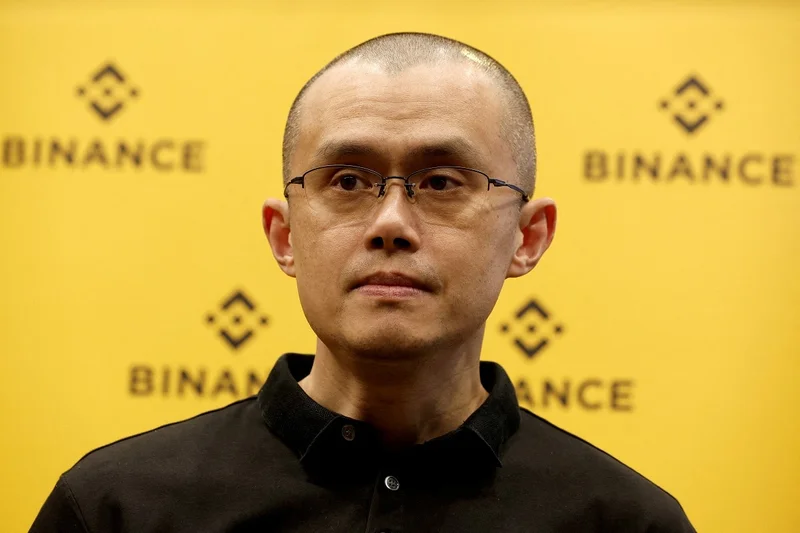
And why? Why this guy? Why now? The answer, offcourse, isn't in the press release. It's in the business section. The pardon just so happens to come after CZ made moves to boost a little crypto venture called World Liberty Financial. A company launched earlier this year by… wait for it… Eric and Donald Trump Jr.
When Leavitt was asked directly if this was a massive conflict of interest, she just repeated the line about the president exercising his "constitutional authority." It's the ultimate non-answer. It’s like asking a bank robber why he has a bag of money and him responding, "I am exercising my authority to hold this bag." It doesn't actually answer the question, does it?
A Pardon Is the New Consulting Fee
This whole episode is a perfect metaphor for how power works now. A presidential pardon isn't a tool of mercy or justice anymore; it's a commodity. It’s an asset to be leveraged, a chit to be cashed in. It’s the ultimate loyalty reward program. This ain't about righting a wrong. It’s about rewarding a friend, or more accurately, a business associate.
You boost the family crypto company, you get the presidential seal of approval wiping your felony clean. It’s so brazenly transactional it’s almost impressive. They’re not even trying to hide it anymore. The subtext is the text.
I tried explaining all this to my uncle over the weekend, the whole crypto-pardon-family-business connection, and he just stared at me blankly. After five minutes, I just gave up. It's like trying to explain the physics of a black hole using only hand puppets. Some things are so dense and absurd that a normal person's brain just rejects them.
The White House is selling this as a bold move for innovation and a strike against the deep state. But what does it really accomplish? It sends a crystal-clear message to every white-collar criminal and shady billionaire out there: the rules don't apply to you, as long as you can find a way to make yourself useful to the right people. It turns the presidency into a concierge service for the rich and connected.
And what happens next? When asked if this pardon clears the way for Binance to resume U.S. operations, the White House punted, telling reporters to ask the Treasury Department. Can you imagine being the poor sucker at Treasury who has to answer that call? "Hi, yeah, the President just pardoned the guy we convicted for massive anti-money laundering failures. So... are we cool now?"
It's a complete mess. They expect us to believe this is all normal, that this is just how the game is played, and the sad part is...
Color Me Shocked
Honestly, are we even surprised anymore? This isn't a bug in the system; it's the main feature. The pardon of Changpeng Zhao isn't some grand statement on cryptocurrency policy. It's the grubby, transactional heart of modern politics laid bare for all to see. It’s a thank-you note written on Department of Justice letterhead. And we're the ones who have to pretend it’s legitimate.

-

The Business of Plasma Donation: How the Process Works and Who the Key Players Are
Theterm"plasma"suffersfromas...
-

The Manyu Phenomenon: What Connects the Viral Crypto, the Tennis Star, and the Anime Legend
It’seasytodismisssportsasmer...
-
ASML's Future: The 2026 Vision and Why Its Next Breakthrough Changes Everything
ASMLIsn'tJustaStock,It'sthe...
-

The Nebius AI Breakthrough: Why This Changes Everything
It’snotoftenthatatypo—oratl...
-

The Great Up-Leveling: What's Happening Now and How We Step Up
Haveyoueverfeltlikeyou'redri...
- Search
- Recently Published
-
- Misleading Billions: The Truth About DeFi TVL - DeFi Reacts
- Secure Crypto: Unlock True Ownership - Reddit's HODL Guide
- Altcoin Season is "here.": What's *really* fueling the latest altcoin hype (and who benefits)?
- The Week's Pivotal Blockchain Moments: Unpacking the breakthroughs and their visionary future
- DeFi Token Performance Post-October Crash: What *actual* investors are doing and the brutal 2025 forecast
- Monad: A Deep Dive into its Potential and Price Trajectory – What Reddit is Saying
- MSTR Stock: Is This Bitcoin's Future on the Public Market?
- OpenAI News Today: Their 'Breakthroughs' vs. The Broken Reality
- Medicare 2026 Premium Surge: What We Know and Why It Matters
- Accenture: What it *really* is, its stock, and the AI game – What Reddit is Saying
- Tag list
-
- Blockchain (11)
- Decentralization (5)
- Smart Contracts (4)
- Cryptocurrency (26)
- DeFi (5)
- Bitcoin (30)
- Trump (5)
- Ethereum (8)
- Pudgy Penguins (5)
- NFT (5)
- Solana (5)
- cryptocurrency (6)
- XRP (3)
- Airdrop (3)
- MicroStrategy (3)
- Plasma (4)
- Zcash (7)
- Aster (10)
- qs stock (3)
- mstr stock (3)
- asts stock (3)
- investment advisor (4)
- morgan stanley (3)
- ChainOpera AI (4)
- federal reserve news today (4)