Bitcoin's Market Dynamics: What Today's Price and the Gold Correlation Really Mean
The Great Bitcoin Paradox: Why Whales Are Buying While Everyone Else Sells
On the surface, the data tells a story of faltering conviction. Since mid-October, a steady stream of Bitcoin has been flowing out of wallets classified as "long-term holders." One analysis, Bitcoin illiquid supply declines as 62,000 BTC moves out of long-term holder wallets: Glassnode, noted that a sum worth roughly $7 billion at current prices has left addresses that have historically been dormant. This is the first significant decline in illiquid supply we’ve seen in the second half of 2025, and it coincides with the `bitcoin price` pulling back from its all-time high above $125,000.
The immediate, almost reflexive, interpretation is negative. The "diamond hands" are cracking. The steadfast holders who form the bedrock of the asset's valuation are finally taking profits. After all, with about 82% of the circulating supply in profit, who could blame them? This narrative seems clean, logical, and points toward a period of price suppression. Momentum buyers have exited, and there isn't enough new demand to soak up the supply.
But this interpretation is incomplete. It’s like analyzing a naval battle by only watching the lifeboats. When you look beneath the surface-level churn, a completely different, and frankly more significant, picture emerges. A stark divergence is underway, and it separates the market into two distinct classes of participants with fundamentally different theses.
The Anatomy of an Outflow
Before we get to the counter-narrative, it’s critical to understand who is actually selling. Data from Glassnode provides a granular view, and the details are revealing. The largest outflows are not coming from the earliest adopters or the multi-billion dollar custodians. Instead, the selling pressure originates squarely from wallets holding between $10,000 and $1,000,000 worth of `BTC`.
This cohort represents a specific market psychology. These aren't day traders, but they aren't long-term strategists, either. Glassnode aptly labels them "momentum buyers"—participants who likely entered the market during the exhilarating run-up over the last couple of years. Their selling since November of last year suggests a classic pattern: buy the strength, sell the first sign of sustained weakness. The price has fallen around 10%—to be more precise, about 9.2% from its peak—and this was enough to trigger their exit.

This is the part of the report that I find genuinely puzzling, not because of the selling itself, but because of who is on the other side of the trade. Usually, in a market correction, the largest players (the whales) either lead the selling or step aside entirely. That is not what is happening here. So, the critical question isn't "Why are people selling?" It's "Who is absorbing this $7 billion wave of supply, and why?"
A Quiet Accumulation
While the $100k holders are heading for the exits, the largest wallets on the network are doing the opposite. "Over the last 30 days, whale wallets have grown their holdings," Glassnode wrote, "and since October 15th, they haven't largely sold their positions." This isn't just a minor discrepancy; it's a profound disagreement about the future value of the asset. One group sees a local top and fears a downturn. The other sees a discount and is systematically accumulating.
This on-chain activity is being mirrored by seismic shifts on Wall Street. Just last week, a Bloomberg report announced that JPMorgan to Allow Bitcoin and Ether as Collateral in Crypto Push. This isn't some token gesture. It’s the world’s most systemically important bank building the financial plumbing that makes holding `crypto` a capital-efficient strategy for funds and corporations. Pledging your `BTC` for a loan is the ultimate HODL—you get liquidity without selling your position. Why would they roll this out now if their largest clients were planning to dump their holdings?
This whole dynamic is like watching two different games being played on the same field. The retail and momentum crowd is playing checkers, reacting to the last price move. The institutional players are playing chess, positioning for a game that will unfold over the next decade. Fidelity’s recent report projects that if current trends hold, nearly 42% of all `Bitcoin` supply (a staggering 8.3 million `BTC`) will be considered illiquid by 2032. The whales aren't just buying this dip; they are executing a long-term strategy to corner the available supply of a provably scarce asset. They are, in effect, taking the asset off the market, one nervous seller at a time.
A Clear Divergence of Conviction
Let's be clear. The current price weakness is real, driven by a cohort of investors who are de-risking. But to call this a bearish signal is to miss the forest for the trees. The real story isn't the outflow from momentum wallets; it's the quiet, deliberate inflow into the deepest pockets in finance. The paradox of whales buying while others sell isn't a paradox at all. It's the signature of a market in transition, shifting from a retail-dominated speculative asset to an institutionally-held strategic reserve. The weak hands are being shaken out, and their coins are ending up in the strongest hands the market has ever seen.

-

The Business of Plasma Donation: How the Process Works and Who the Key Players Are
Theterm"plasma"suffersfromas...
-

The Manyu Phenomenon: What Connects the Viral Crypto, the Tennis Star, and the Anime Legend
It’seasytodismisssportsasmer...
-

The Nebius AI Breakthrough: Why This Changes Everything
It’snotoftenthatatypo—oratl...
-
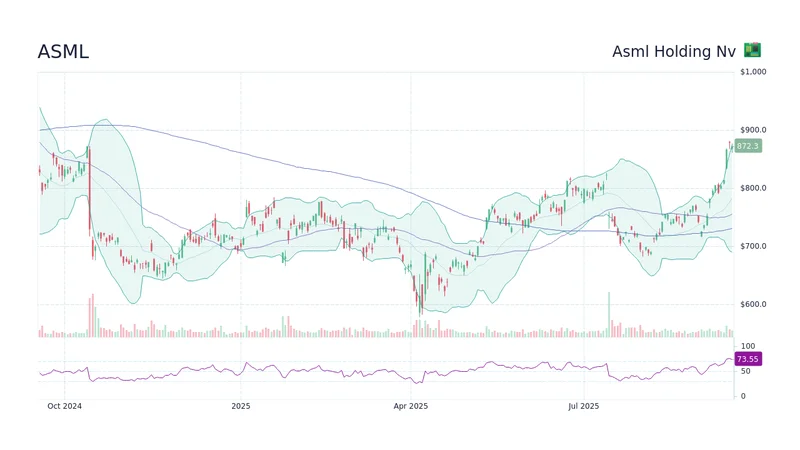
ASML's Future: The 2026 Vision and Why Its Next Breakthrough Changes Everything
ASMLIsn'tJustaStock,It'sthe...
-

The Great Up-Leveling: What's Happening Now and How We Step Up
Haveyoueverfeltlikeyou'redri...
- Search
- Recently Published
-
- Misleading Billions: The Truth About DeFi TVL - DeFi Reacts
- Secure Crypto: Unlock True Ownership - Reddit's HODL Guide
- Altcoin Season is "here.": What's *really* fueling the latest altcoin hype (and who benefits)?
- The Week's Pivotal Blockchain Moments: Unpacking the breakthroughs and their visionary future
- DeFi Token Performance Post-October Crash: What *actual* investors are doing and the brutal 2025 forecast
- Monad: A Deep Dive into its Potential and Price Trajectory – What Reddit is Saying
- MSTR Stock: Is This Bitcoin's Future on the Public Market?
- OpenAI News Today: Their 'Breakthroughs' vs. The Broken Reality
- Medicare 2026 Premium Surge: What We Know and Why It Matters
- Accenture: What it *really* is, its stock, and the AI game – What Reddit is Saying
- Tag list
-
- Blockchain (11)
- Decentralization (5)
- Smart Contracts (4)
- Cryptocurrency (26)
- DeFi (5)
- Bitcoin (30)
- Trump (5)
- Ethereum (8)
- Pudgy Penguins (5)
- NFT (5)
- Solana (5)
- cryptocurrency (6)
- XRP (3)
- Airdrop (3)
- MicroStrategy (3)
- Plasma (4)
- Zcash (7)
- Aster (10)
- qs stock (3)
- mstr stock (3)
- asts stock (3)
- investment advisor (4)
- morgan stanley (3)
- ChainOpera AI (4)
- federal reserve news today (4)