Blue Origin's PR Blitz: What They Actually Launched vs. What They're Promising Next
So, Blue Origin shot another six people into the sky for ten minutes. Dandy. They called themselves the "Space Nomads," which sounds like a rejected prog-rock band from the 70s. One of them was a "mystery passenger," a biotech CEO named Will Lewis who apparently wanted to keep his space joyride a secret until after he landed. Give me a break.
While the livestream cameras were focused on a few rich folks getting their zero-G kicks and exclaiming "Oh my God!", the real story was happening completely off-screen. It’s the classic magician’s trick: look at the flashy thing in this hand, so you don’t see what I’m doing with the other. And what Jeff Bezos is doing with his other hand is methodically building an empire that has very little to do with fulfilling the "lifelong dreams" of franchise executives.
This whole space tourism thing? It's a marketing expense. It’s the shiny bait on a very, very big hook. And while everyone is oohing and aahing at the 10-minute suborbital hop, Blue Origin is quietly getting into bed with the U.S. government and positioning itself to own the damn roads to space.
The Sideshow vs. The Main Event
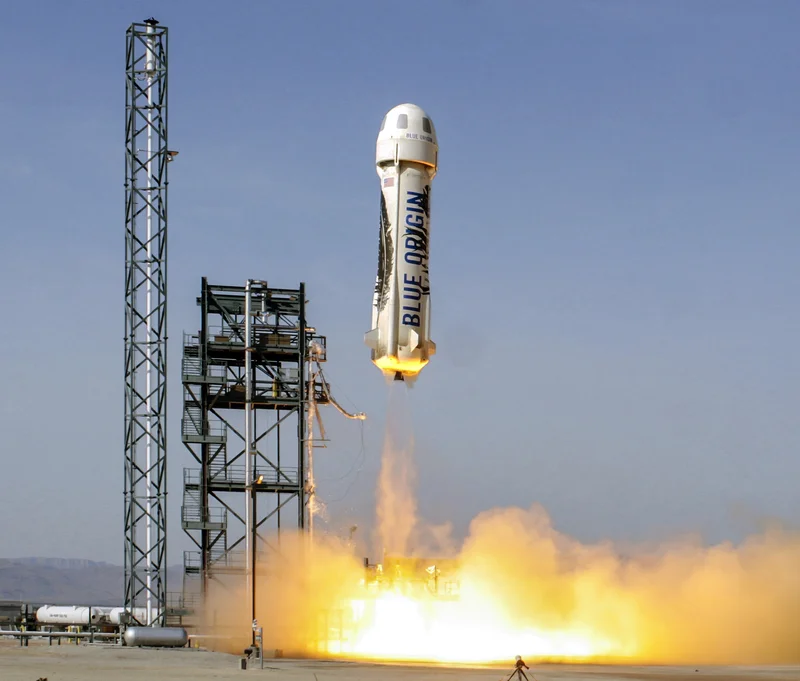
Let’s get this straight. The New Shepard flight, NS-36, lasted exactly 10 minutes and 21 seconds. It went up, floated for a bit, and came down. It's a high-tech roller coaster, an amusement park ride for the one percent. The same day—the very same day—that these "nomads" were floating around, news broke that Blue Origin transports New Glenn booster to launch site ahead of Mars-bound mission – Spaceflight Now.
You see the difference? One is a PR stunt, the other is a 189-foot-tall piece of heavy-lift hardware designed to put serious payloads into orbit for NASA. This booster, hilariously named ‘Never Tell Me the Odds,’ is slated to launch a Mars mission. That ain't a tourist trip. That's the main event.
And the day before that? Blue Origin quietly pocketed a $78.2 million contract from the U.S. Space Force. Not to fly tourists, but to build out "satellite processing infrastructure." That sounds boring, I know. It's supposed to. "Infrastructure" doesn't get clicks. But you know what it gets you? Control. The government itself admits that the facilities at Cape Canaveral are a "major bottleneck." There are plenty of rockets, but not enough garages to get the satellites ready for launch.
So, Bezos’s company is using taxpayer money to build the garages that everyone will need to use. This is like owning the only gas station and repair shop on a 500-mile stretch of highway. You don't just profit from your own cars; you profit from everyone else's, too. Are we really supposed to believe this is just a happy public-private partnership for the "mutual benefit" of all? Or is it one of the oldest plays in the corporate playbook: get the government to subsidize the boring, expensive part of your monopoly?
Bezos is Playing the Long Game, and We're All Pawns
This isn't just about one contract or one big rocket. It’s about a slow, creeping, and brilliant vertical integration of the entire launch ecosystem. And now, there's another piece falling into place: NASA is getting nervous about SpaceX.
Artemis III, the mission to put humans back on the moon, is banking entirely on SpaceX’s Starship. But Starship is... well, it's a wildly ambitious, explosion-prone, and chronically delayed beast. NASA is reportedly so spooked that there are now reports that NASA Could Use Blue Origin's Lander for Artemis III if Starship Fails.
Let that sink in. While Elon Musk is blowing up rockets in Texas for the whole world to see, Jeff Bezos is quietly positioning his company as the reliable, sensible alternative. The safe pair of hands. He's not just building a rocket; he's building the launchpad infrastructure with military money and developing the lunar lander that could save NASA’s flagship program. This is a bad strategy. No, 'bad' doesn't cover it—this is a terrifyingly effective pincer movement.
It's the Amazon playbook, ported to the cosmos. Start with one thing (books/suborbital tourism), then use that beachhead to build the unsexy but essential infrastructure (warehouses/launch facilities), and eventually become the platform that everyone else has to use. He doesn't need to have the flashiest rocket if he owns the ground it launches from and the vehicle that lands on the Moon.
What does it matter if New Glenn's first booster landing failed? SpaceX blew up plenty of rockets before they got it right. Blue Origin says they're "pretty confident" this time. Offcourse they are. They have government contracts and a potential NASA lifeline to fall back on. They can afford to fail a few times while the public is busy watching the space tourists. This whole operation is a slow-motion takeover, and nobody seems to be paying attention because the sideshow is just so darn entertaining.
So, What's the Real Price of Admission?
Everyone is focused on the price of a ticket on New Shepard, but that's the wrong question. The real price is being paid by U.S. taxpayers for contracts that are building out a private company's launch empire. The real price is the slow erosion of competition as one company aims to control not just the rockets, but the facilities, the landers, and the government relationships. We're watching the creation of another "too big to fail" entity, but this time it's not on Wall Street; it's at the edge of space. And we're all just cheering it on, distracted by the pretty lights.

-

The Business of Plasma Donation: How the Process Works and Who the Key Players Are
Theterm"plasma"suffersfromas...
-

The Manyu Phenomenon: What Connects the Viral Crypto, the Tennis Star, and the Anime Legend
It’seasytodismisssportsasmer...
-
ASML's Future: The 2026 Vision and Why Its Next Breakthrough Changes Everything
ASMLIsn'tJustaStock,It'sthe...
-

The Nebius AI Breakthrough: Why This Changes Everything
It’snotoftenthatatypo—oratl...
-

The Great Up-Leveling: What's Happening Now and How We Step Up
Haveyoueverfeltlikeyou'redri...
- Search
- Recently Published
-
- Misleading Billions: The Truth About DeFi TVL - DeFi Reacts
- Secure Crypto: Unlock True Ownership - Reddit's HODL Guide
- Altcoin Season is "here.": What's *really* fueling the latest altcoin hype (and who benefits)?
- The Week's Pivotal Blockchain Moments: Unpacking the breakthroughs and their visionary future
- DeFi Token Performance Post-October Crash: What *actual* investors are doing and the brutal 2025 forecast
- Monad: A Deep Dive into its Potential and Price Trajectory – What Reddit is Saying
- MSTR Stock: Is This Bitcoin's Future on the Public Market?
- OpenAI News Today: Their 'Breakthroughs' vs. The Broken Reality
- Medicare 2026 Premium Surge: What We Know and Why It Matters
- Accenture: What it *really* is, its stock, and the AI game – What Reddit is Saying
- Tag list
-
- Blockchain (11)
- Decentralization (5)
- Smart Contracts (4)
- Cryptocurrency (26)
- DeFi (5)
- Bitcoin (30)
- Trump (5)
- Ethereum (8)
- Pudgy Penguins (5)
- NFT (5)
- Solana (5)
- cryptocurrency (6)
- XRP (3)
- Airdrop (3)
- MicroStrategy (3)
- Plasma (4)
- Zcash (7)
- Aster (10)
- qs stock (3)
- mstr stock (3)
- asts stock (3)
- investment advisor (4)
- morgan stanley (3)
- ChainOpera AI (4)
- federal reserve news today (4)