Procter & Gamble's Surprising Earnings Beat: Why This Is a Sign of Something Bigger
It’s easy to get lost in the daily churn of Wall Street. A stock is up, a stock is down. An earnings report beats by a few cents, and algorithms trigger a flurry of trades. We saw exactly that with Procter & Gamble’s latest fiscal report. The numbers were good—better than expected, even. Adjusted earnings per share of $1.99 against a $1.90 estimate, revenue of $22.4 billion beating the $22.18 billion consensus. The stock got a nice little bump.
And for most, that’s where the story ends. But it’s not the real story. Not even close.
When I first saw the breakdown of their segment growth, I honestly just sat back in my chair, speechless. In this economic climate, with all the talk of consumer pull-back and geopolitical uncertainty, P&G saw a 6% surge in its Beauty segment and a 5% jump in Grooming. This isn't just about selling more soap. This is a profound statement about brand resilience and the deep, almost primal connection a company can build with its customers. It tells us something fundamental is happening under the hood, something the daily stock chart, with its year-to-date decline, is completely failing to capture. Are we watching a legacy giant stumble, or are we witnessing the early results of a quiet, brilliant reinvention?
The Engine Under the Hood
Let's be direct: looking at P&G's stock performance over the last year feels like looking in the rearview mirror. Yes, it’s been down. Yes, it recently bounced off a 52-week low. The bears will point to this and Procter & Gamble Stock (PG) Opinions on Recent Price Decline and Insider Sales as a sign of weakness. On the surface, it’s a narrative that writes itself: a tired old company whose own leadership is cashing out.
But that’s a dangerously simplistic reading of the data. It’s like judging a revolutionary new electric car by the scratches on its paint job. The real innovation, the thing that will determine its future, is the engine. And P&G's engine is humming. The company is delivering growth despite raising prices, which is the holy grail of brand strength. It shows an almost inelastic demand for their products. This isn't luck; it's the result of decades of innovation, marketing, and building trust.
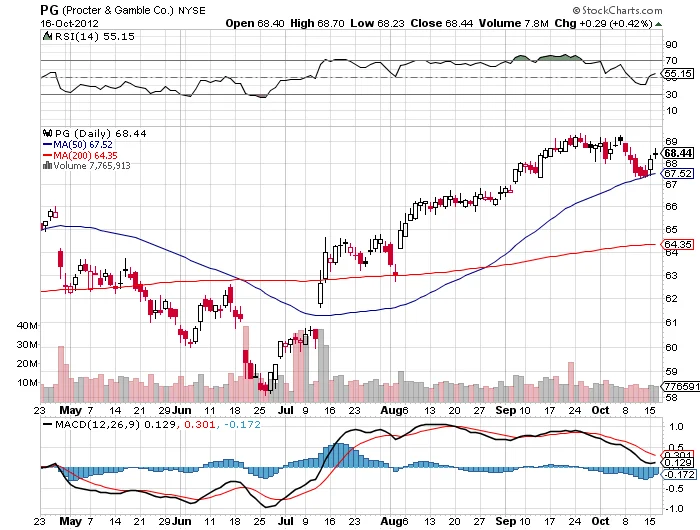
What does it tell you when thousands of options traders, just after the earnings release, piled into call options—that is, bets that the stock will go up—at five times the normal volume? You have this incredible divergence between the scheduled, almost bureaucratic selling from insiders and the raw, real-time optimism from the options market—it’s a fascinating look at where the smart money believes the momentum is actually heading. These traders aren't looking at last year's chart; they're looking at the fundamental power demonstrated in this quarter's results and betting on tomorrow.
Decoding the Human Signal
The insider sales data is a classic red herring. These transactions are often part of pre-planned executive compensation packages—in simpler terms, it's often just a structured way for leaders to realize their stock-based pay, not a sudden vote of no confidence. It’s noise. The real human signal, the one that matters, is found in two places: the checkout aisle and the trading floor.
In the checkout aisle, people are still reaching for Tide, Gillette, and Olay, even when it costs a little more. That’s a vote of confidence millions of times a day. On the trading floor, the surge in bullish call options for the 160-strike price is a powerful, collective bet that the market has undervalued P&G’s quiet strength. While analysts maintain a solid "Moderate Buy" consensus with price targets suggesting double-digit upside, the options market is even more immediate. It’s a groundswell of belief.
This is the kind of paradigm shift that reminds me of the early days of personal computing. Back then, everyone was focused on the giant mainframes, the established players. They missed the quiet revolution happening in garages and small labs, the one that would eventually change everything. P&G isn't a startup in a garage, but it's demonstrating a startup's agility and connection to its user base on the scale of a global titan. How many other companies of that size and age can truly say the same? What does it mean for a company to not only survive but thrive by doubling down on quality and brand loyalty in an era that supposedly rewards only what's new and cheap?
The Real Story Isn't the Stock, It's the Strategy
Forget the chatter. Forget the insider sales reports and the year-to-date stock chart. Those are artifacts of the past. The real, forward-looking story is P&G’s masterclass in proving that deep consumer loyalty and relentless operational excellence can defy economic gravity. This isn’t just a good quarter; it’s a powerful signal that in a world of endless disruption, the companies that truly know their customers can create their own weather. The most important innovation here isn't a new product—it's the resilience of the entire model. And that’s a blueprint for the future.

-

The Business of Plasma Donation: How the Process Works and Who the Key Players Are
Theterm"plasma"suffersfromas...
-

The Manyu Phenomenon: What Connects the Viral Crypto, the Tennis Star, and the Anime Legend
It’seasytodismisssportsasmer...
-
ASML's Future: The 2026 Vision and Why Its Next Breakthrough Changes Everything
ASMLIsn'tJustaStock,It'sthe...
-

The Nebius AI Breakthrough: Why This Changes Everything
It’snotoftenthatatypo—oratl...
-

The Great Up-Leveling: What's Happening Now and How We Step Up
Haveyoueverfeltlikeyou'redri...
- Search
- Recently Published
-
- Misleading Billions: The Truth About DeFi TVL - DeFi Reacts
- Secure Crypto: Unlock True Ownership - Reddit's HODL Guide
- Altcoin Season is "here.": What's *really* fueling the latest altcoin hype (and who benefits)?
- The Week's Pivotal Blockchain Moments: Unpacking the breakthroughs and their visionary future
- DeFi Token Performance Post-October Crash: What *actual* investors are doing and the brutal 2025 forecast
- Monad: A Deep Dive into its Potential and Price Trajectory – What Reddit is Saying
- MSTR Stock: Is This Bitcoin's Future on the Public Market?
- OpenAI News Today: Their 'Breakthroughs' vs. The Broken Reality
- Medicare 2026 Premium Surge: What We Know and Why It Matters
- Accenture: What it *really* is, its stock, and the AI game – What Reddit is Saying
- Tag list
-
- Blockchain (11)
- Decentralization (5)
- Smart Contracts (4)
- Cryptocurrency (26)
- DeFi (5)
- Bitcoin (30)
- Trump (5)
- Ethereum (8)
- Pudgy Penguins (5)
- NFT (5)
- Solana (5)
- cryptocurrency (6)
- XRP (3)
- Airdrop (3)
- MicroStrategy (3)
- Plasma (4)
- Zcash (7)
- Aster (10)
- qs stock (3)
- mstr stock (3)
- asts stock (3)
- investment advisor (4)
- morgan stanley (3)
- ChainOpera AI (4)
- federal reserve news today (4)