Microsoft Earnings: What to Expect and the Key Metrics to Watch
All eyes are on Microsoft this Wednesday. The company is set to release its first-quarter earnings, and the market’s expectation is nothing short of stratospheric. With a stock price up about 30%—to be more exact, 29.50% year to date—and a recent entry into the exclusive $4 trillion market cap club, the prevailing narrative is one of unassailable dominance fueled by an all-in bet on artificial intelligence.
Wall Street analysts, according to Bloomberg, are predictably bullish. They see the $75.5 billion revenue projection and the $3.68 adjusted EPS target not as a ceiling, but as a new floor. This optimism is built on the foundation of Azure, the cloud unit that generated over $75 billion in fiscal 2025 and is projected to grow another 37% this quarter alone. Add to that the company’s massive $80 billion planned investment in AI this year and its newly structured stake in OpenAI (a 27% holding in the public-facing entity, valued at a cool $135 billion), and you have a story that practically writes itself. It’s a story of a legacy giant successfully executing a pivot to the next technological frontier.
But a story is not the same as a balance sheet. And when you look past the headline figures, a persistent, troubling detail emerges. For six consecutive quarterly earnings calls, Microsoft has admitted it cannot meet all of its customer demand for cloud services. The reason is brutally simple: a shortage of servers.
The Narrative vs. The Constraint
The market is pricing Microsoft for infinite, frictionless growth. The reality on the ground, however, is one of physical constraints. The company is in a frantic race to build AI data centers, with planned capital expenditures expected to exceed $30 billion in this quarter alone. This isn't a sign of weakness, precisely—it's the consequence of overwhelming demand. But it is a critical vulnerability.
Think of it like this: Microsoft has engineered the world’s most powerful economic engine in Azure and its AI services, but it’s struggling to build the roads for it to run on. The demand is proven. The technology is, for the most part, there. But the physical infrastructure—the steel, the silicon, the cooling systems—is the bottleneck. Every dollar of potential revenue that goes uncaptured because a server rack isn't available is a dollar a competitor could potentially claim.
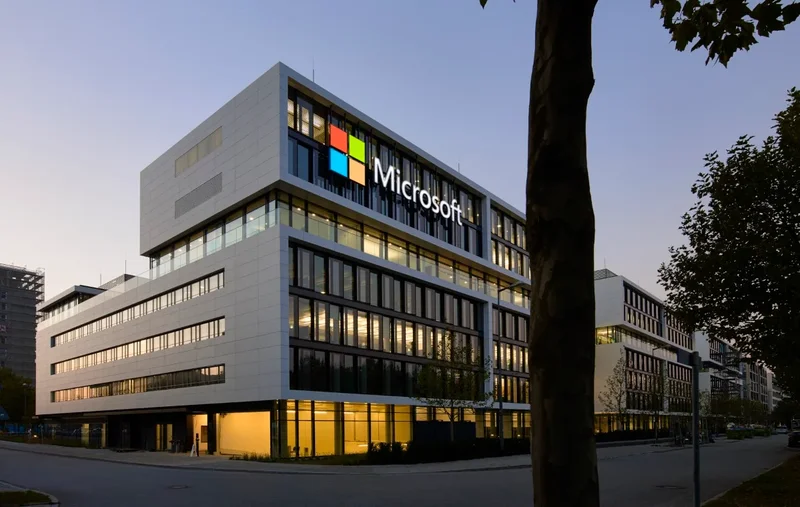
This is the central tension I see heading into Wednesday’s call. The market is cheering the 39% sales growth reported last quarter, which handily beat expectations. But how much higher could that number have been without the server constraints? And more importantly, is the company closing that gap, or is it widening as AI demand continues to explode? I've looked at hundreds of these filings, and this kind of recurring, unresolved supply constraint is a quiet red flag. It suggests a company whose own success is outpacing its operational capacity to deliver. It’s the best kind of problem to have, until it isn’t.
A Tale of Two Microsofts
While this high-stakes infrastructure race is happening in anonymous data centers around the globe, another, more visible version of Microsoft is still tending to its legacy. This week, Microsoft begins rolling out new Start menu on Windows 11 — here's everything you should know. It’s a significant user-facing update, rebuilt to be more customizable and adaptive. Users can now hide recommended files, rearrange pinned apps into categories, and see an improved Phone Link panel.
It’s a necessary, logical evolution for the operating system that still powers the vast majority of the world's PCs. But it also highlights the strange duality of the company today. One Microsoft is engaged in a capital-intensive, generational battle for the future of computing in the cloud. The other is fine-tuning the user interface of a desktop product, making iterative improvements like adding the battery percentage back to the taskbar.
There's no criticism implied here; a company of this scale must walk and chew gum at the same time. But the contrast is telling. The financial markets have placed almost the entirety of Microsoft’s future valuation on the success of the former, while hundreds of millions of users experience the company primarily through the latter. The question is whether the immense resources required for the AI arms race will starve other parts of the business of the attention they need. For now, the Windows update suggests a degree of balance, but can it last when the capex demands for AI are essentially a blank check?
The Real Question Isn't 'If,' But 'How Fast'
Ultimately, the market seems to have already decided that Microsoft’s AI strategy will succeed. The $4 trillion valuation is a bet on the outcome. My analysis, however, suggests the more salient question is about the timeline. The narrative is set, but the execution is constrained by the laws of physics and supply chains. The numbers in Wednesday's report will be impressive, almost certainly beating the consensus. But the real data won't be in the backward-looking revenue figures. It will be in the forward-looking guidance from CFO Amy Hood. Listen carefully for any change in language around capital expenditures and, most critically, any signal that they are finally getting ahead of the demand curve for their cloud infrastructure. Because in this race, being right isn't enough. You also have to be fast.

-

The Business of Plasma Donation: How the Process Works and Who the Key Players Are
Theterm"plasma"suffersfromas...
-

The Manyu Phenomenon: What Connects the Viral Crypto, the Tennis Star, and the Anime Legend
It’seasytodismisssportsasmer...
-
ASML's Future: The 2026 Vision and Why Its Next Breakthrough Changes Everything
ASMLIsn'tJustaStock,It'sthe...
-

The Nebius AI Breakthrough: Why This Changes Everything
It’snotoftenthatatypo—oratl...
-

The Great Up-Leveling: What's Happening Now and How We Step Up
Haveyoueverfeltlikeyou'redri...
- Search
- Recently Published
-
- Misleading Billions: The Truth About DeFi TVL - DeFi Reacts
- Secure Crypto: Unlock True Ownership - Reddit's HODL Guide
- Altcoin Season is "here.": What's *really* fueling the latest altcoin hype (and who benefits)?
- The Week's Pivotal Blockchain Moments: Unpacking the breakthroughs and their visionary future
- DeFi Token Performance Post-October Crash: What *actual* investors are doing and the brutal 2025 forecast
- Monad: A Deep Dive into its Potential and Price Trajectory – What Reddit is Saying
- MSTR Stock: Is This Bitcoin's Future on the Public Market?
- OpenAI News Today: Their 'Breakthroughs' vs. The Broken Reality
- Medicare 2026 Premium Surge: What We Know and Why It Matters
- Accenture: What it *really* is, its stock, and the AI game – What Reddit is Saying
- Tag list
-
- Blockchain (11)
- Decentralization (5)
- Smart Contracts (4)
- Cryptocurrency (26)
- DeFi (5)
- Bitcoin (30)
- Trump (5)
- Ethereum (8)
- Pudgy Penguins (5)
- NFT (5)
- Solana (5)
- cryptocurrency (6)
- XRP (3)
- Airdrop (3)
- MicroStrategy (3)
- Plasma (4)
- Zcash (7)
- Aster (10)
- qs stock (3)
- mstr stock (3)
- asts stock (3)
- investment advisor (4)
- morgan stanley (3)
- ChainOpera AI (4)
- federal reserve news today (4)