Citibank's Bold New Strategy: What This Signals for the Future of Banking
Citibank's Rate Cut Isn't Just News. It's a Signal.
Let’s be clear about something right up front. When a financial institution the size of Citigroup—a behemoth with a footprint in over 100 countries and a market cap that rivals the GDP of a small nation—tweaks its lending rate by a quarter of a percentage point, it’s easy to dismiss. Your news feed probably buries a headline like Citibank slashes lending rate in bold move under a dozen others. A 0.25% drop? It feels like statistical noise, the kind of financial minutiae that only Wall Street analysts are paid to care about.
But I'm telling you, that’s the wrong way to look at this. This isn't just a decimal point moving to the left. It’s a signal. It’s a tremor from the very heart of the global financial system, and if you listen closely, you can hear what it’s saying about our future.
Citigroup is lowering its base rate from 7.25% to 7.00%. Now, the base rate is essentially the foundational cost of money for a vast ecosystem of loans—it’s the wholesale price, if you will, before it gets marked up for you and me. So this cut means the cost of capital, the very lifeblood of innovation and enterprise, just got a little cheaper. When I first saw the announcement, I honestly just sat back in my chair for a moment. Not because of the number itself, but because of the timing. In what many are calling a "challenging economic climate," the default move is to pull back, to hoard resources, to play defense. Instead, Citi is choosing to open the taps. Why? What do they see that others don't?
The Digital Heart Pumps a Little Faster
Think of the global economy as a living organism. If that’s the case, then massive banks like Citigroup are its heart, responsible for pumping capital through the arteries of commerce to every limb of society. A rate cut, then, isn't just a business decision; it's a deliberate choice to increase the circulatory flow. It’s a bet that the body isn’t sick, but hungry—that what we need right now isn’t austerity, but fuel.
This is where we have to look beyond the press release and into the institution’s DNA. We’re talking about a company with a market capitalization of $177 billion, a sprawling giant that provides the financial plumbing for multinational corporations, governments, and millions of individuals. Its decision to make money cheaper has a ripple effect that’s almost impossible to fully map—it touches everything from a startup in Silicon Valley seeking a line of credit to a family in Ohio thinking about expanding their small business.
The raw data presents a fascinatingly complex picture. On one hand, you have solid 6.7% revenue growth over the last three years and a healthy 17.3% net margin. That tells a story of a well-run, profitable machine. But then you see the other side: a debt-to-equity ratio of 1.74. In simpler terms, that means the bank is using a significant amount of borrowed money to finance its assets. It’s a high-leverage strategy, and financial analysts rightly flag it as a risk.

But what if risk is part of the point? What if this isn't a sign of weakness, but of aggressive confidence? High leverage is like driving a high-performance race car—it’s inherently more dangerous than the family sedan, but it’s also the only way you can win the race. By lowering rates while maintaining this leveraged position, Citi is essentially flooring the accelerator, betting that the road ahead leads to growth, not a cliff. It's a breathtakingly bold move, and it tells me they believe the engine of human ingenuity is ready for more fuel.
A Bet on Tomorrow's Builders
This move is a direct counter-narrative to the pervasive pessimism we see everywhere. We are constantly told to brace for impact, to prepare for downturns, to scale back our ambitions. And yet, here is one of the world’s largest financial gatekeepers doing the exact opposite. They are making a calculated bet on us. On our ability to build, to innovate, to create value, and to grow the economy.
This is the kind of system-level thinking that reminds me of the post-WWII era, when the United States, despite being saddled with monumental debt, made massive investments in infrastructure, science, and education. It was a bet on the future that paid off for generations. This rate cut is a tiny echo of that same spirit—the belief that the best way to secure the future is not to hide from it, but to build it. And you can’t build without capital.
Of course, this comes with immense responsibility. Cheaper money can fuel bubbles just as easily as it can fuel breakthroughs. It's a powerful tool, and its deployment requires wisdom. But the alternative—a world where capital is expensive and hoarded by institutions afraid of the future—is one of stagnation. That’s a guaranteed path to decline.
I look at the high institutional ownership of Citi, sitting at nearly 78%, and I see a quiet consensus among the world's most sophisticated investors. They aren’t just holding a bank stock; they are underwriting a particular vision of the future, one where capital is put to work. This rate cut is the most tangible expression of that vision we’ve seen in a long time—it’s a signal that the future is worth investing in, and the speed of that investment is just staggering, it means the gap between an idea on a napkin and a product in the market could shrink just a little bit more for thousands of entrepreneurs. What will we build with this opportunity? What new companies, what new technologies, what new solutions will emerge because the barrier to entry was just lowered, even by a fraction?
A Vote of Confidence in Us
When you strip away all the financial jargon—the P/E ratios, the net margins, the beta volatility—you’re left with a profoundly human action. A decision was made by people in a boardroom to place a bet. It wasn't a bet on a particular stock or a commodity. It was a bet on the creative and productive capacity of people. They are betting that if they make it easier for you to get a loan, you won’t just consume; you will create. You’ll start that business, expand that factory, hire that new employee, or finally pursue that world-changing idea. In a world full of cynical headlines, this small move is a quiet, powerful, and deeply optimistic statement. It’s a vote of confidence in our collective ability to build a better tomorrow. And I, for one, think it’s a bet worth taking.

-

The Business of Plasma Donation: How the Process Works and Who the Key Players Are
Theterm"plasma"suffersfromas...
-
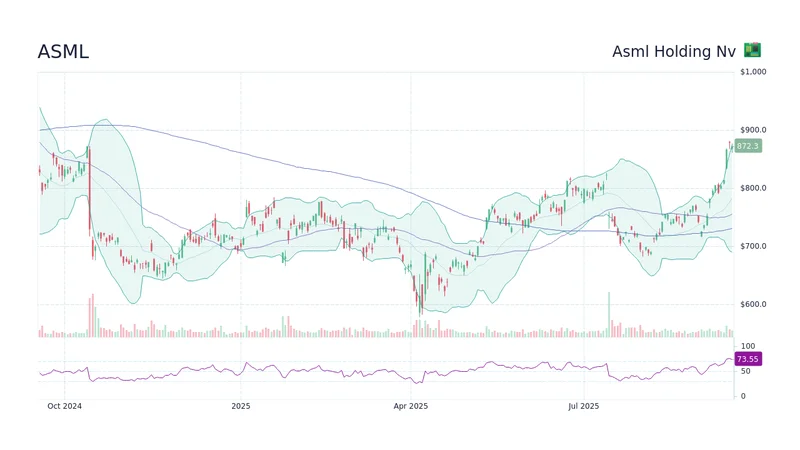
ASML's Future: The 2026 Vision and Why Its Next Breakthrough Changes Everything
ASMLIsn'tJustaStock,It'sthe...
-

The Manyu Phenomenon: What Connects the Viral Crypto, the Tennis Star, and the Anime Legend
It’seasytodismisssportsasmer...
-

The Nebius AI Breakthrough: Why This Changes Everything
It’snotoftenthatatypo—oratl...
-
Secure Crypto: Unlock True Ownership - Reddit's HODL Guide
Alright,folks,let'stalkcrypto....
- Search
- Recently Published
-
- Misleading Billions: The Truth About DeFi TVL - DeFi Reacts
- Secure Crypto: Unlock True Ownership - Reddit's HODL Guide
- Altcoin Season is "here.": What's *really* fueling the latest altcoin hype (and who benefits)?
- The Week's Pivotal Blockchain Moments: Unpacking the breakthroughs and their visionary future
- DeFi Token Performance Post-October Crash: What *actual* investors are doing and the brutal 2025 forecast
- Monad: A Deep Dive into its Potential and Price Trajectory – What Reddit is Saying
- MSTR Stock: Is This Bitcoin's Future on the Public Market?
- OpenAI News Today: Their 'Breakthroughs' vs. The Broken Reality
- Medicare 2026 Premium Surge: What We Know and Why It Matters
- Accenture: What it *really* is, its stock, and the AI game – What Reddit is Saying
- Tag list
-
- Blockchain (11)
- Decentralization (5)
- Smart Contracts (4)
- Cryptocurrency (26)
- DeFi (5)
- Bitcoin (30)
- Trump (5)
- Ethereum (8)
- Pudgy Penguins (5)
- NFT (5)
- Solana (5)
- cryptocurrency (6)
- XRP (3)
- Airdrop (3)
- MicroStrategy (3)
- Plasma (4)
- Zcash (7)
- Aster (10)
- qs stock (3)
- mstr stock (3)
- asts stock (3)
- investment advisor (4)
- morgan stanley (3)
- ChainOpera AI (4)
- federal reserve news today (4)