Crypto's Tariff Shockwave: Understanding the Shake-Up and the Breakthrough That Follows
For a few frantic hours on October 10, 2025, it felt like the sky was falling. I remember watching the charts, a cascade of crimson waterfalls where green shoots had been just days before. The numbers were staggering, almost abstract: $19.13 billion liquidated. A half-trillion dollars in market value erased from the board. The news tickers screamed about President Trump’s threatened tariffs on China, and in the digital town square, the panic was palpable. It was, according to the data crunchers, the largest liquidation event in crypto history.
In moments like that, it's easy to fall for the old, tired narrative: "This is it. The bubble has finally burst." The critics certainly came out in force, pointing to the chaos as definitive proof that this whole grand experiment in decentralized finance was nothing more than a house of cards built on speculation.
They were wrong.
What we witnessed wasn't the death of a system. It was the violent, painful, and absolutely necessary stress test of a new financial paradigm. It was the system purging itself of its excesses, and in doing so, revealing a shocking, stubborn resilience that almost everyone missed. When I first saw the scale of the liquidation, I honestly just sat back in my chair, speechless for a moment. But then, as the dust began to settle, a different feeling emerged: this is the kind of breakthrough that reminds me why I got into this field in the first place. This wasn't a failure; it was the system hardening, evolving in real-time right before our eyes.
The Great Deleveraging
So what actually happened? The trigger was classic 21st-century geopolitics—a tweet, a threat, a tremor of uncertainty rippling out from the White House. But the real fuel for the fire was something internal to the crypto market itself: extreme leverage.
For years, a culture of high-risk, high-reward trading had built up. You had countless traders who were "levered"—in simpler terms, they were essentially borrowing massive amounts of money to place super-sized bets on the direction of the market. It’s like using a long, heavy pole to lift a small rock. It gives you incredible power if you're right, but if the rock slips just an inch, the entire pole swings wildly out of your control and can knock you flat.

When Trump’s tariff threat hit, the market flinched. That small flinch was enough to trigger a cascade of automated sell-offs from these over-leveraged positions. One liquidation triggered another, which triggered ten more, then a hundred, then thousands, in a digital domino effect that moved at the speed of algorithms. It was a firestorm fed by borrowed money.
This is the moment where we have to pause and consider the human cost. Behind those billions in liquidations were real people, many of whom lost everything. It's a stark reminder that as we build this new financial future, we have a profound responsibility to create systems with better guardrails, better education, and more accessible tools for managing risk. But what did the system itself do? Did the core protocols—Bitcoin, Ethereum—break? Did the decentralized exchanges halt? No. They processed every single transaction. They didn't ask for a bailout. The code just… worked.
The Barometer of a New World
The critics love to point out, as John Paton of Kimura London & White did, that in moments of economic fear, crypto is often the first asset to be dumped. They frame this as a weakness, a sign of its immaturity. I see the exact opposite.
Think about it. Why is it sold first? Because it can be. It’s a truly global, 24/7, hyper-liquid market. You can’t just dump your real estate portfolio at 3 a.m. on a Saturday because of a news headline from Asia. You can’t instantly sell off your stake in a private startup. But you can sell your crypto. This hypersensitivity isn't a flaw; it's a feature. It makes the crypto market one of the most honest and immediate barometers of global economic sentiment we've ever created. Watching the market recover and then surge 3-5% on October 27th on the mere rumor of progress in trade talks proves this—the speed of this reaction is just staggering, it means the gap between a global event and its financial consequence is closing faster than we can even comprehend.
This whole episode reminds me of the early days of the stock market. Think of the Panic of 1907, a brutal crash that wiped out fortunes and pushed the financial system to the brink. It was chaotic and destructive. But what came out of it? The creation of the Federal Reserve and a whole new set of regulations that, for all their flaws, made the system more mature and resilient. The 2025 crypto crash was our Panic of 1907. It was a baptism by fire that burned away the most reckless speculation and forced the ecosystem to confront its weaknesses.
The question now isn't if crypto will survive these shocks. We've already answered that. The question is, how do we use the lessons from this fire to build something even stronger? How do we build a decentralized world that can harness this volatility without letting it consume the very people it's meant to empower?
The Scar Tissue Makes It Stronger
Let's be perfectly clear. The crash of October 2025 wasn't the end of the story. It was the end of the prologue. It was the moment a nascent, often naively exuberant market was forced to grow up. It proved that the underlying technology is robust enough to withstand a hurricane of panic selling. It showed that the market, for all its wildness, is deeply connected to the global economy and responds rationally to macro-level news. What we're left with is a system that is leaner, smarter, and has the scar tissue to prove it can take a punch. And that is a foundation you can actually start to build the future on.

-

The Business of Plasma Donation: How the Process Works and Who the Key Players Are
Theterm"plasma"suffersfromas...
-

The Manyu Phenomenon: What Connects the Viral Crypto, the Tennis Star, and the Anime Legend
It’seasytodismisssportsasmer...
-
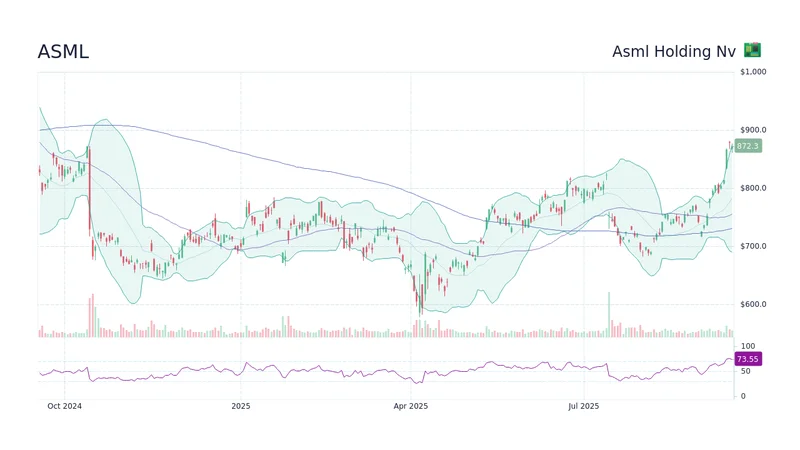
ASML's Future: The 2026 Vision and Why Its Next Breakthrough Changes Everything
ASMLIsn'tJustaStock,It'sthe...
-

The Nebius AI Breakthrough: Why This Changes Everything
It’snotoftenthatatypo—oratl...
-

The Great Up-Leveling: What's Happening Now and How We Step Up
Haveyoueverfeltlikeyou'redri...
- Search
- Recently Published
-
- Misleading Billions: The Truth About DeFi TVL - DeFi Reacts
- Secure Crypto: Unlock True Ownership - Reddit's HODL Guide
- Altcoin Season is "here.": What's *really* fueling the latest altcoin hype (and who benefits)?
- The Week's Pivotal Blockchain Moments: Unpacking the breakthroughs and their visionary future
- DeFi Token Performance Post-October Crash: What *actual* investors are doing and the brutal 2025 forecast
- Monad: A Deep Dive into its Potential and Price Trajectory – What Reddit is Saying
- MSTR Stock: Is This Bitcoin's Future on the Public Market?
- OpenAI News Today: Their 'Breakthroughs' vs. The Broken Reality
- Medicare 2026 Premium Surge: What We Know and Why It Matters
- Accenture: What it *really* is, its stock, and the AI game – What Reddit is Saying
- Tag list
-
- Blockchain (11)
- Decentralization (5)
- Smart Contracts (4)
- Cryptocurrency (26)
- DeFi (5)
- Bitcoin (30)
- Trump (5)
- Ethereum (8)
- Pudgy Penguins (5)
- NFT (5)
- Solana (5)
- cryptocurrency (6)
- XRP (3)
- Airdrop (3)
- MicroStrategy (3)
- Plasma (4)
- Zcash (7)
- Aster (10)
- qs stock (3)
- mstr stock (3)
- asts stock (3)
- investment advisor (4)
- morgan stanley (3)
- ChainOpera AI (4)
- federal reserve news today (4)