Axon's Q3 Miss: Revenue Up, Stock Down – What We Know
[Generated Title]: Axon's Earnings Miss: Is the Carbyne Acquisition a Distraction or a Lifeline?
Axon, the company best known for Tasers and body cameras, recently reported Q3 earnings that landed with a thud. The stock tanked over 20% in after-hours trading following the announcement. Revenue beat expectations, coming in at $711 million against a $704.8 million forecast, but adjusted earnings per share (EPS) told a different story: $1.17 versus an expected $1.54.
The knee-jerk reaction is understandable. Investors fixate on EPS, and a miss of that magnitude raises eyebrows. But let’s dig a bit deeper than the headlines. Axon simultaneously announced its intention to acquire Carbyne, an emergency communications platform, for a hefty $625 million. Is this a strategic move to diversify and drive future growth, or a costly attempt to mask underlying problems?
The Numbers Tell a Split Story
On the surface, Axon's Q3 wasn't a complete disaster. Revenue grew 31% year-over-year, and they even raised full-year revenue guidance to approximately $2.74 billion. This suggests continued strong demand for their products. Software & Services revenue surged 41% year-over-year, outpacing Connected Devices growth of 24%. This transition to higher-margin software and AI-driven analytics seems to be gaining traction.
However, the devil's in the details. Operating income swung to a $2.1 million loss from a $24.4 million profit a year ago. GAAP net income also turned negative, at $2.2 million versus $67 million in the prior year quarter. Operating cash flow declined 34% to $60 million. Management attributed this to global tariffs and heavy R&D spending. Okay, tariffs are a known headwind, and R&D is arguably necessary for future innovation. But can these factors alone explain such a dramatic drop in profitability?
Gross margin also took a hit, coming in at 60.1%. They state that excluding non-GAAP adjustments, adjusted gross margin was 62.7%, decreased 50 basis points year over year, primarily due to global tariffs and increased Platform Solutions product mix in Connected Devices, partially offset by increased Software & Services.
The increase in Platform Solutions in the product mix suggests they are selling more of some of the lower-margin services.
What's interesting is their cash position: it doubled year-over-year to $1.42 billion. That's a war chest ready for deployment, and the Carbyne acquisition is the first major strike. But I've looked at hundreds of these filings, and this particular cash surge preceding a large acquisition always makes me a little uneasy. It raises the question: Did they need to make this acquisition to maintain growth expectations?
Carbyne: Savior or Smoke Screen?
Axon touts the Carbyne acquisition as a key piece of its "Axon 911" initiative, linking the first moment of crisis to every action that follows. They claim it will cut high-priority response times from seven to ten minutes to as little as 120 seconds. That's a bold claim.

The stated goal is to modernize 911 call handling and dispatch workflows. But let's be real: the 911 infrastructure is notoriously fragmented and resistant to change. Will Axon be able to navigate the complex web of local regulations, legacy systems, and entrenched interests to truly revolutionize emergency response?
They estimate that the acquisition adds $5 billion to a market opportunity now exceeding $74 billion across these product categories, a critical part of Axon's $159 billion total addressable market. But total addressable market is a vanity metric. What matters is realistic addressable market, and more importantly, their ability to capture it.
Here's where the numbers get fuzzy. Details on Carbyne's existing revenue and profitability are scarce. Is this a high-growth, high-margin business that will immediately boost Axon's bottom line, or a fixer-upper that will require significant investment and integration efforts? Axon is betting big on the former, but the market clearly isn't convinced. As reported by 247 Wall St., Axon Enterprise Plunges 20% in After Hours on Q3 Earnings Miss.
One telling detail is that Axon rallied sharply after Trump won the 2024 election, as investors seemed to price in a surge in funding for police under the Trump administration. The stock was up as much as 90% between the election and early August, but since then the stock’s gains have fizzled down to 62% since Trump defeated former Vice President Kamala Harris. Another Trump trade, federal deportation contractor GEO Group, has done worse, losing virtually all of its post-election gains, which at one time pushed the shares up 133%.
This suggests that a significant portion of Axon's valuation was tied to political expectations, and the market is now re-evaluating those assumptions.
Desperate Times, Bold Measures?
Axon's Q3 earnings miss is a clear signal that all is not well. While revenue growth remains strong, profitability is taking a hit due to a combination of factors, including tariffs, R&D spending, and product mix. The Carbyne acquisition is a high-stakes gamble that could either transform Axon into a public safety powerhouse or become a costly distraction.
The market's reaction suggests skepticism. Investors are likely waiting for concrete evidence that Carbyne can deliver on its promises and that Axon can effectively integrate the acquisition without further eroding profitability. Until then, the stock is likely to remain under pressure.
And this is the part of the report that I find genuinely puzzling. Axon seems to be signaling that they're moving away from being an energy-based weapons and body camera company into an emergency services company. Is this a pivot that will be welcomed by law enforcement and the public? It remains to be seen.
Is Axon Overreaching?

-

The Business of Plasma Donation: How the Process Works and Who the Key Players Are
Theterm"plasma"suffersfromas...
-

The Manyu Phenomenon: What Connects the Viral Crypto, the Tennis Star, and the Anime Legend
It’seasytodismisssportsasmer...
-
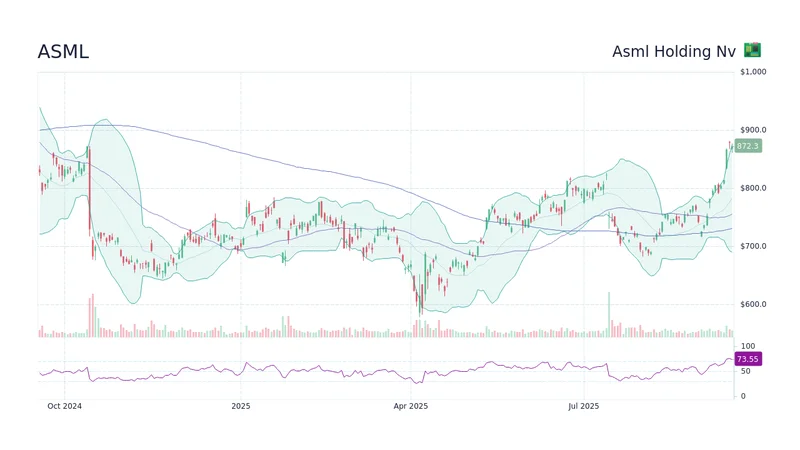
ASML's Future: The 2026 Vision and Why Its Next Breakthrough Changes Everything
ASMLIsn'tJustaStock,It'sthe...
-

The Nebius AI Breakthrough: Why This Changes Everything
It’snotoftenthatatypo—oratl...
-

The Great Up-Leveling: What's Happening Now and How We Step Up
Haveyoueverfeltlikeyou'redri...
- Search
- Recently Published
-
- Misleading Billions: The Truth About DeFi TVL - DeFi Reacts
- Secure Crypto: Unlock True Ownership - Reddit's HODL Guide
- Altcoin Season is "here.": What's *really* fueling the latest altcoin hype (and who benefits)?
- The Week's Pivotal Blockchain Moments: Unpacking the breakthroughs and their visionary future
- DeFi Token Performance Post-October Crash: What *actual* investors are doing and the brutal 2025 forecast
- Monad: A Deep Dive into its Potential and Price Trajectory – What Reddit is Saying
- MSTR Stock: Is This Bitcoin's Future on the Public Market?
- OpenAI News Today: Their 'Breakthroughs' vs. The Broken Reality
- Medicare 2026 Premium Surge: What We Know and Why It Matters
- Accenture: What it *really* is, its stock, and the AI game – What Reddit is Saying
- Tag list
-
- Blockchain (11)
- Decentralization (5)
- Smart Contracts (4)
- Cryptocurrency (26)
- DeFi (5)
- Bitcoin (30)
- Trump (5)
- Ethereum (8)
- Pudgy Penguins (5)
- NFT (5)
- Solana (5)
- cryptocurrency (6)
- XRP (3)
- Airdrop (3)
- MicroStrategy (3)
- Plasma (4)
- Zcash (7)
- Aster (10)
- qs stock (3)
- mstr stock (3)
- asts stock (3)
- investment advisor (4)
- morgan stanley (3)
- ChainOpera AI (4)
- federal reserve news today (4)