Casablanca Acquisitions: What's the Real Story?
Casablanca, Morocco, presents a mixed bag of economic signals. We've got Groupe Holged aggressively expanding its educational portfolio (another school, École La Prairie, snatched up), contrasted against a stock market that's ending the week in the red. The MASI, the main index, took a 0.71% hit, landing at 19,268.4 points. The question isn't just what happened, but why these seemingly opposing forces are at play.
Holged's strategy is clear: consolidate the Casablanca education market. They previously acquired Al Massalik (June 2023) and KENZI (May 2024). Patrick Larrivé and Mouna Boubia at Asafo & Co. are clearly racking up billable hours advising on these deals. But here's where it gets interesting: is this expansion driven by genuine demand, or is it a preemptive land grab in anticipation of future growth? The article doesn't specify enrollment numbers or revenue projections for these schools. We're left guessing whether this is a calculated bet or simply empire-building. Groupe Holged acquires another Casablanca educational facility.
The Casablanca Stock Exchange's (CSE) recent performance raises further questions. A 0.71% dip in the MASI isn't catastrophic, but it’s a signal. Market capitalization remains above the one-trillion-dirham mark (MAD 1,017.83 billion, to be exact), which provides some comfort. Risma climbed 7.65%, while Minière Touissit suffered a 9.99% plunge. These are just two of the most notable stocks. The trading volume for the day hit MAD 220.49 million, with Alliances Développement Immobilier leading the pack at MAD 47.59 million.
Why the market downturn? The article suggests "solid fundamentals and steady investor confidence," but that's the kind of boilerplate language that makes analysts like me reach for the smelling salts. What are these "solid fundamentals," exactly? Are they sustainable? And is investor confidence truly steady, or just wishful thinking? I've looked at hundreds of these market summaries, and the language used to describe the CSE's situation is unusually vague.
Decoding the Disconnect
The disconnect between Holged’s acquisitions and the CSE’s performance could be explained by several factors. Holged's moves represent long-term, private investments, while the stock market reflects short-term, public sentiment. Perhaps investors are wary of broader economic trends that aren't immediately impacting the private education sector. (Or maybe they just had a bad day of trading.)
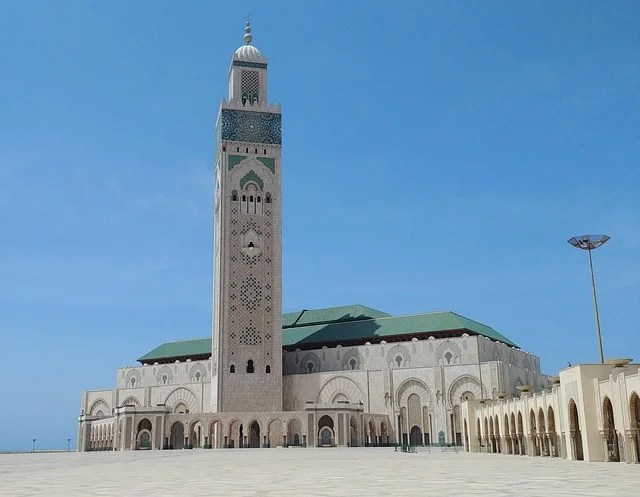
Another possibility: the market dip is sector-specific. The losses were led by Minière Touissit (mining) and Maroc Leasing (finance). This suggests potential concerns in those particular industries, rather than a systemic problem across the entire Moroccan economy.
Then there's the "Casablanca" effect. The city is clearly attracting investment, as evidenced by Casablanca's store opening in Los Angeles. The brand's Beverly Hills location, a 446 sqm space on North Canon Drive, is a testament to its global ambitions. Charaf Tajer's vision for the store blends Los Angeles culture with Ancient Greece-inspired architecture – a quirky juxtaposition, to say the least. But does this translate to real economic impact in Casablanca itself?
And this is the part of the analysis that I find genuinely puzzling: how do we reconcile these micro-level success stories (Holged, Casablanca's store opening) with the macro-level market jitters? The answer, I suspect, lies in understanding the type of capital flowing into Casablanca. Is it patient, long-term investment, or speculative, short-term bets? The data points to a blend of both, creating an inherently unstable situation.
Smoke and Mirrors?
The narrative of "steady investor confidence" feels increasingly like a carefully constructed facade. The data, while limited, suggests a more nuanced picture: a city attracting investment in specific sectors (education, luxury retail), but facing headwinds in others (mining, finance). The question isn't whether Casablanca is growing, but whether that growth is sustainable and evenly distributed. And whether the stock market reflects the true underlying health of the Moroccan economy, or just the collective anxieties of its investors.
The Numbers Don't Lie
Casablanca's story is one of selective growth and underlying uncertainty. The acquisitions are real, the market dip is real, and the "steady investor confidence" narrative is, at best, an oversimplification. Time will tell if Holged's bet pays off, or if the market's jitters foreshadow a larger correction.

-
The Manyu Phenomenon: What Connects the Viral Crypto, the Tennis Star, and the Anime Legend
It’seasytodismisssportsasmer...
-

The Business of Plasma Donation: How the Process Works and Who the Key Players Are
Theterm"plasma"suffersfromas...
-
ASML's Future: The 2026 Vision and Why Its Next Breakthrough Changes Everything
ASMLIsn'tJustaStock,It'sthe...
-

The Nebius AI Breakthrough: Why This Changes Everything
It’snotoftenthatatypo—oratl...
-

Secure Crypto: Unlock True Ownership - Reddit's HODL Guide
Alright,folks,let'stalkcrypto....
- Search
- Recently Published
-
- Misleading Billions: The Truth About DeFi TVL - DeFi Reacts
- Secure Crypto: Unlock True Ownership - Reddit's HODL Guide
- Altcoin Season is "here.": What's *really* fueling the latest altcoin hype (and who benefits)?
- The Week's Pivotal Blockchain Moments: Unpacking the breakthroughs and their visionary future
- DeFi Token Performance Post-October Crash: What *actual* investors are doing and the brutal 2025 forecast
- Monad: A Deep Dive into its Potential and Price Trajectory – What Reddit is Saying
- MSTR Stock: Is This Bitcoin's Future on the Public Market?
- OpenAI News Today: Their 'Breakthroughs' vs. The Broken Reality
- Medicare 2026 Premium Surge: What We Know and Why It Matters
- Accenture: What it *really* is, its stock, and the AI game – What Reddit is Saying
- Tag list
-
- Blockchain (11)
- Decentralization (5)
- Smart Contracts (4)
- Cryptocurrency (26)
- DeFi (5)
- Bitcoin (30)
- Trump (5)
- Ethereum (8)
- Pudgy Penguins (5)
- NFT (5)
- Solana (5)
- cryptocurrency (6)
- XRP (3)
- Airdrop (3)
- MicroStrategy (3)
- Plasma (4)
- Zcash (7)
- Aster (10)
- qs stock (3)
- mstr stock (3)
- asts stock (3)
- investment advisor (4)
- morgan stanley (3)
- ChainOpera AI (4)
- federal reserve news today (4)