Bittensor's Breakthrough Moment: What This Institutional Leap Means for the Future of Decentralized AI
For years, we’ve talked about the convergence of artificial intelligence and blockchain as a beautiful, abstract idea—a theoretical future where intelligence isn't owned by a handful of mega-corporations but is instead a shared, global utility. It was a powerful "what if." Well, I’m here to tell you that the "what if" is over. The future just got its stock ticker.
The recent launch of the Safello Bittensor Staked TAO ETP on the SIX Swiss Exchange is so much more than just another financial product. When I first saw the news—the formal Deutsche Digital Assets and Safello launch Safello Bittensor Staked TAO ETP: STAO announcement—I honestly just sat back in my chair, a slow grin spreading across my face. This is it. This is the moment a radical, decentralized AI network gets its official, regulated, pinstripe-suit-wearing invitation to the main stage of global finance. It's not just a sign of adoption; it's a formal recognition that the next great technological paradigm has arrived.
Forget the short-term price charts for a second. Yes, Bittensor's TAO token recently soared 32% in a week—a move captured in headlines like Bittensor’s TAO jumps 32% as investors eye institutional adoption and first halving—when the rest of the crypto market was getting absolutely hammered by the worst leverage wipeout in history. That’s impressive, sure. It shows resilience. But it’s the why that matters. This isn't just speculative froth. This is the sound of smart money waking up to a fundamental shift in how we’re going to build, access, and reward intelligence itself.
The Engine Under the Hood
Before this ETP, before Grayscale filed for a Bittensor Trust, and before DCG founder Barry Silbert announced a fund dedicated to its ecosystem, a quiet revolution was already well underway. You have to understand what Bittensor actually is to grasp the magnitude of this moment.
Think of it like this: Bitcoin created a decentralized system for validating financial transactions, rewarding "miners" for contributing their computing power to secure the network. Bittensor does the same thing, but for intelligence. It’s a vast, open marketplace where anyone can contribute their computing power or their unique AI models to a collective network—what they call subnets—and get rewarded in TAO for the value they provide. It’s a global, decentralized brain we are all building together, piece by piece, and the speed of this is just staggering—it means the gap between a good idea and a globally scaled AI service is closing faster than we can even comprehend.
This isn’t some far-off dream. It's happening now. Karia Samaroo of xTAO points out that the top three subnets are already generating what looks like over $20 million in annual recurring revenue. We’re talking about real products with real traction. One subnet, Ridges, has built an AI coding agent that achieved 73% accuracy on benchmark tests, nipping at the heels of giants like Anthropic’s Claude model.
This is the kind of breakthrough that reminds me why I got into this field in the first place. It’s not about building a slightly better chatbot. It’s about creating an entirely new economic and computational substrate for intelligence. The raw power was already there. The problem was the on-ramp. How do you get the world’s major financial players—the pension funds, the asset managers, the endowments—to participate in a revolution?

The Bridge to the Old World Is Officially Open
You build them a bridge they recognize. And that bridge is the STAO ETP.
An ETP, or Exchange-Traded Product, is essentially a stock-market-friendly package for a complex asset. In simpler terms, it lets a massive institutional investor buy exposure to TAO with a few clicks in their Bloomberg terminal, just like buying a share of Apple or a gold ETF. They don't need to worry about private keys, digital wallets, or the regulatory headaches of holding crypto directly. Deutsche Digital Assets and Safello just rolled out the red carpet for trillions of dollars in institutional capital.
This is a historical echo. Think back to the early internet. We had the wild, decentralized promise of ARPANET, but for most people, it was inaccessible. Then came the mainstream Internet Service Providers, offering a simple, reliable dial-up connection. That’s what this ETP represents. It’s the dial-up tone for institutional investment into decentralized AI.
And it’s not just a passive investment. This is a staked ETP. The TAO held by the fund is actively participating in the network, earning rewards that are reinvested back into the product. Investors aren't just betting on the price; they are becoming part of the network's economic fabric. They are, in a very real sense, helping to fund the growth of this global brain.
This changes the entire game. For years, the AI race has been defined by who has the most servers and the biggest bank account—a battle fought between a few tech behemoths in Silicon Valley. What happens when a decentralized, open-source competitor can suddenly tap into the world’s capital markets? What new forms of intelligence can we build when funding is no longer a bottleneck, but a free-flowing utility?
Of course, with this new power comes immense responsibility. We're not just building financial instruments; we're architecting the future of intelligence. Ensuring this network remains open, fair, and aligned with human values is the great work of our time. The code is only half the battle; the community and the governance are the other, more important half.
Looking ahead, there's even a "halving" event on the horizon around 2025, which will cut the issuance of new TAO in half, similar to Bitcoin's famous cycle. While some worry this could reduce incentives for contributors, history suggests that programmatic scarcity tends to bode well for an asset's long-term value. But frankly, the halving is a mechanical detail. The true story is the human one: the bridge has been built, the invitations have been sent, and the brightest minds in both finance and AI are starting to walk across.
A New Chapter for Intelligence Itself
This isn't just another crypto story. This is the financial world finally creating a legitimate, regulated pathway to invest in a completely new paradigm for creating and sharing knowledge. The launch of the STAO ETP isn’t the end of the story; it’s the explosive beginning of the second act. We've just handed the keys to the future of AI to a global, open-source community and backed them with the power of the world’s financial markets. Now, we get to see what they build. And I, for one, cannot wait.

-

The Business of Plasma Donation: How the Process Works and Who the Key Players Are
Theterm"plasma"suffersfromas...
-

The Manyu Phenomenon: What Connects the Viral Crypto, the Tennis Star, and the Anime Legend
It’seasytodismisssportsasmer...
-
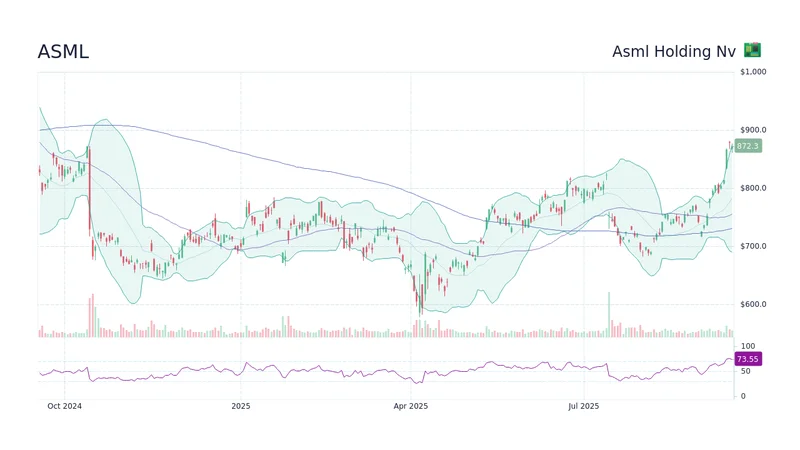
ASML's Future: The 2026 Vision and Why Its Next Breakthrough Changes Everything
ASMLIsn'tJustaStock,It'sthe...
-

The Nebius AI Breakthrough: Why This Changes Everything
It’snotoftenthatatypo—oratl...
-

The Great Up-Leveling: What's Happening Now and How We Step Up
Haveyoueverfeltlikeyou'redri...
- Search
- Recently Published
-
- Misleading Billions: The Truth About DeFi TVL - DeFi Reacts
- Secure Crypto: Unlock True Ownership - Reddit's HODL Guide
- Altcoin Season is "here.": What's *really* fueling the latest altcoin hype (and who benefits)?
- The Week's Pivotal Blockchain Moments: Unpacking the breakthroughs and their visionary future
- DeFi Token Performance Post-October Crash: What *actual* investors are doing and the brutal 2025 forecast
- Monad: A Deep Dive into its Potential and Price Trajectory – What Reddit is Saying
- MSTR Stock: Is This Bitcoin's Future on the Public Market?
- OpenAI News Today: Their 'Breakthroughs' vs. The Broken Reality
- Medicare 2026 Premium Surge: What We Know and Why It Matters
- Accenture: What it *really* is, its stock, and the AI game – What Reddit is Saying
- Tag list
-
- Blockchain (11)
- Decentralization (5)
- Smart Contracts (4)
- Cryptocurrency (26)
- DeFi (5)
- Bitcoin (30)
- Trump (5)
- Ethereum (8)
- Pudgy Penguins (5)
- NFT (5)
- Solana (5)
- cryptocurrency (6)
- XRP (3)
- Airdrop (3)
- MicroStrategy (3)
- Plasma (4)
- Zcash (7)
- Aster (10)
- qs stock (3)
- mstr stock (3)
- asts stock (3)
- investment advisor (4)
- morgan stanley (3)
- ChainOpera AI (4)
- federal reserve news today (4)