Alabama Power: What's Behind Their Recent PR and Infrastructure Moves
The Calculated Folksiness of a Power Monopoly
This October, Alabama Power engaged in a rather charming piece of corporate communication. As the air chilled, the utility released a series of "spooky" energy-saving myths, a campaign detailed in the article Alabama Power provides tips to dispel scary energy-savings myths during spooky season and beyond. The company warned customers about "energy vampires" and the folly of turning off a heating unit entirely, advising the use of power strips, cooking outdoors, and keeping air vents open. It’s practical, seasonal, and perfectly harmless advice.
At the same time, the company’s Environmental Affairs team was installing 30 bat houses across the state, each capable of sheltering up to 200 bats. It’s a commendable conservation effort, complete with a local school art contest. These are the stories that make for good local news segments: a friendly utility helping you save a few bucks while also saving a misunderstood nocturnal mammal.
But these narratives, however well-intentioned, exist in parallel with a much larger, more significant set of data points. While Alabama Power was teaching the public about phantom energy loads from their toasters, its parent company, Southern Company, was reporting third-quarter profits of $1.7 billion. While schoolchildren were painting bat boxes, the utility was selling $500 million in bonds to help finance the acquisition of a $622 million natural gas power plant.
The discrepancy here isn't one of hypocrisy, but of scale. And my analysis suggests the two narratives—the folksy, community-focused persona and the massive, capital-intensive financial reality—are not just parallel, but deeply interconnected. One serves to soften the public perception of the other.
A Masterclass in Narrative Management
Let’s be clear: the energy-saving advice is mostly sound. Your heating system does work harder to bring a cold house back to temperature, and unplugging unused electronics (the so-called "vampire" load) does reduce consumption. The problem is that focusing on these micro-optimizations is like trying to bail out a battleship with a teaspoon. The real story of your power bill isn't written by your coffee maker; it's written by multi-billion dollar capital expenditures and long-term generation strategy.
I've looked at hundreds of these corporate communications, and this particular strategy is a classic. You build a reservoir of public goodwill through small, tangible, and easily understood community engagement. The bat houses are a perfect example—a low-cost, high-visibility initiative that frames the company as an environmental steward. This creates a positive emotional association that is incredibly valuable when the time comes to discuss things the public finds less palatable, like rate adjustments, new power plants, and disruptive infrastructure projects.
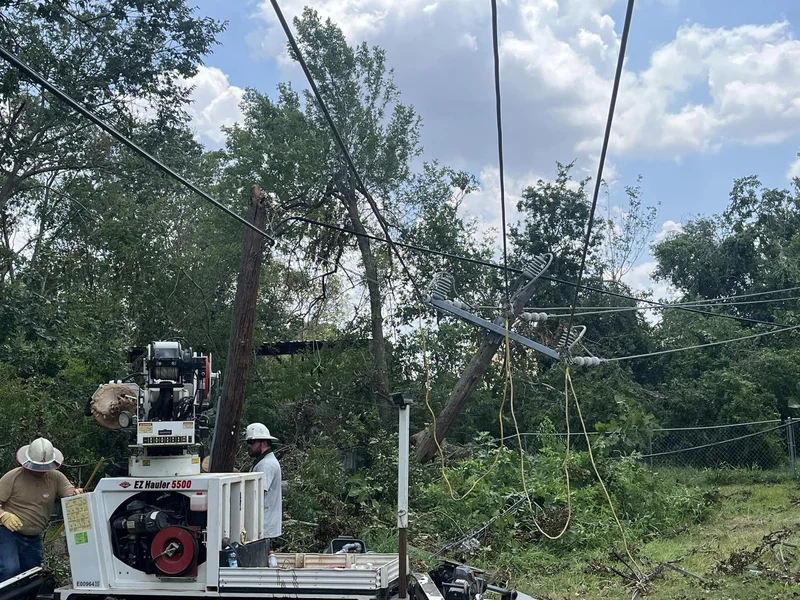
Consider the ongoing work on Valleydale Road. A local news report, Lane closures on Valleydale Road between now and Nov. 28 for utility relocation, details an Alabama Power utility relocation project that will cause disruptions for a month, all in advance of a road widening that won't even begin construction until late 2028. The total utility relocation is expected to cost $10 million and take up to three years. The full construction project is pegged at $45 million. This is the physical manifestation of the "strong, resilient infrastructure" the company talks about. It's slow, expensive, and inconvenient. It's much easier for the public to swallow that inconvenience when the company behind it is the same one that just gave them tips to save $5 on their next bill and helped save the local bats.
The math is simple. The cost of a few dozen bat houses is a rounding error. The public relations value, however, is significant. It’s an asymmetric bet that pays dividends in regulatory hearings and community meetings for years to come. But does this narrative accurately reflect the company's primary focus?
The data suggests otherwise. Southern Company just announced a pipeline of more than 50 gigawatts of new large load additions expected by the mid-2030s, largely driven by the voracious energy appetite of new data centers. To meet that demand, it’s planning five new natural gas combined cycle units and eleven battery storage facilities. In the last quarter alone, it signed contracts for over 2 GW of new demand in Alabama and Georgia. This isn't a company focused on trimming phantom loads from televisions; it's a company gearing up for one of the largest industrial energy expansions in recent memory. The acquisition of the 900 MW Lindsay Hill gas facility is a down payment on that future.
It's a future powered, in large part, by natural gas. While the bat houses are a nod to ecology, the balance sheet tells a story of massive, long-term investment in fossil fuel infrastructure. What is the projected carbon footprint of 50 gigawatts of new load? And how does that weigh against the ecological benefit of 30 bat houses? These are the questions that get lost when the conversation is dominated by spooky energy myths.
The Signal and the Noise
My conclusion, looking at the numbers, is that we're being presented with a carefully curated set of "noise" to distract from the "signal." The noise is the friendly consumer advice, the Halloween puns, and the conservation projects. It’s designed to be relatable and to position the utility as a helpful partner in your daily life. The signal is the financial report: billions in profit, massive capital investments in fossil fuel generation, and a strategy built around accommodating exponential growth from industrial customers like data centers. The real conversation shouldn't be about whether to unplug your toaster. It should be about who pays for this massive infrastructure build-out and what it means for Alabama's energy future for the next 30 years. The folksy PR isn't the story; it's the anesthetic administered before the surgery.

-

The Business of Plasma Donation: How the Process Works and Who the Key Players Are
Theterm"plasma"suffersfromas...
-
The Manyu Phenomenon: What Connects the Viral Crypto, the Tennis Star, and the Anime Legend
It’seasytodismisssportsasmer...
-
ASML's Future: The 2026 Vision and Why Its Next Breakthrough Changes Everything
ASMLIsn'tJustaStock,It'sthe...
-

The Nebius AI Breakthrough: Why This Changes Everything
It’snotoftenthatatypo—oratl...
-

The Great Up-Leveling: What's Happening Now and How We Step Up
Haveyoueverfeltlikeyou'redri...
- Search
- Recently Published
-
- Misleading Billions: The Truth About DeFi TVL - DeFi Reacts
- Secure Crypto: Unlock True Ownership - Reddit's HODL Guide
- Altcoin Season is "here.": What's *really* fueling the latest altcoin hype (and who benefits)?
- The Week's Pivotal Blockchain Moments: Unpacking the breakthroughs and their visionary future
- DeFi Token Performance Post-October Crash: What *actual* investors are doing and the brutal 2025 forecast
- Monad: A Deep Dive into its Potential and Price Trajectory – What Reddit is Saying
- MSTR Stock: Is This Bitcoin's Future on the Public Market?
- OpenAI News Today: Their 'Breakthroughs' vs. The Broken Reality
- Medicare 2026 Premium Surge: What We Know and Why It Matters
- Accenture: What it *really* is, its stock, and the AI game – What Reddit is Saying
- Tag list
-
- Blockchain (11)
- Decentralization (5)
- Smart Contracts (4)
- Cryptocurrency (26)
- DeFi (5)
- Bitcoin (30)
- Trump (5)
- Ethereum (8)
- Pudgy Penguins (5)
- NFT (5)
- Solana (5)
- cryptocurrency (6)
- XRP (3)
- Airdrop (3)
- MicroStrategy (3)
- Plasma (4)
- Zcash (7)
- Aster (10)
- qs stock (3)
- mstr stock (3)
- asts stock (3)
- investment advisor (4)
- morgan stanley (3)
- ChainOpera AI (4)
- federal reserve news today (4)