The Aster Token Listing: An Analysis of Price, Predictions, and Investment Viability
**Generated Title: Aster's $2 Billion Launch: All Volume, No Velocity?**
The crypto market has a short memory and an insatiable appetite for the next big thing. This week, that role was filled by Aster (ASTER), a new decentralized exchange token that exploded onto the scene with a Kraken listing and a headline-grabbing metric: over $2 billion in trading volume within days of its debut. On the surface, it’s the kind of launch that marketing teams dream of. The numbers scream momentum, adoption, and an investor frenzy.
But when you peel back the first layer of data, the narrative starts to fray. The initial price action tells a story that is far less explosive and far more puzzling. After listing on October 20th at approximately $1.16, the token didn’t rocket upward. It drifted sideways, settling around $1.10 by mid-week. This presents a fundamental discrepancy. How does an asset generate billions in trading activity without a corresponding, or even moderate, positive price movement? It’s like watching the tachometer on a supercar redline at 9,000 RPM while the car itself remains stuck in neutral. The noise is deafening, but the vehicle isn't actually going anywhere.
The Volume Anomaly
Let’s be precise. The reported figure was "more than $2 billion" in total trades across both spot and derivatives markets. On its own, that number places ASTER among the most active new listings of the year. Decentralized exchanges were particularly busy, with Hyperliquid alone processing over $700 million in daily transactions. This is where my analysis hits a snag. I've looked at hundreds of these token launches, and a volume-to-price-action disconnect of this magnitude is unusual. Typically, such immense volume, if driven by genuine demand, would create significant upward pressure on the price.
Instead, we saw a slight depreciation. This suggests that the nature of the trading activity may not be what the headline figure implies. Was this $2 billion a reflection of a broad base of investors buying in for the long haul? The price action suggests not. More likely, a significant portion of this volume was composed of high-frequency trading, short-term speculation, or what some analysts diplomatically call "recycled trades." These are scenarios where capital churns rapidly without resulting in a net inflow of new, committed investment.
The question isn't whether the volume was real, but what it represented. Was it a signal of deep, sustainable liquidity, or was it the financial equivalent of a flash mob—intense, fleeting, and ultimately leaving little trace? Without access to the order book's raw data, it's impossible to know for sure. But the price chart provides a powerful clue, and it points away from a simple story of overwhelming demand.

Hype vs. Headwinds
The narrative surrounding ASTER is built on a solid foundation of DeFi buzzwords: a cross-chain DEX, MEV-resistant execution, and up to 1,000x leverage. The platform’s merger of Astherus and APX Finance and its backing from major players like Binance certainly add to its credibility. An Aster (Aster) Price Prediction 2025, 2026 to 2030, for example, is predictably bullish, with some models projecting a price of about $1.88 by year's end—to be more exact, $1.8860, a potential ROI of 68.92%.
This micro-level optimism, however, is running straight into a wall of macroeconomic and market-wide headwinds. The broader crypto market is in a state of flux. Bitcoin recently corrected sharply from a high above $125,000 down to the $107,000 level, liquidating billions in leveraged positions along the way. While institutional forecasts for Bitcoin remain strong (with some banks projecting a year-end target of $200k), the immediate sentiment is cautious. Adding to the uncertainty are renewed U.S.-China trade tensions, sparked by President Trump’s threat of 100% tariffs, which could easily trigger a broader risk-off move in global markets.
Then there's the Federal Reserve. The market is pricing in further rate cuts, which theoretically pushes capital into riskier assets like crypto. (The Fed already cut its key rate by 0.25% on September 17.) But this is not a guaranteed tailwind. With a record $7.6 trillion sitting in U.S. money market funds, investors are clearly holding onto cash, waiting for a clearer signal. Will that capital flow into a brand-new, unproven DeFi token or into more established assets? History suggests the latter, at least initially. ASTER's success, therefore, depends not just on its own technology but on its ability to capture investor confidence in an environment where that confidence is a scarce commodity.
A High-RPM Stall
So, what's the verdict on ASTER? The project's technical specifications are intriguing, and the support from major exchanges provides a crucial layer of liquidity and legitimacy. But the initial market data is a flashing yellow light. The $2 billion volume figure feels more like a vanity metric than a true indicator of investor conviction. Price is truth, and right now, the price is telling us that for every buyer at $1.16, there was a seller ready to meet them. There has been no breakout, no supply squeeze, just an enormous amount of churn within a narrow price band.
The real test for ASTER will come in the following weeks, once the launch-day hype fades and the high-frequency bots move on to the next shiny object. Can it establish a clear uptrend and break through the initial resistance at $1.40? Or will it become just another token trapped in a low-volatility drift, its spectacular launch volume a distant, puzzling memory? Until we see a decisive price move backed by sustained net inflows, my analysis remains unchanged: ASTER has started its engine with a deafening roar, but it has yet to prove it can actually move down the track.

-

The Business of Plasma Donation: How the Process Works and Who the Key Players Are
Theterm"plasma"suffersfromas...
-

The Manyu Phenomenon: What Connects the Viral Crypto, the Tennis Star, and the Anime Legend
It’seasytodismisssportsasmer...
-
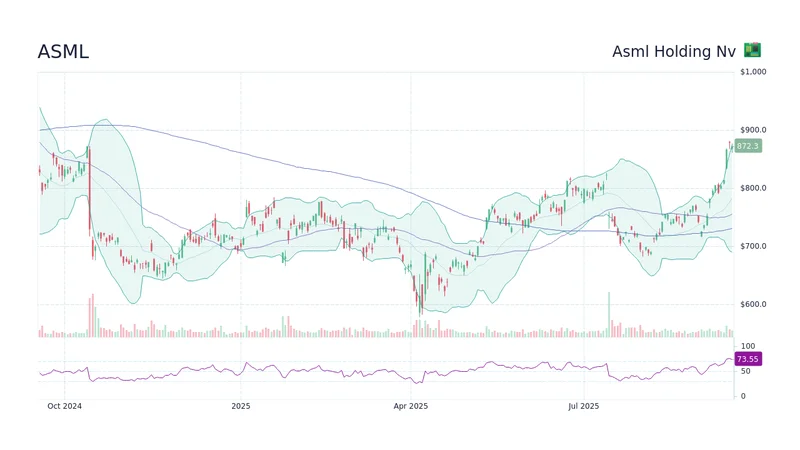
ASML's Future: The 2026 Vision and Why Its Next Breakthrough Changes Everything
ASMLIsn'tJustaStock,It'sthe...
-

The Nebius AI Breakthrough: Why This Changes Everything
It’snotoftenthatatypo—oratl...
-

The Great Up-Leveling: What's Happening Now and How We Step Up
Haveyoueverfeltlikeyou'redri...
- Search
- Recently Published
-
- Misleading Billions: The Truth About DeFi TVL - DeFi Reacts
- Secure Crypto: Unlock True Ownership - Reddit's HODL Guide
- Altcoin Season is "here.": What's *really* fueling the latest altcoin hype (and who benefits)?
- The Week's Pivotal Blockchain Moments: Unpacking the breakthroughs and their visionary future
- DeFi Token Performance Post-October Crash: What *actual* investors are doing and the brutal 2025 forecast
- Monad: A Deep Dive into its Potential and Price Trajectory – What Reddit is Saying
- MSTR Stock: Is This Bitcoin's Future on the Public Market?
- OpenAI News Today: Their 'Breakthroughs' vs. The Broken Reality
- Medicare 2026 Premium Surge: What We Know and Why It Matters
- Accenture: What it *really* is, its stock, and the AI game – What Reddit is Saying
- Tag list
-
- Blockchain (11)
- Decentralization (5)
- Smart Contracts (4)
- Cryptocurrency (26)
- DeFi (5)
- Bitcoin (30)
- Trump (5)
- Ethereum (8)
- Pudgy Penguins (5)
- NFT (5)
- Solana (5)
- cryptocurrency (6)
- XRP (3)
- Airdrop (3)
- MicroStrategy (3)
- Plasma (4)
- Zcash (7)
- Aster (10)
- qs stock (3)
- mstr stock (3)
- asts stock (3)
- investment advisor (4)
- morgan stanley (3)
- ChainOpera AI (4)
- federal reserve news today (4)