Base Power's Billion-Dollar Plan: How They're Reinventing the American Power Grid
Let’s talk about the electric grid. For most of us, it’s an abstraction. A thing that just is. You flip a switch, the light comes on. You plug in your phone, it charges. It’s the invisible lifeblood of modern civilization, and we don’t think about it until the moment it fails. And lately, it’s been failing a lot. The hum of the refrigerator goes silent. The Wi-Fi router blinks off. In that sudden, unnerving quiet, you realize how fragile it all is—a vast, centralized, century-old machine groaning under 21st-century strain.
For years, we’ve been patching it, propping it up, talking about "smart grids" in vague, futuristic terms. But a press release that landed this week from an Austin-based company called Base Power—Base Power Raises $1 Billion Series C to Build the Future of American Power—didn't just talk about the future. It came with a $1 billion check and a plan so audacious, so fundamentally different, that it feels less like a patch and more like a complete system reboot.
This isn't just another story about a startup raising a mountain of cash. I see a lot of those. This is different. This is a signal that the paradigm for how we generate, store, and distribute energy is finally, truly, beginning to shift. Base Power isn’t just selling batteries; they’re building a new kind of grid from the ground up, starting not in some colossal power plant, but in your neighbor’s garage.
From Consumer to Keystone
So, what is Base Power actually doing? On the surface, it’s simple. They operate as a licensed electricity provider in Texas. Homeowners pay a monthly fee, and in return, they get their power and a home battery system installed—no rooftop solar required. When the grid is humming along, everything is normal. When the grid goes down, the battery seamlessly kicks in and keeps the lights on. It’s a fantastic insurance policy against the increasingly common blackouts that plague states like Texas.
But that’s just the first layer. The real genius is what happens behind the scenes. They’re building a Virtual Power Plant, or VPP—in simpler terms, it's like an orchestra where thousands of individual home batteries are conducted in perfect harmony to support the entire grid. Instead of one massive, vulnerable power plant, you have a distributed, resilient network of thousands of tiny ones. When demand spikes on a hot summer afternoon, Base can instantly draw a little bit of power from each home in its network, creating a massive surge of supply to prevent a brownout.
This completely flips the script on our relationship with energy. For a hundred years, we’ve been passive consumers, sitting at the very end of the line. This model turns homes into active, critical keystones of the entire energy infrastructure. It’s the architectural difference between a monolithic mainframe computer—powerful but singular and vulnerable—and the internet, a distributed network of nodes that can survive even if parts of it go down. What does it mean for our society when every home is not just a point of consumption, but a source of stability? What new possibilities open up when the grid becomes a two-way conversation instead of a one-way lecture?
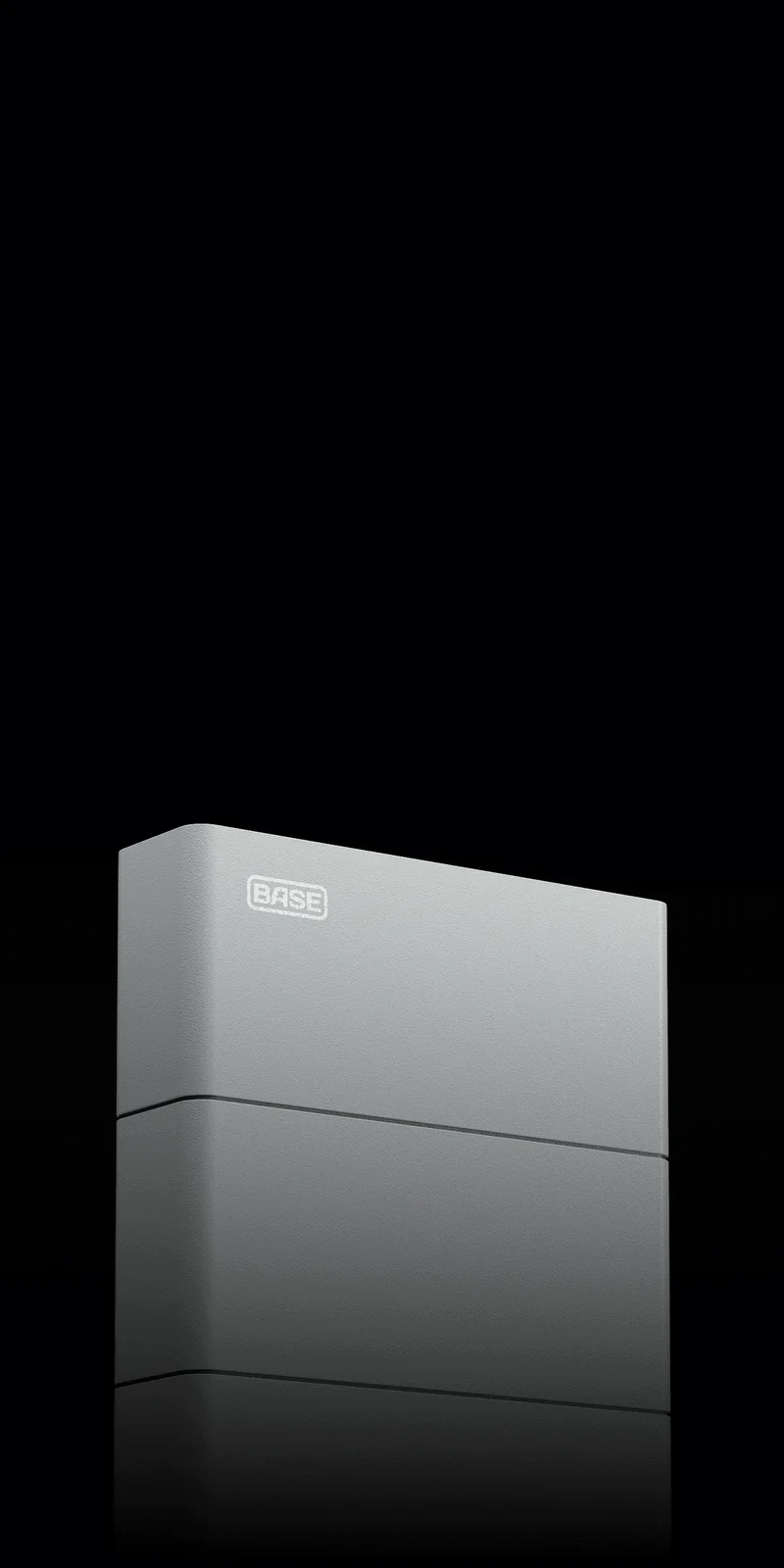
When I first saw the numbers—over 100 MWh of battery capacity deployed in less than two years—I honestly just sat back in my chair, speechless. That pace is staggering, driven by partnerships with major homebuilders like Lennar and a genuine, organic demand from people who are simply tired of being left in the dark. This isn't a theoretical white paper; it's happening now, in real neighborhoods across Dallas, Houston, and Austin.
The New American Factory
The part of this announcement that truly lit me up, though, wasn't just the software or the network. It was the hardware. It was the concrete plan to build a massive factory for energy storage and power electronics right in the heart of downtown Austin. And the location they chose? The former printing press of the Austin American-Statesman newspaper. The symbolism is just perfect. They are literally replacing the machinery that distributed yesterday's information with the machinery that will distribute tomorrow's energy.
This is the kind of breakthrough that reminds me why I got into this field in the first place. We’re not just importing boxes from overseas; we’re building the muscle to reindustrialize America. Listen to the company's COO, Justin Lopas: “The only way to add capacity to the grid is physically deploying hardware, and we need to make that here in the U.S., ourselves.” This isn't just about building a factory, it's about building the systems to build factories—the tools, the software, the human expertise, the supply chains—and that's the kind of long-term thinking that gives me real, tangible hope for our industrial future.
This move is a direct answer to one of the biggest questions of our time: Can we still build big, important things in America? The answer from Base Power, backed by a billion dollars, is an unequivocal "yes." It’s a modern-day echo of the printing press itself. Gutenberg’s invention took information out of the hands of the few and distributed it to the many, sparking a revolution in human thought. What happens when we do the same thing with energy—the fundamental resource that powers everything else?
Of course, with this new power comes new responsibilities. As we weave our homes into the very fabric of our national infrastructure, we have to ask the right questions. How do we ensure equity in a system where grid stability could become tied to homeownership? How do we protect the data and privacy of a family whose energy usage is now part of a vast, interconnected network? These aren't trivial concerns, and building a just and secure system is as critical as building a functional one. But these are the problems of an abundant future, and they are far better problems to have than the ones we face with our decaying, brittle system today.
We're Finally Building Tomorrow's Power
Let's be clear. What Base Power is doing is more than a business model. It is the beginning of the end for the centralized, top-down grid that defined the 20th century. This $1 billion isn't just an investment in a company; it's a down payment on a future where energy is abundant, reliable, and democratized. It’s a future where resilience is built into the very architecture of our communities, not bolted on as an afterthought. We are witnessing a foundational shift, moving from a fragile monologue of power to a resilient dialogue. And it’s happening faster than any of us thought possible. The future of energy isn’t coming. It’s being built. Right now. In a factory in Texas.

-

The Business of Plasma Donation: How the Process Works and Who the Key Players Are
Theterm"plasma"suffersfromas...
-

The Manyu Phenomenon: What Connects the Viral Crypto, the Tennis Star, and the Anime Legend
It’seasytodismisssportsasmer...
-
ASML's Future: The 2026 Vision and Why Its Next Breakthrough Changes Everything
ASMLIsn'tJustaStock,It'sthe...
-
The Nebius AI Breakthrough: Why This Changes Everything
It’snotoftenthatatypo—oratl...
-

The Great Up-Leveling: What's Happening Now and How We Step Up
Haveyoueverfeltlikeyou'redri...
- Search
- Recently Published
-
- Misleading Billions: The Truth About DeFi TVL - DeFi Reacts
- Secure Crypto: Unlock True Ownership - Reddit's HODL Guide
- Altcoin Season is "here.": What's *really* fueling the latest altcoin hype (and who benefits)?
- The Week's Pivotal Blockchain Moments: Unpacking the breakthroughs and their visionary future
- DeFi Token Performance Post-October Crash: What *actual* investors are doing and the brutal 2025 forecast
- Monad: A Deep Dive into its Potential and Price Trajectory – What Reddit is Saying
- MSTR Stock: Is This Bitcoin's Future on the Public Market?
- OpenAI News Today: Their 'Breakthroughs' vs. The Broken Reality
- Medicare 2026 Premium Surge: What We Know and Why It Matters
- Accenture: What it *really* is, its stock, and the AI game – What Reddit is Saying
- Tag list
-
- Blockchain (11)
- Decentralization (5)
- Smart Contracts (4)
- Cryptocurrency (26)
- DeFi (5)
- Bitcoin (30)
- Trump (5)
- Ethereum (8)
- Pudgy Penguins (5)
- NFT (5)
- Solana (5)
- cryptocurrency (6)
- XRP (3)
- Airdrop (3)
- MicroStrategy (3)
- Plasma (4)
- Zcash (7)
- Aster (10)
- qs stock (3)
- mstr stock (3)
- asts stock (3)
- investment advisor (4)
- morgan stanley (3)
- ChainOpera AI (4)
- federal reserve news today (4)