Merrill Lynch's $9.5M Fraud Case: Why It's a Glimpse Into the Future of Financial Trust
The Cracks in the Fortress
It starts with a story that feels almost like a cliché, a grim headline you skim past. A two-time Pro Bowl football player, Reshad Jones, a man who earned over $56 million through sheer athletic grit, finds himself fleeced. His trusted financial advisor at one of the world's most prestigious firms, Merrill Lynch, allegedly siphons off millions. We’re talking $2.59 million vanishing into a black hole of strip clubs, luxury travel, and jewelry. The details are sordid, predictable, and deeply human. The case was recently settled, with a report confirming that Merrill Lynch to pay ex-Pro Bowler Reshad Jones $9.5M to settle fraud suit. Another advisor, Vincent Ferrara, also formerly of Merrill, faces a separate $2 million complaint for misappropriating funds.
It’s easy to see these as isolated incidents, the tragic but inevitable result of a few bad apples. But I don’t think that’s the real story here. I’ve spent my life studying systems—complex, interconnected networks, from neural nets to the architecture of the internet. And when I see repeated, systemic failures like these, my mind goes to a different place. It’s not about the individual bugs; it’s about the code itself. What if the very structure of these financial fortresses, these so-called "wirehouses"—basically, the giant, legacy institutions that have dominated Wall Street for a century—is the true vulnerability? Are we just watching the inevitable decay of an outdated operating system?
These stories of fraud aren't just about stolen money. They’re about a catastrophic breach of the most valuable asset in any system: trust. When you hand your life’s savings to a massive institution, you aren't just buying stocks and bonds. You're buying the promise of safety, of oversight, of a fortress with walls so high and systems so robust that no single person could possibly bring them down. Yet, time and again, we see that the ghost in the machine isn't a technical glitch; it's a human one, exploiting the opacity and complexity of a system that was supposed to protect us. It begs the question: is the fortress actually a cage, for both the client and the ethical advisor trapped within it?
The Great Escape
Just when you start to lose hope in the system, a different kind of story emerges. It’s not a headline about fraud; it’s a quiet legal ruling out of a federal court in Georgia. Merrill Lynch tried to block a massive team of its own advisors, a group called OpenArc managing a staggering $128 billion in assets, from leaving to start their own independent firm. Merrill requested a temporary restraining order, the legal equivalent of building a wall around its departing talent. And the judge said no.
I have to be honest, reading about the OpenArc team successfully facing down a giant like Merrill Lynch gave me chills. It’s the classic David vs. Goliath story, but for the digital age of finance. For decades, the wirehouses have held onto their top talent using a powerful weapon: fear. The threat of a career-ending lawsuit, the sheer complexity of moving billions of dollars, the narrative that "it's just too difficult"… it was enough to keep even the most ambitious advisors in their seats. As one expert put it, “This was a fear-based industry for decades and fear just lost in court.”

This isn't just a legal victory; it's a paradigm shift, confirming what many in the industry believe: Advisors say Merrill legal loss in OpenArc case shifts RIA balance of power. Think of the old wirehouse model as a mainframe computer from the 1970s. It’s a monolithic, closed system. All the processing power, all the data, and all the control reside in one central place. It’s powerful, yes, but it’s also rigid, opaque, and incredibly restrictive for the user. The advisors are like programmers forced to work with punch cards, their connection to the client filtered through layers of bureaucracy and institutional self-interest.
What we're seeing now, with the rise of independent Registered Investment Advisors (RIAs) powered by open platforms like Charles Schwab, is the personal computer revolution of wealth management. It's the great unbundling. Suddenly, advisors can own their own business, choose their own technology, and—most importantly—build a fiduciary relationship directly with their clients, free from the conflicts of a massive parent company. The OpenArc ruling didn't just let one team go free; it sent a message to every advisor in every wirehouse office in the country: the mainframe is obsolete. You can have your own PC now.
Of course, this new freedom comes with immense responsibility. As one lawyer wisely cautioned, a move like this requires meticulous planning and flawless execution. You have to follow every rule, dot every 'i', and ensure the transition is seamless for the client. But the key takeaway is that it can be done. The psychological barrier has been shattered—this single event proves that independence isn't a fantasy for a small-timer; it’s a viable, scalable path for the biggest players in the game. It’s the kind of breakthrough that reminds me why I got into studying systems in the first place, because it shows how a single crack can precede a seismic shift that changes everything.
The Trust Protocol
When you strip it all away, the stories of fraud and the stories of freedom are about the same thing: the architecture of trust. The old model was built on institutional trust. You trusted the brand name on the building, the century of history, the sheer size of the fortress. But that model is failing. Its vulnerabilities are being exposed, not by hackers, but by its own employees. The trust protocol is broken.
The future, the one being built by teams like OpenArc, is based on a different architecture. It’s a decentralized, human-scale model built on personal trust between a client and their advisor, empowered by transparent technology. It’s a shift from trusting the fortress to trusting the artisan. This isn't just a better business model; it’s a more resilient, more ethical, and profoundly more human way of handling something as deeply personal as our financial futures. The walls of the old guard aren't just cracked; they're becoming irrelevant.

-

The Business of Plasma Donation: How the Process Works and Who the Key Players Are
Theterm"plasma"suffersfromas...
-

The Manyu Phenomenon: What Connects the Viral Crypto, the Tennis Star, and the Anime Legend
It’seasytodismisssportsasmer...
-
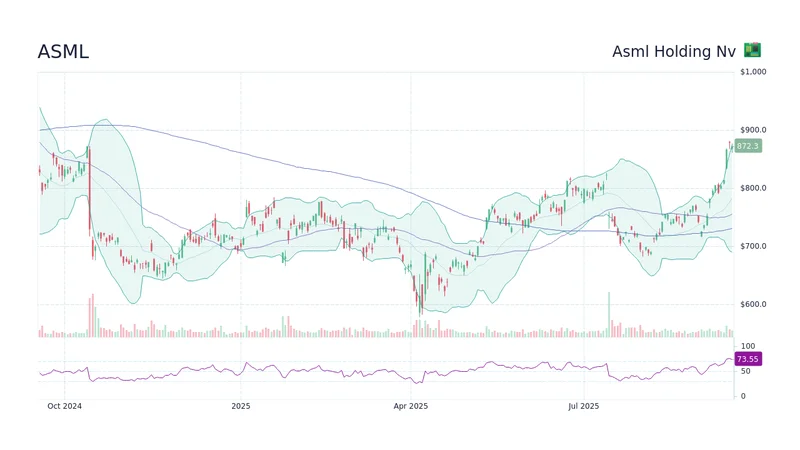
ASML's Future: The 2026 Vision and Why Its Next Breakthrough Changes Everything
ASMLIsn'tJustaStock,It'sthe...
-

The Nebius AI Breakthrough: Why This Changes Everything
It’snotoftenthatatypo—oratl...
-

The Great Up-Leveling: What's Happening Now and How We Step Up
Haveyoueverfeltlikeyou'redri...
- Search
- Recently Published
-
- Misleading Billions: The Truth About DeFi TVL - DeFi Reacts
- Secure Crypto: Unlock True Ownership - Reddit's HODL Guide
- Altcoin Season is "here.": What's *really* fueling the latest altcoin hype (and who benefits)?
- The Week's Pivotal Blockchain Moments: Unpacking the breakthroughs and their visionary future
- DeFi Token Performance Post-October Crash: What *actual* investors are doing and the brutal 2025 forecast
- Monad: A Deep Dive into its Potential and Price Trajectory – What Reddit is Saying
- MSTR Stock: Is This Bitcoin's Future on the Public Market?
- OpenAI News Today: Their 'Breakthroughs' vs. The Broken Reality
- Medicare 2026 Premium Surge: What We Know and Why It Matters
- Accenture: What it *really* is, its stock, and the AI game – What Reddit is Saying
- Tag list
-
- Blockchain (11)
- Decentralization (5)
- Smart Contracts (4)
- Cryptocurrency (26)
- DeFi (5)
- Bitcoin (30)
- Trump (5)
- Ethereum (8)
- Pudgy Penguins (5)
- NFT (5)
- Solana (5)
- cryptocurrency (6)
- XRP (3)
- Airdrop (3)
- MicroStrategy (3)
- Plasma (4)
- Zcash (7)
- Aster (10)
- qs stock (3)
- mstr stock (3)
- asts stock (3)
- investment advisor (4)
- morgan stanley (3)
- ChainOpera AI (4)
- federal reserve news today (4)