Morgan Stanley's Q3 Earnings Beat: What This Signals for Tech & the Future of Investing
It’s easy to glance at a headline like Morgan Stanley posts massive third-quarter earnings beat and file it away under “business as usual.” Another Wall Street giant does well, the stock ticks up, the world keeps spinning. But I’m telling you, if you look closer at the numbers that came out this week, you’re not just seeing a quarterly report. You’re seeing a tremor from the future. You’re seeing the first concrete evidence of a paradigm shift that we’ve been talking about in abstract terms for years.
This wasn’t just a good quarter for Morgan Stanley. It was a statement. While the headlines focused on investment banking fees, the real story—the one that should make the hair on your arms stand up—is buried in a single, staggering number: $4.12 billion. That’s the revenue they generated from trading stocks. In just three months. When I first saw that number, I honestly just sat back in my chair, speechless. That isn't just a market rally or a few clever bets. That’s the sound of a new kind of engine roaring to life, an engine that runs not on greed or fear, but on pure, unadulterated data and processing power.
What we're witnessing is the quiet coronation of the algorithm as the new king of capital. The report mentions that the surge came as "markets kept on edge." For human traders, an edgy, volatile market is a minefield of anxiety and second-guessing. But for a sophisticated AI, volatility isn't a threat; it's an ocean of opportunity. It’s the perfect environment to execute thousands of trades per second, capitalizing on microscopic price fluctuations that a human brain can't even perceive, let alone act on. Are we truly prepared for a world where the stability of our global economy rests on the logic of machines that think in a language we can no longer fully comprehend?
The Ghost in the Trading Machine
Let’s be clear about what this means. The iconic image of the trading floor—men in suits shouting, waving paper, running on adrenaline and instinct—is now a relic, a museum piece. The real action today happens in silent, refrigerated server farms in places like Mahwah, New Jersey. The battlefield isn't a physical floor; it's the fiber-optic cables stretching between data centers. Morgan Stanley’s success is a testament to their mastery of this new domain.
This is the new financial ecosystem, and it operates on principles that are fundamentally different from the ones that governed markets for the last century. It’s built on incredibly complex quantitative models—in simpler terms, they’re using mathematics and machine learning to build predictive maps of human economic behavior, and they’re getting terrifyingly good at it. This isn't about one brilliant trader making a gut call. It’s about a team of PhDs in physics and computer science designing an autonomous system that can learn, adapt, and exploit patterns in the market at light speed.
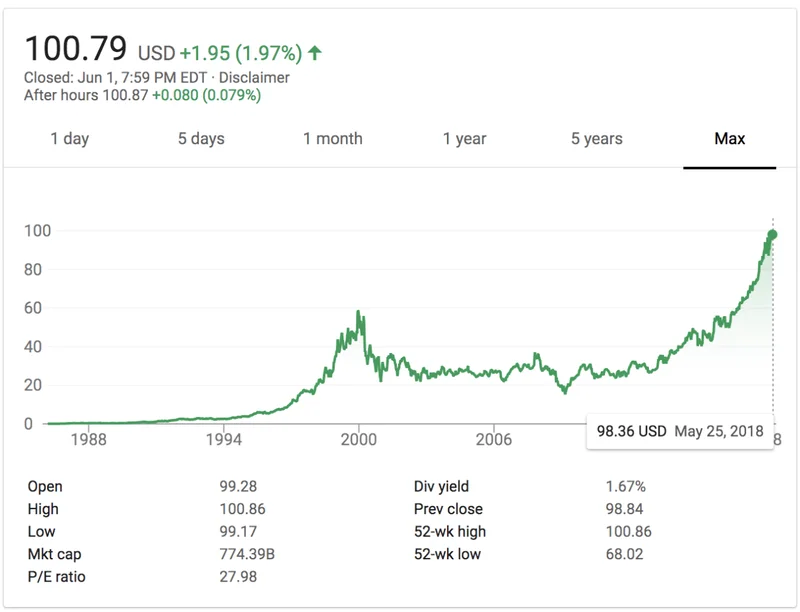
This is a complete paradigm shift, a move from intuition to pure data-driven probability and the speed of this evolution is just staggering—it means the gap between a human financial analyst and an advanced trading AI is quickly becoming an unbridgeable chasm. Think of it like this: the old market was a chess game played between grandmasters. The new market is a grandmaster playing against a supercomputer that can calculate every possible move, ten moves ahead, in the blink of an eye. The human is still in the room, but are they really the one playing the game anymore? What new purpose do we find for human ingenuity when the machine can so clearly outperform us in the execution?
A New Renaissance of Value
This moment feels, to me, very much like the invention of the printing press. Before Gutenberg, knowledge was hoarded, copied slowly by hand, and controlled by a select few. The press didn't just make more books; it fundamentally rewired society by democratizing information. It unleashed centuries of innovation, literacy, and progress. We are standing at the threshold of a similar transformation. Algorithmic trading isn't just about making money faster; it's a profound change in how we process and act on information at a global scale.
Of course, with this immense power comes an equally immense responsibility. We’ve seen glimpses of the risks, like the 2010 "Flash Crash," where automated systems created a terrifying, trillion-dollar market plunge in minutes. We are building the most powerful economic engines in human history. We have to be the ones to build the safety features, the ethical firewalls, and the oversight to ensure these tools serve humanity, not the other way around. The challenge isn't just in writing smarter code, but in cultivating the wisdom to deploy it correctly.
But I refuse to let that caution curdle into fear. What I see in Morgan Stanley’s report is not an omen, but a promise. It’s the promise of a world where we can use this incredible computational power to manage systems far too complex for the unassisted human mind. Imagine applying these same principles not just to stock markets, but to optimizing global supply chains, modeling climate change solutions, or predicting and preventing the next pandemic. This is the "Big Idea" that's hiding inside that earnings report. We are building the tools that will allow us to tackle the greatest challenges of our time. We are moving from an economy of reaction to an economy of prediction, and that changes everything.
The Future's Balance Sheet
When you strip away the noise, the story of this quarter is simple: humanity is successfully building artificial minds to manage the complexity we ourselves have created. This isn't the end of human relevance; it's the beginning of its augmentation. We are not being replaced. We are being upgraded. The real value, the true capital of the 21st century, won't be measured in dollars alone, but in the elegance of the code we write and the vision with which we deploy it. And from where I'm sitting, the returns are looking astronomical.

-

The Business of Plasma Donation: How the Process Works and Who the Key Players Are
Theterm"plasma"suffersfromas...
-
ASML's Future: The 2026 Vision and Why Its Next Breakthrough Changes Everything
ASMLIsn'tJustaStock,It'sthe...
-

The Manyu Phenomenon: What Connects the Viral Crypto, the Tennis Star, and the Anime Legend
It’seasytodismisssportsasmer...
-

The Nebius AI Breakthrough: Why This Changes Everything
It’snotoftenthatatypo—oratl...
-
Secure Crypto: Unlock True Ownership - Reddit's HODL Guide
Alright,folks,let'stalkcrypto....
- Search
- Recently Published
-
- Misleading Billions: The Truth About DeFi TVL - DeFi Reacts
- Secure Crypto: Unlock True Ownership - Reddit's HODL Guide
- Altcoin Season is "here.": What's *really* fueling the latest altcoin hype (and who benefits)?
- The Week's Pivotal Blockchain Moments: Unpacking the breakthroughs and their visionary future
- DeFi Token Performance Post-October Crash: What *actual* investors are doing and the brutal 2025 forecast
- Monad: A Deep Dive into its Potential and Price Trajectory – What Reddit is Saying
- MSTR Stock: Is This Bitcoin's Future on the Public Market?
- OpenAI News Today: Their 'Breakthroughs' vs. The Broken Reality
- Medicare 2026 Premium Surge: What We Know and Why It Matters
- Accenture: What it *really* is, its stock, and the AI game – What Reddit is Saying
- Tag list
-
- Blockchain (11)
- Decentralization (5)
- Smart Contracts (4)
- Cryptocurrency (26)
- DeFi (5)
- Bitcoin (30)
- Trump (5)
- Ethereum (8)
- Pudgy Penguins (5)
- NFT (5)
- Solana (5)
- cryptocurrency (6)
- XRP (3)
- Airdrop (3)
- MicroStrategy (3)
- Plasma (4)
- Zcash (7)
- Aster (10)
- qs stock (3)
- mstr stock (3)
- asts stock (3)
- investment advisor (4)
- morgan stanley (3)
- ChainOpera AI (4)
- federal reserve news today (4)