The Fed Rate Cut: What the Data Says About Your Mortgage
The Fed Cut Rates, So Why Are Mortgages Getting More Expensive?
It’s the kind of headline that leaves the average person scratching their head. On October 29th, the Federal Reserve did what the market expected: it cut its benchmark interest rate by a quarter of a percentage point, leaving many to wonder what the Fed’s latest rate cut means for your mortgage. Logic would suggest borrowing should get cheaper across the board. Yet, within 24 hours, the average rate on a 30-year fixed mortgage hadn’t fallen; it had jumped from 6.13% to 6.33%.
This isn't a typo. It's a classic lesson in market dynamics, one that separates the headline-readers from those who understand how capital actually moves. The disconnect reveals a fundamental truth: the market isn't reacting to what the Fed did. It’s reacting to what Fed Chair Jerome Powell said.
The quarter-point cut was already priced in. It was a foregone conclusion, baked into bond yields for weeks. The real information, the data point that traders were actually waiting for, was the forward guidance. You can almost picture the scene: Powell at the podium, reporters leaning forward, the entire bond market holding its breath not for the announced rate, but for the adjectives he would use to describe the path forward. When he appeared "hawkish" and signaled that another cut in December was far from guaranteed, the market recalibrated.
This is the entire story in a nutshell. Mortgage rates don’t track the Fed Funds rate directly. They move in concert with the yield on the 10-year Treasury note, which is a measure of long-term economic and inflation expectations. Powell’s cautious tone was a signal that the fight against inflation isn't over, that the era of easy money might not be returning as quickly as hoped. The market is like a long-distance runner; it cares less about the single step it just took and far more about whether the next five miles are uphill. Powell just pointed to a hill.
The Signal and the Noise
To understand the bond market’s reaction, you have to separate the event from the signal. The event was the 0.25% rate cut. The signal was the uncertainty injected into the December meeting. Matthew Graham, the COO of Mortgage News Daily, put it succinctly: the market moved to a place where a December cut is a "solid possibility, but not a full lock." That sliver of doubt is all it takes to push long-term yields higher.
This isn’t an anomaly. We’re observing a potential repeat of a pattern from the last few years—a late-year spike in mortgage rates. In 2022, 2023, and 2024, rates climbed in the final quarter. Those increases were largely attributed to persistent inflation concerns. Now, with inflation at 3%, the primary driver seems to be shifting from hard inflation data to softer, more qualitative factors like forward guidance and general economic uncertainty.

And this is where the data becomes particularly noisy. The ongoing federal government shutdown is a significant impediment to clear analysis. Key economic reports are delayed, which means the Fed itself is operating with a less complete picture. We see this distortion in the mortgage application data. Overall applications rose about 7%—or more precisely, 7.1% for the week ending October 24th. But beneath that headline number, there’s a divergence. Applications for government-backed loans are falling, with USDA loan applications showing a significant drop (a 26% weekly decline, to be specific). The Mortgage Bankers Association directly attributes this to the shutdown.
I've analyzed markets during shutdowns before, and the information lag creates significant blind spots. We're flying with a foggy instrument panel, making Powell's verbal cues even more critical than they otherwise would be.
Untangling the Housing Data Crosscurrents
The rate paradox is happening inside a housing market that is already sending deeply conflicting signals. It’s a statistician’s nightmare. For every bullish data point, there’s a bearish one to counter it.
Consider the tension between buyer activity and actual sales. Mortgage purchase applications are up 5% week-over-week, suggesting renewed interest from buyers, likely prompted by the brief dip in rates before the Fed meeting. Yet, the National Association of Realtors reports that pending home sales were nationally flat in September. They aren't converting. This suggests a cohort of buyers is window-shopping, perhaps getting pre-approved to lock in a rate, but ultimately hesitating to pull the trigger. Why? Affordability remains the dominant constraint. As one economist noted, lower rates help, but they aren't a "cure-all."
Then there’s the inventory puzzle. New listings saw their biggest year-over-year increase in five months for the four weeks ending October 26th, a rise of 4.6%. Sellers, it seems, are also reacting to rate movements, hoping to catch a wave of demand. Overall inventory is up 6.9% from a year ago. This should, in theory, put downward pressure on prices and ease the affordability crunch.
But at the same time, Redfin’s Homebuyer Demand Index, a measure of early-stage interest, is down 10% from this time last year. So we have more sellers listing homes and more buyers applying for mortgages, but fewer people starting the search process and no growth in contract signings. It’s a market full of motion but little forward progress. The question that remains unanswered by the data is which of these trends is the leading indicator and which is the lag. Are the new listings a sign of a healthy market to come, or a desperate attempt by sellers to get out before conditions worsen?
The Market Is Forward-Looking, Not Reactive
Ultimately, the confusion stems from a simple, often-forgotten principle: markets price in the future, not the present. The 0.25% rate cut was yesterday's news before it was even announced. The only piece of information that mattered was what it implied about tomorrow. Powell’s cautious language was interpreted as a sign that the path to lower rates will be slower and less certain than anticipated. For an asset as long-term as a 30-year mortgage, that future path is everything. The immediate jump in rates wasn't a malfunction; it was the system working exactly as designed, processing new information about the future in real-time. Don't watch the Fed's hands; listen to its words.

-

The Business of Plasma Donation: How the Process Works and Who the Key Players Are
Theterm"plasma"suffersfromas...
-

The Manyu Phenomenon: What Connects the Viral Crypto, the Tennis Star, and the Anime Legend
It’seasytodismisssportsasmer...
-
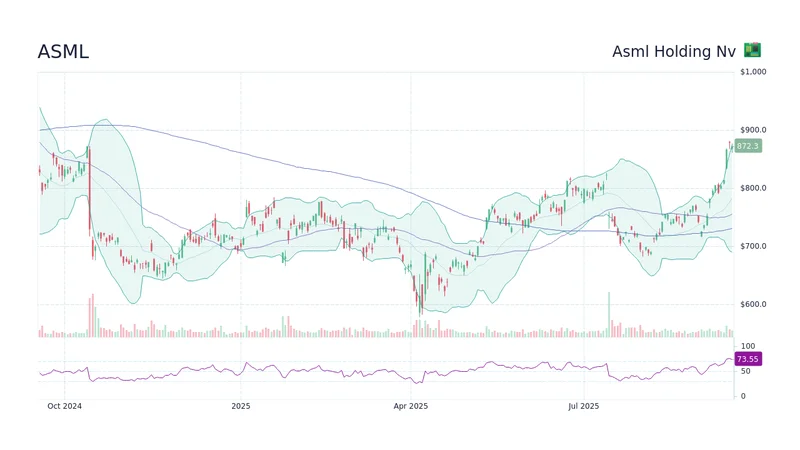
ASML's Future: The 2026 Vision and Why Its Next Breakthrough Changes Everything
ASMLIsn'tJustaStock,It'sthe...
-

The Nebius AI Breakthrough: Why This Changes Everything
It’snotoftenthatatypo—oratl...
-

The Great Up-Leveling: What's Happening Now and How We Step Up
Haveyoueverfeltlikeyou'redri...
- Search
- Recently Published
-
- Misleading Billions: The Truth About DeFi TVL - DeFi Reacts
- Secure Crypto: Unlock True Ownership - Reddit's HODL Guide
- Altcoin Season is "here.": What's *really* fueling the latest altcoin hype (and who benefits)?
- The Week's Pivotal Blockchain Moments: Unpacking the breakthroughs and their visionary future
- DeFi Token Performance Post-October Crash: What *actual* investors are doing and the brutal 2025 forecast
- Monad: A Deep Dive into its Potential and Price Trajectory – What Reddit is Saying
- MSTR Stock: Is This Bitcoin's Future on the Public Market?
- OpenAI News Today: Their 'Breakthroughs' vs. The Broken Reality
- Medicare 2026 Premium Surge: What We Know and Why It Matters
- Accenture: What it *really* is, its stock, and the AI game – What Reddit is Saying
- Tag list
-
- Blockchain (11)
- Decentralization (5)
- Smart Contracts (4)
- Cryptocurrency (26)
- DeFi (5)
- Bitcoin (30)
- Trump (5)
- Ethereum (8)
- Pudgy Penguins (5)
- NFT (5)
- Solana (5)
- cryptocurrency (6)
- XRP (3)
- Airdrop (3)
- MicroStrategy (3)
- Plasma (4)
- Zcash (7)
- Aster (10)
- qs stock (3)
- mstr stock (3)
- asts stock (3)
- investment advisor (4)
- morgan stanley (3)
- ChainOpera AI (4)
- federal reserve news today (4)