Berkshire Hathaway Post-Buffett: An Analysis of Its Stock, Holdings, and Future Strategy
The Quiet Unraveling of the Buffett Premium
For decades, analyzing Berkshire Hathaway stock has been a straightforward, almost comfortable exercise. The central thesis was simple: bet on Warren Buffett. You weren't just buying a collection of high-quality assets; you were buying access to the judgment, capital allocation skill, and—most critically—the reputation of a singular figure. The official narrative today is one of continuity. The succession plan is in place. Greg Abel, a seasoned and respected operator from within the Berkshire ecosystem, is the designated heir. The company insists the "culture" is the enduring asset.
This is a clean, reassuring story. It is also, I suspect, becoming demonstrably less true, as Berkshire worries grow as Buffett’s CEO handover nears.
While the headlines focus on the stability of the plan, a more subtle and significant repricing is occurring beneath the surface. The market, in its slow, forward-looking way, is beginning to calculate the value of Berkshire Hathaway without its founder. The "worries" aren't manifesting as panic-selling or dramatic plunges in the Berkshire Hathaway stock price. Instead, they are appearing as a quiet, logical erosion of an intangible asset that has been core to the company’s valuation for half a century: the Buffett Premium. This isn't about whether Abel can manage the existing Berkshire Hathaway companies; it’s about whether any mortal can replicate the financial anomaly that is Warren Buffett.
What is this premium, exactly? It’s the invisible line item on Berkshire’s balance sheet representing Buffett’s unique ability to command terms no other executive on earth can. It’s the phone call he gets first during a crisis. It’s the favorable financing he can extend to a desperate blue-chip company (the Goldman Sachs and Bank of America deals during the financial crisis are textbook examples), securing preferred stock and warrants that are essentially a fee for his credibility. This isn't just good management; it’s a gravitational pull. How do you bake the value of that gravity into a succession plan? More importantly, how does the market price its inevitable disappearance?

Searching for the Ghost in the Machine
If you’re looking for evidence of this anxiety in the day-to-day fluctuations of Berkshire Hathaway stock b price, you’ll likely miss it. The company’s fortress balance sheet and the sheer earning power of its subsidiaries—from insurance giants like GEICO to the BNSF railroad—provide a high floor for the stock. The real story requires looking at more sophisticated, forward-looking metrics. The question isn't what Berkshire is worth today, but what traders are willing to pay for its future.
My analysis suggests the market's doubt is surfacing in the spread between Berkshire’s market capitalization and its intrinsic, sum-of-the-parts value. For years, Berkshire has consistently traded at a healthy premium to the estimated value of its component parts. This was the Buffett Premium made manifest. You paid extra for the wizard who would reinvest the cash flows from See’s Candies and Berkshire Hathaway Energy into the next great opportunity, whether it was a massive stake in Apple stock or an outright acquisition. That premium has historically been around 15%—or to be more precise, it has fluctuated between 12% and 18%, depending on the market cycle and available opportunities.
Lately, that premium has shown signs of compression. It hasn't vanished, but it is tightening. The market appears to be slowly transitioning its valuation model for Berkshire from a growth-oriented compounder led by a genius to a well-managed but ultimately finite holding company. I've looked at hundreds of these kinds of valuation models, and this particular trend is unusual for a company not in immediate distress. It suggests a quiet, orderly walk toward a lower valuation ceiling. The market seems to be saying it trusts the assets but is becoming less certain about the future of the allocator.
This is the central problem. The Buffett model is not a replicable algorithm. It’s an art form built on a foundation of deep public trust, personal relationships, and a willingness to act with staggering speed and scale when others are paralyzed by fear. It's like a legendary orchestra conductor. The orchestra (the collection of Berkshire Hathaway holdings) can remain, and a new, highly competent conductor can be brought in. The musicians will still play beautifully. But will they produce the same transcendent sound that was the hallmark of the old master? The market is beginning to bet that they won't. The magic wasn't just in the sheet music; it was in the one holding the baton.
A Premium in Decay
The succession plan for Berkshire Hathaway is a masterclass in corporate governance and logical planning. Greg Abel is unquestionably the right choice from an operational standpoint. But the market isn't pricing in operational risk; it's pricing in the loss of an anomaly. The "Buffett Premium" was never about management flowcharts or quarterly earnings. It was the quantifiable value of a singular reputation. Its erosion upon his departure is not a possibility, but a mathematical eventuality. The only real question left is the rate of the decay.

-

The Business of Plasma Donation: How the Process Works and Who the Key Players Are
Theterm"plasma"suffersfromas...
-

The Manyu Phenomenon: What Connects the Viral Crypto, the Tennis Star, and the Anime Legend
It’seasytodismisssportsasmer...
-
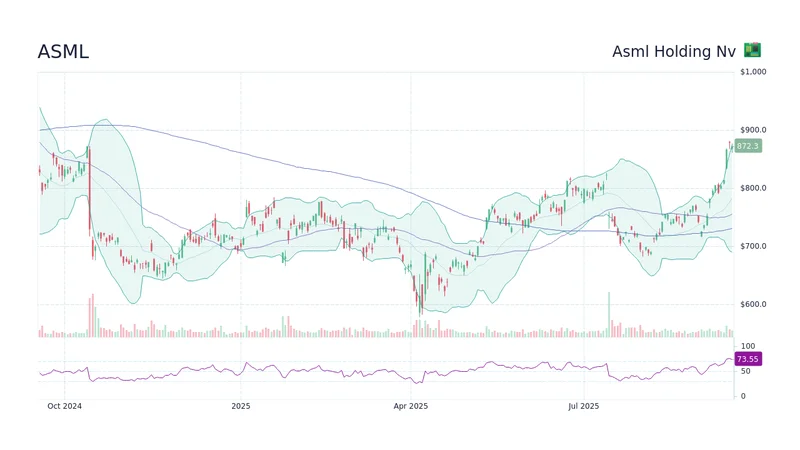
ASML's Future: The 2026 Vision and Why Its Next Breakthrough Changes Everything
ASMLIsn'tJustaStock,It'sthe...
-

The Nebius AI Breakthrough: Why This Changes Everything
It’snotoftenthatatypo—oratl...
-

The Great Up-Leveling: What's Happening Now and How We Step Up
Haveyoueverfeltlikeyou'redri...
- Search
- Recently Published
-
- Misleading Billions: The Truth About DeFi TVL - DeFi Reacts
- Secure Crypto: Unlock True Ownership - Reddit's HODL Guide
- Altcoin Season is "here.": What's *really* fueling the latest altcoin hype (and who benefits)?
- The Week's Pivotal Blockchain Moments: Unpacking the breakthroughs and their visionary future
- DeFi Token Performance Post-October Crash: What *actual* investors are doing and the brutal 2025 forecast
- Monad: A Deep Dive into its Potential and Price Trajectory – What Reddit is Saying
- MSTR Stock: Is This Bitcoin's Future on the Public Market?
- OpenAI News Today: Their 'Breakthroughs' vs. The Broken Reality
- Medicare 2026 Premium Surge: What We Know and Why It Matters
- Accenture: What it *really* is, its stock, and the AI game – What Reddit is Saying
- Tag list
-
- Blockchain (11)
- Decentralization (5)
- Smart Contracts (4)
- Cryptocurrency (26)
- DeFi (5)
- Bitcoin (30)
- Trump (5)
- Ethereum (8)
- Pudgy Penguins (5)
- NFT (5)
- Solana (5)
- cryptocurrency (6)
- XRP (3)
- Airdrop (3)
- MicroStrategy (3)
- Plasma (4)
- Zcash (7)
- Aster (10)
- qs stock (3)
- mstr stock (3)
- asts stock (3)
- investment advisor (4)
- morgan stanley (3)
- ChainOpera AI (4)
- federal reserve news today (4)