Macau's Big Bet Beyond Gambling: What It Is, Its Place in China, and Its Future
I’ve always been fascinated by cities. Not just as collections of buildings and people, but as living, evolving systems. They have their own operating systems, their own source code written in culture, law, and commerce. For decades, the source code of Macau was simple and brutally effective: high-stakes risk. It was the global capital of chance, a glittering monument to the roll of the dice and the turn of a card, a place where, To play a desperate gambler, Colin Farrell lived in a Macau casino for two months.
But what happens when a city’s core operating system is declared obsolete? What happens when a higher authority decides to push a mandatory, system-wide update?
We’re watching it happen right now. Macau is undergoing one of the most profound and rapid urban transformations on the planet. This isn’t just a pivot; it’s a complete teardown and reinstallation. The city we thought we knew, the so-called "Las Vegas of the East," is being decommissioned. In its place, a new, radically different version is being compiled and deployed in real-time. And by watching this process, we can catch a glimpse of a certain kind of future that might be coming for all of us.
Decommissioning the Old Code
Every operating system has legacy features—old lines of code that, while once essential, are no longer compatible with the new architecture. In the Macau 2.0 update, the most glaring legacy features are freedom of the press and political pluralism. The recent shutdown of All About Macao, one of the city’s last independent media outlets, wasn't just a political tragedy; from a systems perspective, it was the methodical removal of an unauthorized process.
The outlet’s final headline, “Take care and goodbye,” felt less like a farewell and more like a final error message before a forced shutdown. The government revoked its registration, reporters were arrested, and sponsors dried up under immense pressure. This is the new firewall being installed, a system designed to block the "foreign interference" and "unpatriotic" data packets that dissent represents. The speed at which this is happening is just staggering—it’s a complete ideological and economic teardown and rebuild happening in real-time, and it shows the gap between a theoretical blueprint and on-the-ground reality is closing faster than we can even process.
When you see pro-democracy lawmakers arrested under new national security laws and election candidates disqualified for not being "patriotic" enough, you’re not just watching political suppression. You are watching the debugging of a city. The old Macau ran on a chaotic, somewhat unpredictable code of semi-autonomy, a system that allowed for beautiful, messy, human things like independent journalism. The new system, however, prioritizes stability, predictability, and absolute alignment with Beijing’s central server. So, what does a city become when its code for "freedom" is deliberately and systematically overwritten with a new directive for "order"?
Installing the New Applications
No system can run on a vacuum. As the old applications are uninstalled, new ones must take their place. If high-stakes gambling was the killer app of Macau 1.0, then state-sanctioned wellness and technology are the core programs of Macau 2.0. The government is pushing a massive initiative to diversify the economy away from the casinos that provided the vast majority of its revenue. They’re implementing what’s essentially a state-directed economic pivot—in simpler terms, the government is deciding which industries get to thrive and which ones get phased out, all to align with a national agenda of "common prosperity."
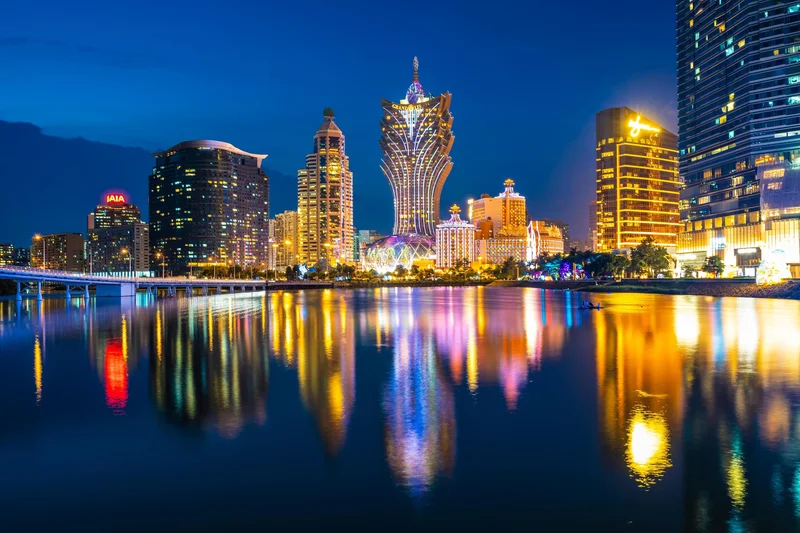
Enter the new "resort hospital." When I first read about a luxury medical facility offering cosmetic procedures and advanced health screenings opening inside Studio City, a Hollywood-themed casino resort, I honestly just had to sit back for a moment. The symbolism is overwhelming. The very architecture of risk is being retrofitted to house the architecture of calculated wellness. You are replacing the baccarat table, a game of pure, unadulterated chance, with an MRI machine, a tool of precise measurement and risk mitigation. One is about embracing uncertainty; the other is about eliminating it.
This shift is a direct response to the perceived bugs of the old system. The chaos of the gambling world, which produced massive wealth but also crime—as seen in a recent case where Four arrested after defrauding two Macau casinos of HK$17.4 million in non-negotiable chips—is being replaced by the managed, predictable world of medical tourism. It’s a move from a high-volatility, high-reward model to a low-volatility, state-controlled one.
Of course, there’s a human element here we can’t ignore. This is more than just an abstract systems update; it’s a fundamental change to the lives and livelihoods of the people of Macau. The process reminds me, in a way, of Baron Haussmann’s 19th-century renovation of Paris—a radical, top-down redesign meant to improve flow and control, but one that bulldozed entire neighborhoods and communities in the process. We have a responsibility to ask: what is lost when a city is optimized for perfect efficiency and control? What happens to the human spirit—the very spirit of risk and creativity that built Macau in the first place—when the system is designed to eliminate all variables?
The Blueprint is Live
What we are witnessing in Macau is more than just the story of a single city. It’s a prototype, a living laboratory for a new model of urban design. It is the blueprint for a city as a centrally managed platform, where the economy, the media, and even the culture are applications that can be installed or uninstalled by a central administrator to serve a larger strategic goal. It’s a fascinating, breathtaking, and deeply sobering experiment. And as we move forward into an era of "smart cities" and data-driven governance, the lessons from Macau—both the triumphs of its efficiency and the ghosts of what it's leaving behind—will be more important than ever. We are all architects of the future, and the blueprint is now live.

-

The Business of Plasma Donation: How the Process Works and Who the Key Players Are
Theterm"plasma"suffersfromas...
-
The Manyu Phenomenon: What Connects the Viral Crypto, the Tennis Star, and the Anime Legend
It’seasytodismisssportsasmer...
-
ASML's Future: The 2026 Vision and Why Its Next Breakthrough Changes Everything
ASMLIsn'tJustaStock,It'sthe...
-
The Nebius AI Breakthrough: Why This Changes Everything
It’snotoftenthatatypo—oratl...
-

The Great Up-Leveling: What's Happening Now and How We Step Up
Haveyoueverfeltlikeyou'redri...
- Search
- Recently Published
-
- Misleading Billions: The Truth About DeFi TVL - DeFi Reacts
- Secure Crypto: Unlock True Ownership - Reddit's HODL Guide
- Altcoin Season is "here.": What's *really* fueling the latest altcoin hype (and who benefits)?
- The Week's Pivotal Blockchain Moments: Unpacking the breakthroughs and their visionary future
- DeFi Token Performance Post-October Crash: What *actual* investors are doing and the brutal 2025 forecast
- Monad: A Deep Dive into its Potential and Price Trajectory – What Reddit is Saying
- MSTR Stock: Is This Bitcoin's Future on the Public Market?
- OpenAI News Today: Their 'Breakthroughs' vs. The Broken Reality
- Medicare 2026 Premium Surge: What We Know and Why It Matters
- Accenture: What it *really* is, its stock, and the AI game – What Reddit is Saying
- Tag list
-
- Blockchain (11)
- Decentralization (5)
- Smart Contracts (4)
- Cryptocurrency (26)
- DeFi (5)
- Bitcoin (30)
- Trump (5)
- Ethereum (8)
- Pudgy Penguins (5)
- NFT (5)
- Solana (5)
- cryptocurrency (6)
- XRP (3)
- Airdrop (3)
- MicroStrategy (3)
- Plasma (4)
- Zcash (7)
- Aster (10)
- qs stock (3)
- mstr stock (3)
- asts stock (3)
- investment advisor (4)
- morgan stanley (3)
- ChainOpera AI (4)
- federal reserve news today (4)