ChainOpera AI's $4B Valuation: An Analysis of the Data Behind Its 600% Surge
ChainOpera AI's 600% Surge: A Masterclass in Timing or a House of Cards?
An asset doesn't surge over 600% in a 24-hour period by accident. The recent price action of ChainOpera AI ($COAI), which catapulted its Fully Diluted Valuation (FDV) north of $4 billion, is a textbook case study in market dynamics. The official narrative, of course, credits "solid technology" and a "deep understanding of the market pulse." And while there may be merit to that, a dispassionate look at the data suggests a different, more precise story. This wasn't just a successful launch; it was a near-perfectly engineered confluence of external market forces, expertly harnessed.
The numbers are, frankly, staggering. A single-day rally of 512%—or 603.9%, depending on your data source—is an outlier in any market, leading to headlines like ChainOpera AI (COAI) Surges 600% to a New All-Time High and Everyone Wants to Know Why. Daily perps trading volume exceeded $6 billion, a figure that briefly put it in the same league as BTC and ETH. This isn't the slow, organic growth of a project finding its user base. This is the financial equivalent of a shockwave.
The company line is that ChainOpera saved on marketing by entering a market already "educated" by other AI projects, allowing them to focus on product. This is a clever reframing. A more direct interpretation is that they surfed a wave of hype generated by others. But the real story is more complex. The success of $COAI appears to be less about a single revolutionary product and more about the synchronized firing of at least four distinct market engines. The question is whether the vehicle can sustain flight now that the boosters are falling away.
Deconstructing the Tailwinds
When you peel back the layers of the $COAI launch, you find a series of powerful, concurrent trends that the project aligned with, either by design or by incredible fortune.
First, there was the BNB Smart Chain (BSC) ecosystem itself. ChainOpera’s decision to build on BSC, made half a year ago, now looks prescient. With BNB’s price soaring from $500 to $1,300, the entire ecosystem was awash in liquidity and user activity. Cointelegraph data confirms BNB Chain was ranking first in 24-hour on-chain fee revenue, a direct proxy for network activity. ChainOpera didn’t create this surge; it simply positioned itself in the epicenter of it. It’s like setting up a shop on the busiest street in town right as the city announces a massive festival.
Second, the launch coincided with a speculative frenzy in perpetual futures trading on BSC, with daily volume reportedly exceeding $100 billion. Given that a perpetuals listing was ChainOpera's core strategy, this provided an ocean of liquidity and market depth that a project of this age could never have generated on its own. The collaboration with ASTER on DEX perps only amplified this effect.
Third, the broader AI narrative was hitting a fever pitch. Catalyzed by events like the OpenAI and AMD partnership, capital was actively hunting for AI-related tokens. ChainOpera entered not at the start of this trend, but at its peak, capturing maximum speculative interest.

And finally, in a move that feels far too convenient to be coincidental, $COAI launched on the same day as another high-interest project, the stablecoin $XPL. This created a "bundle buying" phenomenon, a traffic resonance effect that concentrated market attention on both assets. I've looked at hundreds of these launch sequences, and the alignment of these four distinct market currents is… unusual. It's either masterful planning or the kind of luck that makes careers. But luck isn't a sustainable business model.
The Signal in the Noise
So, where is the fundamental value? The project’s defenders will point to its user metrics: a reported 3 million AI users, with 300,000 using BNB to access services, and a subsequent conversion of 40,000 of them into $COAI holders post-TGE. This is presented as the holy grail of Web3: a project that successfully converted product users into token holders.
But this data requires scrutiny. How many of these "users" were drawn in by the Binance Alpha airdrop rewards program? Was their engagement driven by a genuine need for a "Full-stack AI infrastructure," or by the rational economic incentive of a potential airdrop? The provided data doesn't offer this crucial distinction. Without it, the user-to-holder funnel looks less like a testament to product-market fit and more like a highly effective incentive campaign. What happens to user engagement when the incentives dry up?
The technical charts add another layer of caution. The wave count analysis suggests the price is in the fifth and final wave of its initial impulse, which began in late September. This fifth wave has already extended to 2.61 times the length of waves one and three combined—a common area for a rally to exhaust itself. While some targets extend to $3.78, the analysis implies the parabolic move is, by its very nature, nearing an end. This is the signature of a momentum trade, not a long-term value investment.
It's like watching a multi-stage rocket launch. The roaring BNB ecosystem was the first-stage booster, providing the initial massive thrust. The AI narrative and perps trading frenzy were the second stage, pushing it through the atmosphere. The dual-listing with $XPL was the final payload deployment, creating a spectacular flare. Every stage fired with perfect timing. But the critical question remains: now that it has reached this altitude, does it have its own engine to achieve a stable orbit, or was the entire event just the launch sequence?
Adding to this is the qualitative data from the community—specifically, allegations circulating that the team has been involved in a prior rug-pull. While unconfirmed, these whispers introduce a non-trivial reputational risk variable that doesn't appear on any chart but should absolutely be factored into any serious analysis.
A Perfectly Engineered Momentum Trade
Let's be clear. My analysis doesn't conclude that ChainOpera AI is without value. The product may well be functional and innovative. But the current $4 billion valuation is not a reflection of that product's proven, sustainable utility. It is the direct result of a brilliantly executed momentum trade that capitalized on a perfect storm of market conditions. The team has demonstrated an elite-level understanding of tokenomics, liquidity dynamics, and narrative warfare.
The risk for any investor now is distinguishing the value of the engineering from the value of the product. The former has been proven to be world-class. The latter remains an open question. This explosive rally was a masterclass in timing and execution, but the sustainability of its current market capitalization rests on a foundation that appears to be built more on temporary market euphoria than on established fundamentals. The storm they rode in on will eventually pass. The question is what will be left standing when it does.

-

The Business of Plasma Donation: How the Process Works and Who the Key Players Are
Theterm"plasma"suffersfromas...
-
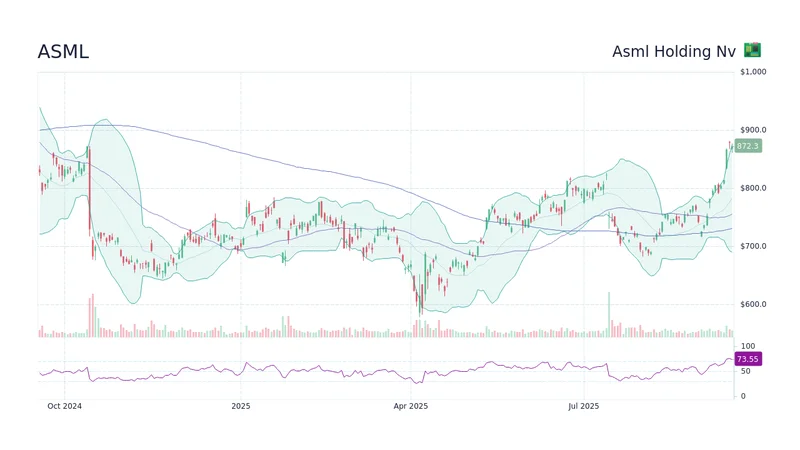
ASML's Future: The 2026 Vision and Why Its Next Breakthrough Changes Everything
ASMLIsn'tJustaStock,It'sthe...
-

The Manyu Phenomenon: What Connects the Viral Crypto, the Tennis Star, and the Anime Legend
It’seasytodismisssportsasmer...
-

The Nebius AI Breakthrough: Why This Changes Everything
It’snotoftenthatatypo—oratl...
-

The Great Up-Leveling: What's Happening Now and How We Step Up
Haveyoueverfeltlikeyou'redri...
- Search
- Recently Published
-
- Misleading Billions: The Truth About DeFi TVL - DeFi Reacts
- Secure Crypto: Unlock True Ownership - Reddit's HODL Guide
- Altcoin Season is "here.": What's *really* fueling the latest altcoin hype (and who benefits)?
- The Week's Pivotal Blockchain Moments: Unpacking the breakthroughs and their visionary future
- DeFi Token Performance Post-October Crash: What *actual* investors are doing and the brutal 2025 forecast
- Monad: A Deep Dive into its Potential and Price Trajectory – What Reddit is Saying
- MSTR Stock: Is This Bitcoin's Future on the Public Market?
- OpenAI News Today: Their 'Breakthroughs' vs. The Broken Reality
- Medicare 2026 Premium Surge: What We Know and Why It Matters
- Accenture: What it *really* is, its stock, and the AI game – What Reddit is Saying
- Tag list
-
- Blockchain (11)
- Decentralization (5)
- Smart Contracts (4)
- Cryptocurrency (26)
- DeFi (5)
- Bitcoin (30)
- Trump (5)
- Ethereum (8)
- Pudgy Penguins (5)
- NFT (5)
- Solana (5)
- cryptocurrency (6)
- XRP (3)
- Airdrop (3)
- MicroStrategy (3)
- Plasma (4)
- Zcash (7)
- Aster (10)
- qs stock (3)
- mstr stock (3)
- asts stock (3)
- investment advisor (4)
- morgan stanley (3)
- ChainOpera AI (4)
- federal reserve news today (4)