Tim Cook's Apple Future: Analyzing the Succession Plan and Exit Rumors
For a company that built its modern identity on a single, defiant act—staring down the FBI in the San Bernardino case—Apple’s recent behavior presents a significant data anomaly. The quiet removal of the ICEBlock app, a tool designed to alert communities to immigration enforcement raids, feels less like a principled stand and more like a quiet capitulation. This isn't just another App Store dispute. It’s a moment that forces a difficult question.
On one track, we have a public firestorm. A former 20-year Apple veteran, Wiley Hodges, has penned an open letter to Tim Cook, effectively accusing the company of abandoning the very values it spent the last decade marketing to us. As one headline put it: Ex veteran Apple marketing exec challenges Tim Cook on ICEBlock. On a parallel, quieter track, the tectonic plates of Apple's leadership are shifting. Cook is turning 65, and the conversations about his succession are no longer theoretical.
These two events are not unrelated. The ICEBlock controversy is a real-time stress test of Apple’s corporate soul, happening at the precise moment the company is deciding who will be its steward for the next decade. What we’re witnessing is a fundamental conflict between Apple’s carefully curated image as a digital sanctuary and the pragmatic realities of operating a nearly $4 trillion enterprise in a hostile political environment.
A Discrepancy in Principles
Let's first establish the baseline. In 2016, Apple, under Tim Cook, refused to create a backdoor for the FBI to unlock an iPhone. Cook’s open letter at the time was a masterclass in corporate conviction, framing the issue as a defense of civil liberties for all users. It was a risky, defining moment that cemented Apple’s brand as “the good guys.”
Now, consider the ICEBlock affair. The app gained notoriety after the White House condemned it, triggering a classic Streisand Effect that sent it rocketing up the App Store charts. The developer faced public threats from the Attorney General, and the DHS secretary threatened a news organization for simply reporting on it. Last week, following a demand from AG Pam Bondi, Apple complied and pulled the app.
The company’s justification was boilerplate. “Based on information we’ve received from law enforcement about the safety risks associated with ICEBlock, we have removed it.”
This is where the official narrative deviates from a verifiable process. I've looked at hundreds of these corporate statements, and the lack of a specific legal citation here is telling. Was there a court order? A national security letter? Or was it an informal "request" that Apple chose not to fight? The developer claims the safety argument is "patently false," and without transparent evidence from Apple, it’s impossible to verify the company's claim.
This is the core of Wiley Hodges’ critique. He contrasts the FBI standoff, where Apple demanded due process, with the ICEBlock removal, which appears to have happened without any legal process at all. He writes, "The removal of ICEBlock without evidence of the government either providing a lawful basis for such a demand or following a legal process...represents an erosion of this principled stance."
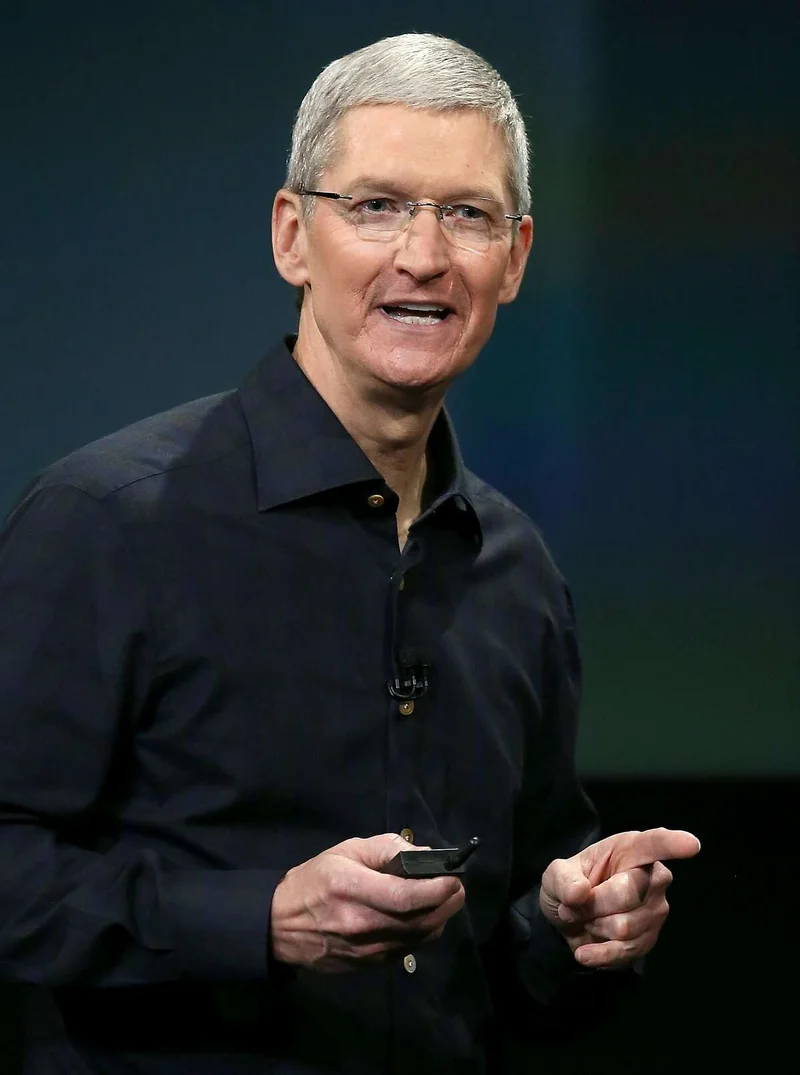
The app itself is almost a secondary issue. The primary data point is the asymmetry in Apple’s response. Resisting the FBI was a clean, technically complex fight that played well with Apple’s global, privacy-conscious customer base. Resisting the current administration on an immigration-related app is a politically messy, tribal affair. One was a defense of a principle; the other appears to be a risk calculation. What has changed in the intervening years? Or, more to the point, what is about to change?
The Succession Variable
The timing of this identity crisis couldn’t be more acute. Tim Cook, the architect of Apple’s operational supremacy and its values-driven marketing, is reportedly preparing for his eventual departure, with some reports stating that Tim Cook might soon step down as Apple’s CEO. The company’s valuation has soared to nearly $4 trillion—more precisely, it's hovering just shy of that mark, but the trajectory during his tenure is undeniable. But as COO Jeff Williams and other senior figures head for the exit, the focus shifts to the heir apparent: John Ternus.
Ternus is, by all accounts, a product man. An engineer with 24 years at the company, he has overseen the development of Apple’s most successful hardware lines. His elevation would signal a return to a leadership archetype more akin to Steve Jobs than Tim Cook. He’s a builder, not an operations chief. Sources describe him as deeply respected within the engineering ranks, and at 50 years old (the same age Cook was when he took over), he’s positioned for a decade-long run.
This is the critical variable. Cook’s tenure was defined by scaling the empire Jobs built while simultaneously infusing it with a persona centered on privacy, environmentalism, and human rights. It was a brilliant strategy that differentiated Apple from its data-hungry rivals. But does a product-focused CEO have the same appetite for the political battles that defined Cook’s later years?
An engineer’s primary objective is to solve problems and ship products. A protracted, public fight over an app that serves a politically charged niche could be seen as an unnecessary distraction from the core mission of developing the next iPhone or Vision Pro. It’s a variable that introduces significant uncertainty into the equation of Apple’s future identity. Will a Ternus-led Apple see a stand like the one against the FBI as a core brand principle worth defending at all costs, or as a non-essential risk to be managed and minimized?
The ICEBlock decision may be our first piece of data answering that question. It suggests a potential pivot toward a more politically agnostic, product-centric posture. Avoid the messy fights, protect the supply chain, and focus on engineering excellence. It’s a logical strategy, but it’s not the one that Apple has been selling to its customers for the past decade.
An Inevitable Trade-Off
Let’s be clear. The idea of Apple as an unwavering bastion of user rights was always part marketing narrative, part reality. But the San Bernardino case gave that narrative a powerful, tangible anchor. The ICEBlock decision cuts that anchor loose. It suggests that Apple’s principles are, like any other corporate asset, subject to a risk-reward analysis. The risk of fighting the FBI on encryption was deemed acceptable for the brand equity it generated. The risk of fighting the current administration on immigration was apparently not.
The succession plan is not happening in a vacuum. It’s a deliberate preparation for a new era. Choosing an engineer like John Ternus signals a potential recalibration of priorities—away from the political stage and back to the engineering lab. This isn't necessarily a good or bad thing, but it is a significant change. The era of Tim Cook—the operational master who became a reluctant political advocate—is closing. The data suggests his successor’s mandate will be simpler: build great things and, wherever possible, stay out of the headlines. The "good guys" narrative was a luxury, and the cost of maintaining it appears to have finally exceeded its value.

-

The Business of Plasma Donation: How the Process Works and Who the Key Players Are
Theterm"plasma"suffersfromas...
-
ASML's Future: The 2026 Vision and Why Its Next Breakthrough Changes Everything
ASMLIsn'tJustaStock,It'sthe...
-
Morgan Stanley's Q3 Earnings Beat: What This Signals for Tech & the Future of Investing
It’seasytoglanceataheadline...
-

The Manyu Phenomenon: What Connects the Viral Crypto, the Tennis Star, and the Anime Legend
It’seasytodismisssportsasmer...
-

The Nebius AI Breakthrough: Why This Changes Everything
It’snotoftenthatatypo—oratl...
- Search
- Recently Published
-
- Misleading Billions: The Truth About DeFi TVL - DeFi Reacts
- Secure Crypto: Unlock True Ownership - Reddit's HODL Guide
- Altcoin Season is "here.": What's *really* fueling the latest altcoin hype (and who benefits)?
- The Week's Pivotal Blockchain Moments: Unpacking the breakthroughs and their visionary future
- DeFi Token Performance Post-October Crash: What *actual* investors are doing and the brutal 2025 forecast
- Monad: A Deep Dive into its Potential and Price Trajectory – What Reddit is Saying
- MSTR Stock: Is This Bitcoin's Future on the Public Market?
- OpenAI News Today: Their 'Breakthroughs' vs. The Broken Reality
- Medicare 2026 Premium Surge: What We Know and Why It Matters
- Accenture: What it *really* is, its stock, and the AI game – What Reddit is Saying
- Tag list
-
- Blockchain (11)
- Decentralization (5)
- Smart Contracts (4)
- Cryptocurrency (26)
- DeFi (5)
- Bitcoin (30)
- Trump (5)
- Ethereum (8)
- Pudgy Penguins (5)
- NFT (5)
- Solana (5)
- cryptocurrency (6)
- XRP (3)
- Airdrop (3)
- MicroStrategy (3)
- Plasma (4)
- Zcash (7)
- Aster (10)
- qs stock (3)
- mstr stock (3)
- asts stock (3)
- investment advisor (4)
- morgan stanley (3)
- ChainOpera AI (4)
- federal reserve news today (4)