Crypto Prices Plunge: The Data Behind the Drop and What Comes Next
Anatomy of a Meltdown: Deconstructing the $20 Billion Crypto Liquidation Cascade
================================================================================
The catalyst was predictable, almost a caricature of modern geopolitics: a late-night social media post from a former, and perhaps future, U.S. President. Donald Trump’s declaration of a 100% tariff on China was the spark, an event that saw headlines declare Crypto prices plunge as Trump hits China with 100pc tariffs. But the explosion that followed—a historic, $20 billion liquidation event that vaporized leveraged positions across the crypto market—was not a story about tariffs. It was a story about the dangerously brittle plumbing hidden just beneath the surface of the digital asset boom.
When the news broke, Bitcoin was trading around $116,000. Within hours, it had plunged toward $100,000. Ethereum followed, tumbling from its perch to as low as $3,400. You could almost hear the digital guillotine as billions in leveraged positions were vaporized in minutes, triggering a cascade of forced selling that dwarfed anything the market had ever seen.
To put the scale of this event in perspective, we need to look at the data from past cataclysms. The COVID-19 crash in March 2020 triggered roughly $1.2 billion in liquidations. The collapse of FTX, an event many considered an industry-ending black swan, forced about $1.6 billion. The Trump tariff announcement? It wiped out over $19 billion in leveraged positions—to be more exact, some data aggregators like CoinGlass put the 24-hour total closer to $20 billion. This wasn't just another bad day in a volatile market; it was a systemic stress test that the market’s derivative infrastructure failed spectacularly.
The Illusion of a Spot Sell-Off
In the immediate aftermath, the narrative was one of panic. The headlines screamed of a market in freefall, implying that investors were dumping their holdings in fear of a global trade war. But a closer look at the on-chain data paints a very different, and far more instructive, picture. This wasn't a crisis of conviction. It was a crisis of leverage.

Let’s use XRP as a clinical case study. Amid the chaos, the token’s price plummeted 42% to an intraday low of $1.54. A classic panic dump, right? Not exactly. On-chain data from Santiment shows that balances on exchanges—the primary venue for spot selling—remained largely unchanged. There was no mass exodus of long-term holders rushing to cash out. Instead, the opposite occurred. Wallets holding over 1 billion XRP increased their holdings, scooping up an additional 1.04 billion tokens (valued at roughly $2.5 billion) from the wreckage, a trend noted by outlets that reported how the XRP Price Recovers From the Bottom As Whales Buy the Dips.
This pattern suggests the crash wasn't driven by fundamental sentiment but by the mechanics of the derivatives market. The word on the street, amplified by figures like BitMEX co-founder Arthur Hayes, points directly at the auto-liquidation engines of major centralized exchanges. The culprit appears to be cross-margined positions, where traders use one asset (say, their BTC holdings) as collateral for leveraged bets on other, more volatile altcoins. This is the market’s equivalent of building a house of cards. When the core collateral, Bitcoin, took a sharp hit from the macro news, it triggered margin calls not just on Bitcoin positions, but across the entire spectrum of assets tied to that collateral. The exchanges' automated systems began force-selling everything to cover the losses, creating a feedback loop of cascading liquidations.
And this is the part of the report that I find genuinely puzzling. We’re talking about platforms that handle trillions in volume, yet their risk management systems behaved in a way that amplified, rather than contained, the contagion. Reports surfaced of exchanges like Coinbase and Robinhood crashing or halting buys at the market bottom, preventing capital from flowing in to stabilize prices. Why are the liquidation engines on these multi-billion dollar exchanges seemingly so crude? And what responsibility do these platforms bear for facilitating the construction of such a fragile financial structure in the first place?
A System Purged, Not Broken
While the liquidation numbers are staggering, the event itself was more of a violent purge than a fundamental break. The core protocols of Bitcoin and Ethereum functioned flawlessly. The decentralized finance (DeFi) space saw its Total Value Locked (TVL) drop by about 11% to $147 billion (a significant but not fatal blow), yet DEX trading volumes surged. This wasn't a failure of the technology, but a failure of the hyper-leveraged, centralized financial games built on top of it.
The market’s recovery, though tentative, underscores this point. Bitcoin quickly rebounded above $110,000, and Ethereum clawed its way back over $3,800. The Bitcoin dominance metric held steady around 58%, indicating that capital didn't flee the crypto ecosystem entirely; it simply consolidated into the primary asset while the froth was violently skimmed off the top.
This event was a brutal, expensive lesson in risk management. It exposed the immense, systemic danger of centralized exchanges offering high-leverage products with interconnected margin systems. For years, traders have been conditioned to believe that leverage is a tool for wealth acceleration. This was a stark reminder that it is, more accurately, a transmission mechanism for risk. The $20 billion bonfire was fueled not by fear of China, but by the reckless pursuit of leveraged gains. The market will recover, but the scars from this cascade should serve as a permanent warning about the architecture of risk in the digital age.
A Brittle System Exposed
Ultimately, my analysis is this: the market didn't break, its most fragile component did. This wasn't a "crypto" crisis; it was a derivatives crisis that happened to take place on crypto exchanges. The entire event demonstrates that the crypto market's greatest systemic risk isn't a hostile regulator or a macroeconomic shock, but its own internal addiction to unsustainable levels of leverage. The system has become so interconnected and over-leveraged that a single political statement can trigger a deleveraging event an order of magnitude larger than the collapse of a fraudulent, multi-billion dollar exchange. That is a deeply unsettling reality, and it proves the financial infrastructure built around these assets is nowhere near as resilient as the assets themselves.

-

The Business of Plasma Donation: How the Process Works and Who the Key Players Are
Theterm"plasma"suffersfromas...
-
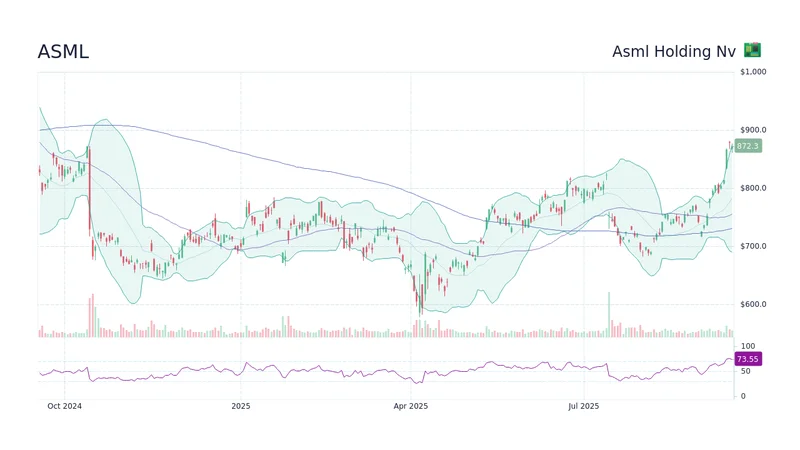
ASML's Future: The 2026 Vision and Why Its Next Breakthrough Changes Everything
ASMLIsn'tJustaStock,It'sthe...
-
Morgan Stanley's Q3 Earnings Beat: What This Signals for Tech & the Future of Investing
It’seasytoglanceataheadline...
-

The Manyu Phenomenon: What Connects the Viral Crypto, the Tennis Star, and the Anime Legend
It’seasytodismisssportsasmer...
-

The Nebius AI Breakthrough: Why This Changes Everything
It’snotoftenthatatypo—oratl...
- Search
- Recently Published
-
- Misleading Billions: The Truth About DeFi TVL - DeFi Reacts
- Secure Crypto: Unlock True Ownership - Reddit's HODL Guide
- Altcoin Season is "here.": What's *really* fueling the latest altcoin hype (and who benefits)?
- The Week's Pivotal Blockchain Moments: Unpacking the breakthroughs and their visionary future
- DeFi Token Performance Post-October Crash: What *actual* investors are doing and the brutal 2025 forecast
- Monad: A Deep Dive into its Potential and Price Trajectory – What Reddit is Saying
- MSTR Stock: Is This Bitcoin's Future on the Public Market?
- OpenAI News Today: Their 'Breakthroughs' vs. The Broken Reality
- Medicare 2026 Premium Surge: What We Know and Why It Matters
- Accenture: What it *really* is, its stock, and the AI game – What Reddit is Saying
- Tag list
-
- Blockchain (11)
- Decentralization (5)
- Smart Contracts (4)
- Cryptocurrency (26)
- DeFi (5)
- Bitcoin (30)
- Trump (5)
- Ethereum (8)
- Pudgy Penguins (5)
- NFT (5)
- Solana (5)
- cryptocurrency (6)
- XRP (3)
- Airdrop (3)
- MicroStrategy (3)
- Plasma (4)
- Zcash (7)
- Aster (10)
- qs stock (3)
- mstr stock (3)
- asts stock (3)
- investment advisor (4)
- morgan stanley (3)
- ChainOpera AI (4)
- federal reserve news today (4)