Morgan Stanley's AI Chip Pick: Deconstructing Their AMD vs. Micron Call
The Challenger's Dilemma
In the relentless gold rush that is the AI hardware market, every investor is hunting for the next Nvidia. It’s a logical pursuit. The company’s dominance has created a gravitational pull, warping market expectations and turning competitors into distant satellites. For a time, the consensus narrative placed Advanced Micro Devices (AMD) in the role of the primary challenger—the David to Nvidia’s silicon Goliath.
The thesis wasn’t without merit. Under CEO Lisa Su, AMD has a documented history of executing turnarounds, most notably by exploiting Intel’s stumbles in the CPU market to reclaim significant market share. Investors, conditioned by that success, expected a repeat performance. The problem, of course, is that Nvidia is not a struggling incumbent. It's a fortress, fortified by its CUDA software ecosystem, which acts as a deep moat that competitors find nearly impossible to cross.
For months, the market seemed to hold a "show me" attitude toward AMD's AI ambitions. Then came the data point everyone was waiting for: a blockbuster 6GW agreement with OpenAI, reportedly worth over $100 billion, to supply several generations of AMD Instinct GPUs. On paper, it’s a monumental win. Securing the world's most prominent AI lab as a flagship customer is a powerful signal.
And this is the part of the analysis that I find genuinely puzzling. Morgan Stanley’s top analyst, Joseph Moore, acknowledges the deal's importance but maintains a neutral "Equal-weight" rating. He notes that OpenAI seems "invested in AMD's success," which could help solve the software and ecosystem challenges. Yet, the core skepticism remains. Why? Because the fundamental question hasn't been answered. Does a single, massive customer commitment translate into a durable, widespread ecosystem? Or does it simply make AMD a highly leveraged supplier to one very powerful client, while the rest of the market continues to default to Nvidia's CUDA? The path to becoming a true AI heavyweight, it seems, is paved with more than just one massive contract.

The Shovel-Seller's Certainty
While AMD is locked in a high-stakes, high-risk battle for the throne, Micron is executing a different, and arguably much simpler, strategy. To use an old analogy, they aren't mining for gold; they're selling the shovels and pickaxes to every miner in the valley. Micron specializes in memory (specifically DRAM and NAND), and its premier AI product is high-bandwidth memory (HBM), a critical component for handling the colossal datasets AI models require.
Micron's success isn't contingent on which company—Nvidia, AMD, or a future upstart—wins the GPU war. Its success is contingent only on the war continuing to be fought. As long as data centers are being built and accelerators are being installed, the demand for HBM and other advanced memory is non-negotiable.
The numbers here are not speculative; they are historical facts. Micron's most recent quarterly revenue soared by 46.1% year-over-year to $11.32 billion, handily beating estimates. The company's guidance for the next quarter projects revenue between $12.2 billion and $12.8 billion, again blowing past analyst forecasts. This performance has propelled the stock’s incredible run this year, up about 120%—to be more exact, 122% year-to-date.
This is where Morgan Stanley’s analysis pivots from cautious to bullish. Moore rates Micron as "Overweight," seeing more room to run. His logic is straightforward: pricing power. He points to anecdotes of DDR5 server pricing rising by double digits, suggesting that Micron’s already impressive earnings power is likely underestimated. The market for memory, often prone to brutal boom-and-bust cycles, appears to be in a structurally different, AI-driven supercycle. There is no "show me" story here. The demand is present, quantifiable, and accelerating. Micron is simply selling an essential, high-demand commodity into a supply-constrained market. It’s a far less glamorous story than AMD's, but the balance sheet doesn't care about glamour.
An Exercise in Risk-Pricing
Ultimately, the divergence in Morgan Stanley's ratings for AMD and Micron isn't just a comparison of two semiconductor companies. It's a clear statement on how the market is pricing risk in the current AI environment. AMD represents a high-variance bet on displacing a deeply entrenched incumbent. The potential reward is immense, but the execution risk—particularly around building a software ecosystem to rival CUDA—is equally massive. Micron, on the other hand, is a bet on the certainty of the trend itself. It’s a lower-variance play that benefits from the entire industry's capital expenditure, regardless of who ultimately wins the architectural wars. The market, for now, is rewarding the sure thing over the next big thing, a conclusion detailed in the bank's analysis, AMD or Micron: Morgan Stanley Selects the Top AI Chip Stock to Buy. It's a flight to tangible, quantifiable demand, and in this environment, selling the shovels is seen as a much safer bet than fighting for the gold mine.

-

The Business of Plasma Donation: How the Process Works and Who the Key Players Are
Theterm"plasma"suffersfromas...
-

The Manyu Phenomenon: What Connects the Viral Crypto, the Tennis Star, and the Anime Legend
It’seasytodismisssportsasmer...
-
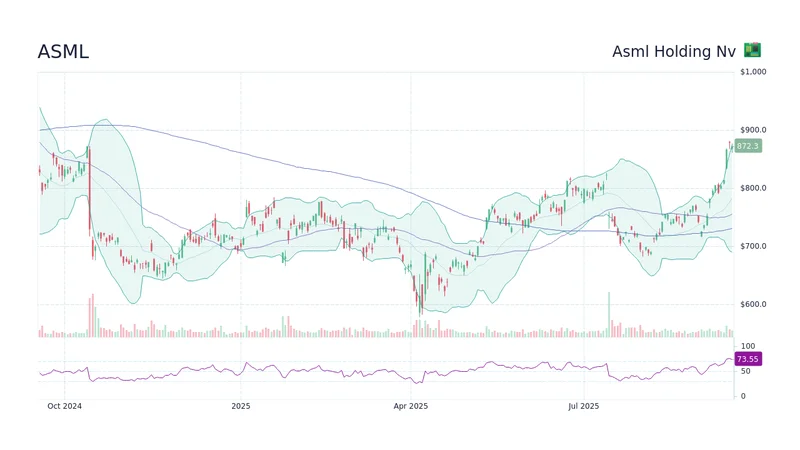
ASML's Future: The 2026 Vision and Why Its Next Breakthrough Changes Everything
ASMLIsn'tJustaStock,It'sthe...
-

The Nebius AI Breakthrough: Why This Changes Everything
It’snotoftenthatatypo—oratl...
-

The Great Up-Leveling: What's Happening Now and How We Step Up
Haveyoueverfeltlikeyou'redri...
- Search
- Recently Published
-
- Misleading Billions: The Truth About DeFi TVL - DeFi Reacts
- Secure Crypto: Unlock True Ownership - Reddit's HODL Guide
- Altcoin Season is "here.": What's *really* fueling the latest altcoin hype (and who benefits)?
- The Week's Pivotal Blockchain Moments: Unpacking the breakthroughs and their visionary future
- DeFi Token Performance Post-October Crash: What *actual* investors are doing and the brutal 2025 forecast
- Monad: A Deep Dive into its Potential and Price Trajectory – What Reddit is Saying
- MSTR Stock: Is This Bitcoin's Future on the Public Market?
- OpenAI News Today: Their 'Breakthroughs' vs. The Broken Reality
- Medicare 2026 Premium Surge: What We Know and Why It Matters
- Accenture: What it *really* is, its stock, and the AI game – What Reddit is Saying
- Tag list
-
- Blockchain (11)
- Decentralization (5)
- Smart Contracts (4)
- Cryptocurrency (26)
- DeFi (5)
- Bitcoin (30)
- Trump (5)
- Ethereum (8)
- Pudgy Penguins (5)
- NFT (5)
- Solana (5)
- cryptocurrency (6)
- XRP (3)
- Airdrop (3)
- MicroStrategy (3)
- Plasma (4)
- Zcash (7)
- Aster (10)
- qs stock (3)
- mstr stock (3)
- asts stock (3)
- investment advisor (4)
- morgan stanley (3)
- ChainOpera AI (4)
- federal reserve news today (4)