The Delta Moment: Why This Changes Everything and What We Build Next
Delta's Big Bet: Why Resisting the Future of Flight is Actually About Saving It
There's a revolution happening at 35,000 feet, and it looks a lot like the plane you take from Chicago to Dallas. For years, the transatlantic journey has been the domain of the titans—the hulking, twin-aisle Boeing 777s and Airbus A350s, modern cathedrals of the sky. But a new philosophy is taking hold, one built on efficiency, agility, and a kind of network-logic that would make a Silicon Valley engineer weep with joy. Airlines like JetBlue, United, and American are embracing a new generation of smaller, single-aisle jets like the Airbus A321XLR, capable of crossing the ocean with stunning fuel economy.
This is more than just a new piece of hardware; it’s a paradigm shift. These planes are opening up thrilling new routes, connecting smaller cities directly and bypassing the congested mega-hubs. Think Indianapolis to Dublin, or Newark to the coast of Spain. It’s a point-to-point dream made real. The logic is flawless, the economics are sound, and the technology is, frankly, brilliant.
And then there’s Delta.
In a move that sent ripples through the industry, Delta’s president, Glen Hauenstein, recently drew a line in the sand. His declaration that Delta won’t use narrow-body planes for long flights to Europe cited concerns over "product and brand issues." When I first read that, I honestly just sat back in my chair, speechless. In an era where everyone is chasing efficiency, here was a major player hitting the brakes. Why? Because they're making a profound bet not just on their brand, but on the very definition of what it means to travel well.
The Allure of the Algorithm
Let’s be clear: the move to long-range, narrow-body planes is incredibly seductive. From a systems-thinking perspective, it’s a masterpiece. You have smaller, more efficient nodes—the planes—creating a more resilient and distributed network of routes. It’s the aviation equivalent of moving from a monolithic mainframe to a nimble cloud architecture. The Airbus A321XLR is an engineering marvel that allows airlines to test new markets with far less financial risk. If a route from Nashville to Dublin doesn't fill up a giant A330, it’s a disaster. But a nearly-full A321XLR? That’s a sustainable business.
This is the future as defined by data. It's a world where the primary goal is connection, pure and simple. The algorithm says people want to get from Point A to Point B, and this new technology provides the most efficient way to draw that line. It promises a world of unprecedented access, a democratization of long-haul travel that brings far-flung destinations within reach of new communities.

So why would anyone push back against this seemingly utopian vision of connectivity? What could possibly be a "product issue" with a brand-new, hyper-efficient plane? The answer, I believe, lies in the one variable that algorithms so often struggle to quantify: the human soul.
The Ghost in the Machine
When Hauenstein talks about "product," he's not just talking about a seat. He’s talking about the entire human experience of being suspended in a metal tube for eight hours over a dark ocean. We’re talking about single-aisle planes—in simpler terms, the same basic fuselage you fly for 90 minutes to visit your parents—for a journey that crosses continents and time zones.
Imagine the reality. One aisle for 200 people to share. Two, maybe three lavatories, leading to that all-too-familiar scene of a line snaking down the cabin, a silent, shuffling queue of weary travelers. Less space to stand, to stretch, to simply escape the confinement of your seat. It’s the kind of subtle friction that compounds over a long flight, turning a journey of wonder into an exercise in endurance. This is Delta making a statement that the human element isn't just another variable to be optimized away in a spreadsheet—it’s the entire point of the service, the core of what it means to travel with dignity and not just be processed like cargo.
This is the technological equivalent of the debate between streaming a movie on your phone and seeing it in a true IMAX theater. Both methods deliver the content, but one prioritizes convenience and efficiency while the other prioritizes the quality of the experience. Delta is betting that for certain journeys, the experience is not just a feature; it is the entire product. They are making a courageous, almost philosophical, stand. They’re asking a question that we in the tech world must constantly ask ourselves: as we build these incredibly powerful and efficient systems, what is our responsibility to the human beings who have to live inside them?
This isn’t a Luddite’s rejection of new technology. It’s a deeply humanistic application of it. Delta is still investing heavily in state-of-the-art wide-body jets like the A350 and A330neo, and even putting lie-flat seats on some narrow-bodies for shorter transcontinental flights. They aren't against progress. They are simply defining progress differently. Their decision suggests a future where technology serves human comfort, not the other way around. It’s a bet that in a world of increasing automation and efficiency, the last true luxury, the ultimate differentiator, won't be speed or cost, but a thoughtfully designed human experience.
The Human Algorithm
Delta’s move isn’t about being old-fashioned. It’s about being profoundly forward-thinking. They are looking at a world that is rushing toward maximum efficiency and asking if we've forgotten the person at the center of it all. They're betting that as our lives become more optimized, scheduled, and algorithmically defined, the demand for genuine, uncompromised quality and comfort will only grow. This isn't a retreat from the future; it's an investment in a different, more human-centric one. It’s a bold declaration that the best path forward isn’t always the one that’s most efficient on paper, but the one that remembers we’re more than just data points to be moved across a map.

-

The Business of Plasma Donation: How the Process Works and Who the Key Players Are
Theterm"plasma"suffersfromas...
-
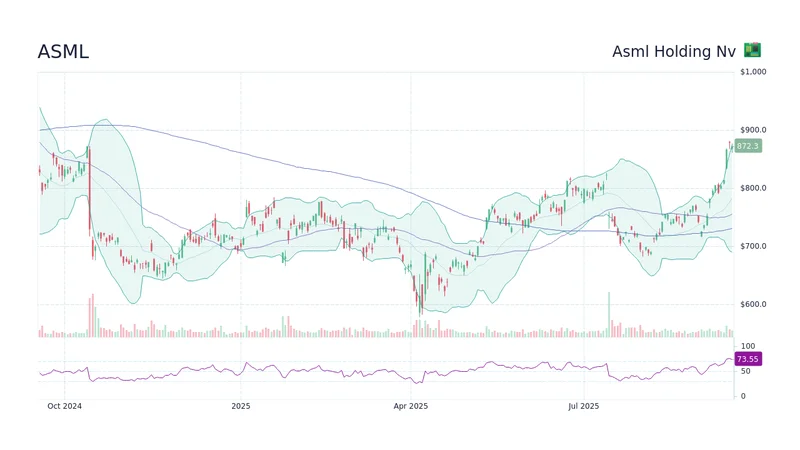
ASML's Future: The 2026 Vision and Why Its Next Breakthrough Changes Everything
ASMLIsn'tJustaStock,It'sthe...
-

The Manyu Phenomenon: What Connects the Viral Crypto, the Tennis Star, and the Anime Legend
It’seasytodismisssportsasmer...
-

The Nebius AI Breakthrough: Why This Changes Everything
It’snotoftenthatatypo—oratl...
-
Secure Crypto: Unlock True Ownership - Reddit's HODL Guide
Alright,folks,let'stalkcrypto....
- Search
- Recently Published
-
- Misleading Billions: The Truth About DeFi TVL - DeFi Reacts
- Secure Crypto: Unlock True Ownership - Reddit's HODL Guide
- Altcoin Season is "here.": What's *really* fueling the latest altcoin hype (and who benefits)?
- The Week's Pivotal Blockchain Moments: Unpacking the breakthroughs and their visionary future
- DeFi Token Performance Post-October Crash: What *actual* investors are doing and the brutal 2025 forecast
- Monad: A Deep Dive into its Potential and Price Trajectory – What Reddit is Saying
- MSTR Stock: Is This Bitcoin's Future on the Public Market?
- OpenAI News Today: Their 'Breakthroughs' vs. The Broken Reality
- Medicare 2026 Premium Surge: What We Know and Why It Matters
- Accenture: What it *really* is, its stock, and the AI game – What Reddit is Saying
- Tag list
-
- Blockchain (11)
- Decentralization (5)
- Smart Contracts (4)
- Cryptocurrency (26)
- DeFi (5)
- Bitcoin (30)
- Trump (5)
- Ethereum (8)
- Pudgy Penguins (5)
- NFT (5)
- Solana (5)
- cryptocurrency (6)
- XRP (3)
- Airdrop (3)
- MicroStrategy (3)
- Plasma (4)
- Zcash (7)
- Aster (10)
- qs stock (3)
- mstr stock (3)
- asts stock (3)
- investment advisor (4)
- morgan stanley (3)
- ChainOpera AI (4)
- federal reserve news today (4)