The Fed Cuts Interest Rates: What the Data Says and What Comes Next
The Federal Reserve’s October rate cut was the most predictable, and yet most revealing, policy decision of the year. The quarter-point reduction was priced in, telegraphed, and delivered exactly as expected. The Dow, S&P, and Nasdaq barely flinched on the news itself. The real story, as is so often the case, wasn't in the action but in the language that followed.
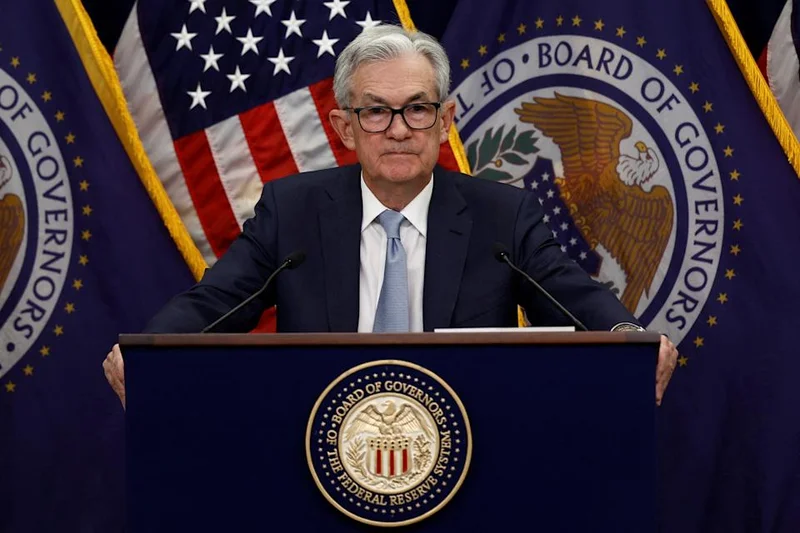
When Fed Chair Jerome Powell stepped up to the microphone, the market was listening for one thing: a clear signal about December. Instead, it got a masterclass in strategic ambiguity. As CNBC put it, the Fed cuts rates again, but Powell raises doubts about easing at next meeting. Powell stated that a further rate cut at the next meeting was "far from a foregone conclusion." In the sanitized lexicon of central banking, that’s the equivalent of a flashing red light. The market understood. The slight dip in the indices that followed wasn't a reaction to the cut; it was a repricing of future expectations based on Powell’s sudden hesitancy.
The quarter-point move, bringing the federal funds rate to a range of 3.75% to 4.00% (its lowest since 2022), wasn't the continuation of an easing cycle. It was the beginning of the end of one. The Fed just fired its last clear shot, and now it’s signaling that it’s holstering its weapon, unsure of what target to aim at next.
An Institution Flying Blind
To understand Powell’s cautious posture, you have to look at the data dashboard in front of him. Frankly, it’s a mess of contradictory signals. The Fed is operating under a dual mandate: keep inflation under control and maximize employment. Right now, those two goals are in direct opposition.
On one hand, the labor market is softening. The Fed’s own statement noted that "job gains have slowed this year." This is an understatement. Private payroll data from ADP showed an outright loss of 32,000 jobs in September. Powell himself described the labor market as "less dynamic and somewhat softer." In this scenario, the textbook response is to lower rates to stimulate hiring.
On the other hand, inflation remains stubbornly above the Fed’s 2% target. The latest reading came in at 3.0% year-over-year. While slightly lower than some economists predicted, it's still a significant number. It was just a few months ago that fears of tariff-driven inflation were the primary concern. Powell tried to downplay this, suggesting tariffs might only lead to "one-time price increases," but the core problem remains. Stimulating a slowing economy with rate cuts threatens to pour fuel on this inflationary fire.
This is the classic recipe for stagflation, an economic poison that paralyzes policymakers. So, which mandate does the Fed prioritize when they directly conflict? Does the institutional memory of 1970s-style stagflation now outweigh the immediate pressure to prop up a flagging job market? Powell’s statement gives us no clear answer.
Compounding this dilemma is a critical lack of reliable information. The ongoing government shutdown has delayed the release of gold-standard federal data, including the official monthly jobs report. One economist aptly described the Fed as "flying blind." This isn't just a colorful metaphor; it's a methodological crisis. Making multi-billion-dollar policy decisions based on incomplete, private-sector proxy data is like a surgeon operating with a blurry X-ray. Powell’s decision to signal a pause is him admitting he can't see the runway clearly enough to plan his next move.
Dissent in the Ranks, Noise from the Sidelines
The internal fractures at the Fed are becoming just as telling as the external data. This wasn't a unanimous decision. The vote revealed a three-way split in thinking, a significant departure from the consensus-driven image the Fed prefers to project. Jeffrey Schmid, President of the Kansas City Fed, voted to hold rates steady, likely concerned about the inflation side of the mandate. Meanwhile, Stephen Miran, a top White House economic advisor, cast the lone vote for a more aggressive half-point cut, aligning with the relentless pressure campaign from the White House.
President Trump has been calling for massive rate cuts—as much as 3 percentage points—in a public crusade with little historical precedent. In the end, the Fed cuts interest rates for 2nd time this year, but rejects large reduction sought by Trump. This political theater, including the attempted ouster of board member Lisa Cook, creates a tremendous amount of noise. And this is the part of the analysis that I find genuinely puzzling from a strategic standpoint. The market largely sees through this pressure, but it undeniably complicates the Fed's communication task. It forces Powell to not only justify his decisions based on economics but also to perform a delicate dance to assert the Fed's independence.
I’ve analyzed hundreds of FOMC statements, and this level of public dissent, coupled with the overt political drama, points to an institution under immense strain. The committee is not just divided on the data; it's divided on the entire philosophy of its response. Miran sees a sputtering engine that needs a jumpstart. Schmid sees a fire that needs dousing. And Powell is in the middle, trying to do a little of both and satisfying neither. The result is a quarter-point cut that feels less like a decisive action and more like a compromise born from a fractured committee. It's a move designed to appease both hawks and doves just enough to maintain a fragile consensus. But a policy of compromise is not a strategy for victory.
The market’s negative reaction to Powell’s press conference wasn't about the 25 basis points. It was about the realization that the pilot doesn't have a flight plan.
A Tactical Retreat from an Unsolvable Problem
This rate cut should not be mistaken for a confident step in a well-defined monetary easing cycle. It was the opposite. It was a tactical concession to a slowing labor market, immediately followed by Powell’s verbal retreat, a signal that the Fed is deeply uncomfortable with the inflationary risks of going any further. The Fed is boxed in. The data is contradictory, the committee is fractured, and its primary information sources are temporarily offline. Powell’s message was clear: Don’t expect us to be the cavalry. We're pausing to see which of these economic enemies—unemployment or inflation—charges first. This isn't a hawkish pivot; it's an admission of profound uncertainty.

-

The Business of Plasma Donation: How the Process Works and Who the Key Players Are
Theterm"plasma"suffersfromas...
-

The Manyu Phenomenon: What Connects the Viral Crypto, the Tennis Star, and the Anime Legend
It’seasytodismisssportsasmer...
-

The Nebius AI Breakthrough: Why This Changes Everything
It’snotoftenthatatypo—oratl...
-
ASML's Future: The 2026 Vision and Why Its Next Breakthrough Changes Everything
ASMLIsn'tJustaStock,It'sthe...
-

The Great Up-Leveling: What's Happening Now and How We Step Up
Haveyoueverfeltlikeyou'redri...
- Search
- Recently Published
-
- Misleading Billions: The Truth About DeFi TVL - DeFi Reacts
- Secure Crypto: Unlock True Ownership - Reddit's HODL Guide
- Altcoin Season is "here.": What's *really* fueling the latest altcoin hype (and who benefits)?
- The Week's Pivotal Blockchain Moments: Unpacking the breakthroughs and their visionary future
- DeFi Token Performance Post-October Crash: What *actual* investors are doing and the brutal 2025 forecast
- Monad: A Deep Dive into its Potential and Price Trajectory – What Reddit is Saying
- MSTR Stock: Is This Bitcoin's Future on the Public Market?
- OpenAI News Today: Their 'Breakthroughs' vs. The Broken Reality
- Medicare 2026 Premium Surge: What We Know and Why It Matters
- Accenture: What it *really* is, its stock, and the AI game – What Reddit is Saying
- Tag list
-
- Blockchain (11)
- Decentralization (5)
- Smart Contracts (4)
- Cryptocurrency (26)
- DeFi (5)
- Bitcoin (30)
- Trump (5)
- Ethereum (8)
- Pudgy Penguins (5)
- NFT (5)
- Solana (5)
- cryptocurrency (6)
- XRP (3)
- Airdrop (3)
- MicroStrategy (3)
- Plasma (4)
- Zcash (7)
- Aster (10)
- qs stock (3)
- mstr stock (3)
- asts stock (3)
- investment advisor (4)
- morgan stanley (3)
- ChainOpera AI (4)
- federal reserve news today (4)