MicroStrategy (MSTR) Stock: A Sober Look at the Data Behind the Volatility
MSTR vs. COIN: Are You Betting on the Asset or the Arena?
On the surface, MicroStrategy (MSTR) and Coinbase (COIN) are lumped together in the same bucket: “crypto stocks.” With both set to report earnings on October 30, the market is treating them as two sides of the same speculative coin (MSTR vs. COIN: Which Crypto Stock Is a Better Buy Ahead of Earnings?). This is a lazy and fundamentally flawed analysis. The two companies represent entirely different theses on the future of digital assets, and understanding that distinction is the only way to make a rational decision.
One is a leveraged bet on a single asset. The other is a bet on the infrastructure of an entire emerging economy. One is a vault; the other is the arena itself, complete with the ticket takers, concession stands, and the ever-present risk of the regulators showing up to change the rules of the game. As the earnings data approaches, investors aren’t just choosing a stock; they’re choosing which of these two divergent futures they believe in.
Deconstructing MicroStrategy: The Leveraged Bitcoin Vault
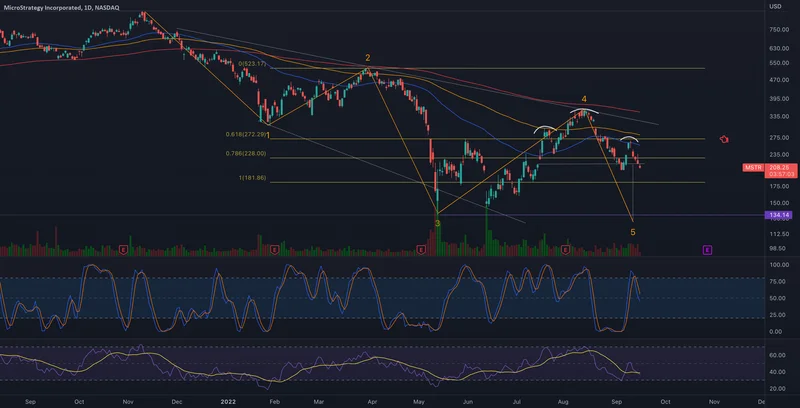
Let’s be clear about what MicroStrategy is. The legacy enterprise analytics software business provides a steady, if unexciting, stream of revenue. But that business is no longer the point. It’s the engine room of a much larger vessel: a corporate treasury vehicle designed for the singular purpose of acquiring and holding Bitcoin. The company’s quarterly earnings reports are, frankly, exercises in accounting noise. The GAAP requirement to report unrealized losses on its Bitcoin holdings as impairments creates wild, headline-grabbing swings in net income that are almost entirely disconnected from the company’s actual strategy.
The numbers that matter for MSTR are not its earnings per share—expected to be a loss of $0.10—but the size of its Bitcoin stack and the premium the market is willing to pay for it. According to its latest filing, the company holds approximately 640,000 Bitcoin—to be more exact, 640,808 BTC. This makes the company a de facto spot Bitcoin ETF, but one with a critical difference: leverage. Michael Saylor has used debt and equity issuance aggressively to fund these purchases, turning MSTR into a vehicle that magnifies Bitcoin's price movements.
This strategy is a double-edged sword. An analyst at TD Cowen sees this as a path to a $620 price target, an upside of over 117%, predicated on the belief that the company will hold nearly a million BTC by 2027. This is the bull case in its purest form: Bitcoin's price appreciates, and MSTR’s leveraged position supercharges those returns for shareholders. This makes MSTR something akin to a closed-end fund for Bitcoin, run by a high-conviction manager. You aren't just buying Bitcoin; you're buying Saylor's strategy of acquiring it by any means necessary.
But this raises a critical, and often overlooked, question. Is the substantial premium that MSTR's market capitalization often holds over the spot value of its Bitcoin a fair price for this strategy and access to leverage, or is it a persistent market inefficiency that could evaporate the moment a true spot ETF becomes widely available in the U.S.? (A Fresh Look at MicroStrategy (MSTR) Valuation Following Recent Share Price Volatility)
Coinbase: The Crypto Economy's Tollbooth
If MicroStrategy is the vault, Coinbase is the sprawling financial infrastructure being built around it. Its performance isn’t tethered just to the price of Bitcoin but to the activity across the entire crypto ecosystem. The consensus forecast for Coinbase—earnings of $1.15 per share on $1.80 billion in sales—tells a story of a business with multiple, complex revenue streams. Transaction fees are the obvious one, rising and falling with market volatility. But the more interesting components are the steadier ones: custodial fees, staking rewards, and the revenue generated from its partnership on the USDC stablecoin.
Coinbase’s model is one of vertical integration. It’s the exchange, the broker, and the custodian, positioning itself as the primary gateway for both retail and, increasingly, institutional capital. The recently announced partnership with Citigroup (a major institutional player) to facilitate fiat deposits and withdrawals is a clear signal of this ambition. It’s a move to become the prime broker for the digital asset class.
The analyst upgrade from JPMorgan points to two potential catalysts that have very little to do with the daily price of Bitcoin. The first is the potential launch of a native token for its Layer 2 blockchain, Base, which the analyst speculates could add between $12 billion and $34 billion in value. I've looked at hundreds of these filings, and this is one of the more aggressive, venture-capital-style valuations I’ve seen baked into a public company's price target. The second catalyst is higher yields on USDC for subscribers, a direct play on the current interest rate environment.
This is a far more complex machine than MSTR. Its success depends on navigating a treacherous regulatory environment, fending off competitors, and successfully launching new products that gain traction. Its fate is tied not just to price appreciation but to user growth, trading volume, and the expansion of use cases for digital assets. So, can Coinbase successfully thread the needle, placating regulators while still innovating fast enough to maintain its market leadership?
The Signal vs. The Noise
Ultimately, the choice between MSTR and COIN boils down to a single question: are you looking for a clean signal or are you willing to invest in the noise?
MicroStrategy is the clean signal. It is a simple, leveraged proxy for the price of Bitcoin. Its earnings reports are distractions; the only metric that truly matters is the price of BTC. If you believe Bitcoin is going significantly higher and you trust Michael Saylor’s capital allocation, MSTR is the most direct and aggressive equity instrument available to play that thesis.
Coinbase is a bet on the entire, chaotic, and potentially revolutionary crypto economy. Its success is a function of transaction volumes, developer activity on its network, institutional adoption, and its ability to navigate a legal landscape that is being written in real time. It’s a far more complicated investment with more moving parts and, arguably, more operational risk. But it also has a much wider field to play on. Its success isn't dependent on Bitcoin alone, but on the maturation of the entire digital asset class.
The analyst consensus favoring MSTR's higher upside potential seems to be a straightforward calculation based on a rising Bitcoin price. It’s an easy model to build. The Coinbase model is messy. But for a long-term investor, the value is often found in solving the messy problems. The MSTR bet is a purer one, but the COIN bet is on the bigger, more transformative picture.

-

The Business of Plasma Donation: How the Process Works and Who the Key Players Are
Theterm"plasma"suffersfromas...
-

The Manyu Phenomenon: What Connects the Viral Crypto, the Tennis Star, and the Anime Legend
It’seasytodismisssportsasmer...
-
ASML's Future: The 2026 Vision and Why Its Next Breakthrough Changes Everything
ASMLIsn'tJustaStock,It'sthe...
-

The Nebius AI Breakthrough: Why This Changes Everything
It’snotoftenthatatypo—oratl...
-

The Great Up-Leveling: What's Happening Now and How We Step Up
Haveyoueverfeltlikeyou'redri...
- Search
- Recently Published
-
- Misleading Billions: The Truth About DeFi TVL - DeFi Reacts
- Secure Crypto: Unlock True Ownership - Reddit's HODL Guide
- Altcoin Season is "here.": What's *really* fueling the latest altcoin hype (and who benefits)?
- The Week's Pivotal Blockchain Moments: Unpacking the breakthroughs and their visionary future
- DeFi Token Performance Post-October Crash: What *actual* investors are doing and the brutal 2025 forecast
- Monad: A Deep Dive into its Potential and Price Trajectory – What Reddit is Saying
- MSTR Stock: Is This Bitcoin's Future on the Public Market?
- OpenAI News Today: Their 'Breakthroughs' vs. The Broken Reality
- Medicare 2026 Premium Surge: What We Know and Why It Matters
- Accenture: What it *really* is, its stock, and the AI game – What Reddit is Saying
- Tag list
-
- Blockchain (11)
- Decentralization (5)
- Smart Contracts (4)
- Cryptocurrency (26)
- DeFi (5)
- Bitcoin (30)
- Trump (5)
- Ethereum (8)
- Pudgy Penguins (5)
- NFT (5)
- Solana (5)
- cryptocurrency (6)
- XRP (3)
- Airdrop (3)
- MicroStrategy (3)
- Plasma (4)
- Zcash (7)
- Aster (10)
- qs stock (3)
- mstr stock (3)
- asts stock (3)
- investment advisor (4)
- morgan stanley (3)
- ChainOpera AI (4)
- federal reserve news today (4)