AGI: What It Is (and Isn't) and Why It Changes Everything
Type "what is AGI" into a search bar, and you’ll get two wildly different answers. One will take you down a rabbit hole of tax forms and the IRS; it’s about your Adjusted Gross Income, a number that defines your financial year. The other—AGI in AI—is about a concept that could define our entire century: Artificial General Intelligence. For years, the pursuit of this second AGI has been the tech world’s holy grail, the ultimate prize locked away in a castle guarded by titans like OpenAI, Google, and Meta.
But what if the castle is a mirage? What if the prize we’ve been chasing isn’t the one that actually matters?
Lately, a fog of doubt has rolled in. You can hear it in the cautious tones of the industry’s brightest minds. OpenAI’s Sam Altman admits GPT-5 is “missing something quite important.” Meta’s Yann LeCun warns that true AGI could still be “decades” away. And the ever-skeptical Gary Marcus dismisses the breathless timelines as pure marketing. They’re all staring at the same mountain, and from their vantage point, the summit looks impossibly far.
Then, a few weeks ago, a voice cut through the noise with a simple, electrifying idea. On a podcast, of all places, Replit CEO Amjad Masad said something that completely reframed the entire conversation. He argued that the economy, our society, doesn’t need “true AGI” to be utterly transformed. We just need what he calls “functional AGI.”
When I first heard him lay this out, I honestly just sat back in my chair, a slow grin spreading across my face. This is the kind of breakthrough thinking that reminds me why I got into this field in the first place. It’s not about a new algorithm; it’s a new perspective.
The Dawn of the 'Functional' Age
So, what exactly is this “functional AGI”? Let’s break it down. For decades, our vision of AGI has been shaped by science fiction: a conscious, self-aware machine, a digital mind that thinks and feels like a human. It’s a beautiful, romantic, and frankly, terrifying idea. But Masad’s concept is far more grounded, and infinitely more useful in the here and now.
Functional AGI doesn’t need to be conscious. It doesn’t need to ponder the meaning of its own existence. It just needs to do one thing exceptionally well: learn from real-world data and autonomously complete complex, verifiable tasks. Think of it as the ultimate intern—one that can observe how a task is done, figure out the steps, and then replicate and improve upon them, tirelessly, across any industry.
This is a profound distinction. The quest for “true AGI” is like the medieval alchemists’ obsession with turning lead into gold. They were chasing a miracle, a fundamental rewriting of the laws of nature. But “functional AGI” is the steam engine. It didn’t require a new physics; it just required a new way of harnessing the physics we already understood. And just like the steam engine, it’s a tool that doesn’t just improve one thing—it changes everything.
We’re talking about an engine for labor itself. Masad believes this kind of AI can be used to “automate a big part of labour,” not in some distant, dystopian future, but soon. Imagine training an AI to handle all the logistics of a global shipping company, or to manage the complex web of permits and inspections for a construction project, or even to perform delicate, remote surgery with a steadiness no human hand could match. These are not tasks that require a soul. They require competence.
This shift in focus from a thinking machine to a doing machine is the paradigm shift we’ve been waiting for. It forces us to ask entirely new questions. If the "doing" is handled, what becomes the new premium for human effort? Does our value shift entirely to creativity, to strategy, to empathy and human connection?
Escaping the Innovation Trap
Masad also delivered a stark warning, suggesting the industry might be stuck in a “local maximum trap.” This is a fantastic concept—in simpler terms, it means we’ve found a profitable hill and are so focused on climbing it that we can’t see the massive mountain range just beyond the horizon. We’re so busy making our chatbots slightly more poetic and our image generators marginally more realistic that we’re missing the bigger picture.
The current AI boom is staggering, no doubt about it—the speed at which these models are improving means the gap between a wild idea and a working prototype is shrinking to almost nothing, and it’s genuinely thrilling. But this incrementalism is the very definition of a local maximum. We’re perfecting the lightbulb, while Masad is talking about building the power grid.
The skepticism from figures like LeCun and Marcus suddenly makes perfect sense in this context. They are absolutely right that simply scaling up our current models—just adding more data and more compute—won't magically spark consciousness. But Masad’s point is that this was never the right goal to begin with. We don’t need to create a synthetic human to revolutionize the global economy.
This isn’t the first time we’ve seen this pattern. Think of the early days of the internet. The initial obsession was with digitizing encyclopedias and newspapers—a "local maximum" focused on replicating old media in a new format. The real revolution, the mountain range, was social networks, the gig economy, and instant global communication, things nobody could have fully predicted.
Of course, with this incredible power comes an equally incredible responsibility. A tool that can automate labor on this scale must be wielded with care and foresight. The conversation can't just be about what is AGI in AI; it must also be about what its implementation means for society. We have a duty to build ladders, not just engines, ensuring that as we automate tasks, we elevate people into new roles that leverage their uniquely human skills. The real AGI income shouldn’t be a windfall for a single AGI company; it should be a dividend of progress paid to all of humanity.
The Real Prize Isn't a Thinking Machine
For too long, we’ve been measuring our progress toward a finish line defined by science fiction. We’ve been so fixated on building an artificial mind that we’ve overlooked the opportunity to build the ultimate artificial tool. The goal isn't to replicate ourselves. It's to build something that unleashes us—freeing us from the drudgery of repeatable tasks to focus on the things only humans can do: to discover, to create, to dream, and to connect with each other. That’s the revolution. And it’s already here.

-

The Business of Plasma Donation: How the Process Works and Who the Key Players Are
Theterm"plasma"suffersfromas...
-
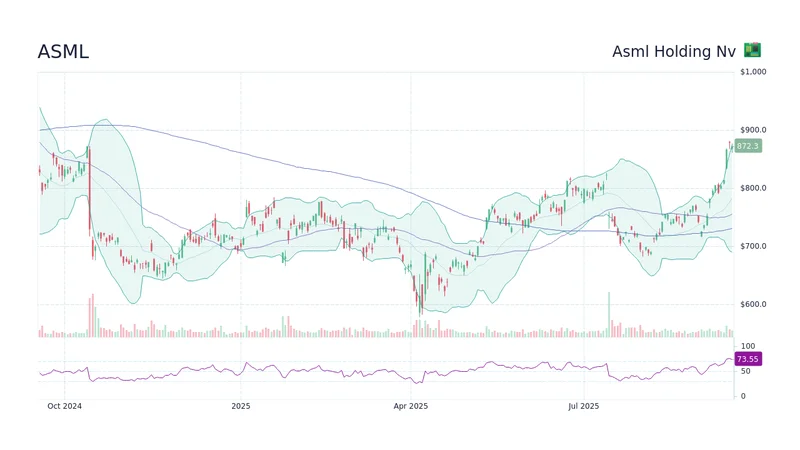
ASML's Future: The 2026 Vision and Why Its Next Breakthrough Changes Everything
ASMLIsn'tJustaStock,It'sthe...
-

The Manyu Phenomenon: What Connects the Viral Crypto, the Tennis Star, and the Anime Legend
It’seasytodismisssportsasmer...
-

The Nebius AI Breakthrough: Why This Changes Everything
It’snotoftenthatatypo—oratl...
-

Secure Crypto: Unlock True Ownership - Reddit's HODL Guide
Alright,folks,let'stalkcrypto....
- Search
- Recently Published
-
- Misleading Billions: The Truth About DeFi TVL - DeFi Reacts
- Secure Crypto: Unlock True Ownership - Reddit's HODL Guide
- Altcoin Season is "here.": What's *really* fueling the latest altcoin hype (and who benefits)?
- The Week's Pivotal Blockchain Moments: Unpacking the breakthroughs and their visionary future
- DeFi Token Performance Post-October Crash: What *actual* investors are doing and the brutal 2025 forecast
- Monad: A Deep Dive into its Potential and Price Trajectory – What Reddit is Saying
- MSTR Stock: Is This Bitcoin's Future on the Public Market?
- OpenAI News Today: Their 'Breakthroughs' vs. The Broken Reality
- Medicare 2026 Premium Surge: What We Know and Why It Matters
- Accenture: What it *really* is, its stock, and the AI game – What Reddit is Saying
- Tag list
-
- Blockchain (11)
- Decentralization (5)
- Smart Contracts (4)
- Cryptocurrency (26)
- DeFi (5)
- Bitcoin (30)
- Trump (5)
- Ethereum (8)
- Pudgy Penguins (5)
- NFT (5)
- Solana (5)
- cryptocurrency (6)
- XRP (3)
- Airdrop (3)
- MicroStrategy (3)
- Plasma (4)
- Zcash (7)
- Aster (10)
- qs stock (3)
- mstr stock (3)
- asts stock (3)
- investment advisor (4)
- morgan stanley (3)
- ChainOpera AI (4)
- federal reserve news today (4)