Japan's Naval Railgun: What This Breakthrough Means for the Future of Technology
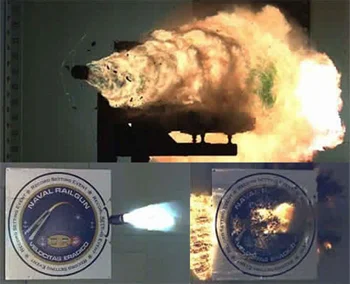
For a decade, it was the ghost in the machine of naval warfare, a science-fiction dream the U.S. Navy was hammering into reality. The electromagnetic railgun. The concept was breathtakingly simple and terrifyingly powerful: use pure electromagnetic force to launch a solid metal slug at speeds exceeding Mach 7. We're talking about hitting a target over 100 miles away with the kinetic force of a freight train. When I first read about the Navy's program, I felt that thrilling sense of the future arriving ahead of schedule. This wasn’t just a bigger cannon; it was a paradigm shift, a weapon that fired not with gunpowder, but with physics itself.
Then, just as it seemed poised to change everything, it vanished. The program was quietly shelved, the prototypes dismantled, the conversation shifting to more practical, near-term projects. Headlines lamented the failure, pointing to budget cuts and insurmountable technical hurdles. For a moment, it felt like one of those grand, audacious projects—like the flying cars we were all promised—that was just too far ahead of its time. A beautiful, brilliant failure.
But what if it wasn’t a failure at all? What if it was just the first, necessary chapter in a much bigger story? What if the dream didn't die, but simply crossed an ocean?
The Physics of a Broken Dream
To understand why the American railgun dream stalled, you have to appreciate the sheer, brutal violence of the physics involved. This isn't like a conventional cannon, which is basically a controlled explosion. A railgun is more like trying to contain a lightning strike inside a metal tube, over and over again. The weapon releases a current on the order of 3 to 5 million amps—that’s 1,200 volts discharged in a ten-millisecond flash—to accelerate a 45-pound projectile from zero to five thousand miles per hour in the blink of an eye.
The energy levels are measured in megajoules—and in simpler terms, one megajoule is the kinetic energy of a one-ton truck hitting a wall at 160 miles per hour. The Navy was testing these things at over 30 megajoules. The problem is, that biblical amount of energy doesn’t just push the projectile forward; it tries to tear the launcher apart from the inside out. The intense heat and electromagnetic stress were literally cracking the gun barrels after fewer than 30 shots. It was a spectacular feat of power, but it had the lifespan of a lightbulb in a hurricane.
Beyond the catastrophic wear and tear, the weapon was an insatiable energy hog. It demanded so much electricity that only the Navy’s most advanced destroyers, the Zumwalt-class, could even hope to power it. Add in a slow rate of fire, and the tactical math just didn't add up. The project was a bit like the early days of rocketry, where brilliant engineers like Robert Goddard were celebrated for their vision but plagued by spectacular, fuel-leaking explosions on the launchpad. The vision was right, but the materials and systems just weren't ready for the stress. The U.S. Navy proved the concept was possible, but it couldn't prove it was sustainable.
And so, the program was paused. But here’s the beautiful part of innovation: the core idea, the hypervelocity projectile itself, survived. That brilliant piece of engineering is now being adapted to fire from conventional 5-inch naval guns and Army howitzers. It was a quiet admission that while the revolutionary launcher was a step too far, the revolutionary ammunition was a resounding success. The project wasn't a total loss; it was a pivot. But the true resurrection of the railgun itself was happening somewhere else entirely.
A Phoenix Rises in the East
Across the Pacific, engineers in Japan were watching. And they were learning. While the world was writing the railgun’s obituary, Japan’s Acquisition, Technology & Logistics Agency (ATLA) was methodically tackling the very problem that had killed the American effort: barrel life. And this is the part that is just so incredible, because while the U.S. focused on raw power, Japan focused on endurance and they solved the barrel-life problem by developing new materials, a different blend of metals that could withstand the punishment, which completely changes the equation for this technology. They didn't just improve it; they mastered it, achieving a barrel life of over 120 rounds.
Suddenly, the math works. The dream is viable again.
And it’s not just a laboratory success. In a series of stunning announcements, Japan has revealed a fully functional railgun, mounted in a turret, operating at sea on their test ship, the JS Asuka. They’ve released images of it firing. More than that, they’ve confirmed it’s the first time in history a Japanese Warship Fires Railgun At Target Vessel For The First Time. This is no longer a science experiment. This is the birth of a new weapon system.
Seeing those images of the sleek turret on the Asuka's deck honestly made the hair on my arms stand up. This is the kind of breakthrough that reminds me why I got into this field in the first place. It’s a testament to a different philosophy of innovation—not just chasing the biggest numbers, but patiently engineering for resilience and practicality. Japan is now moving on to the next phase: developing a complete system with continuous firing capabilities, advanced fire control, and miniaturized power sources. They’re even collaborating with French and German researchers.
So what does it mean when one country's insurmountable obstacle becomes another's solved equation? It means the story is far from over. Of course, with any such leap in power comes immense responsibility. A weapon that can strike from over the horizon with such speed and force reshapes not just naval tactics, but the very nature of deterrence. It raises profound questions about escalation and defense in an already tense world. But technologically, the message is clear: the age of electromagnetic warfare is dawning.
The Future Doesn't Get Canceled, It Gets Relocated
Let’s be clear: the U.S. Navy’s railgun program wasn’t a failure. It was a foundational investment. It was the bold, expensive, and necessary first draft that identified all the critical problems. It asked the right questions, even if it couldn't answer all of them. Innovation isn't a straight line; it's a global relay race, where one team runs its leg of the race as hard as they can before passing the baton to the next.
What we are witnessing with Japan's success is the second leg of that race. They took the lessons learned from the American effort and applied a different kind of genius—the genius of materials science, of patience, of incremental mastery—to overcome the final hurdle. The railgun is alive, and it may very well be the future of naval combat. The dream we all thought had faded is burning brighter than ever, just under a different flag. And it’s a powerful reminder that sometimes, for a truly revolutionary idea to succeed, it just needs a change of scenery.

-

The Business of Plasma Donation: How the Process Works and Who the Key Players Are
Theterm"plasma"suffersfromas...
-
ASML's Future: The 2026 Vision and Why Its Next Breakthrough Changes Everything
ASMLIsn'tJustaStock,It'sthe...
-

Morgan Stanley's Q3 Earnings Beat: What This Signals for Tech & the Future of Investing
It’seasytoglanceataheadline...
-

The Manyu Phenomenon: What Connects the Viral Crypto, the Tennis Star, and the Anime Legend
It’seasytodismisssportsasmer...
-

The Great Up-Leveling: What's Happening Now and How We Step Up
Haveyoueverfeltlikeyou'redri...
- Search
- Recently Published
-
- Bitcoin's Recovery: The Numbers Don't Add Up (- Reactions Only)
- Misleading Billions: The Truth About DeFi TVL - DeFi Reacts
- Secure Crypto: Unlock True Ownership - Reddit's HODL Guide
- Altcoin Season is "here.": What's *really* fueling the latest altcoin hype (and who benefits)?
- The Week's Pivotal Blockchain Moments: Unpacking the breakthroughs and their visionary future
- DeFi Token Performance Post-October Crash: What *actual* investors are doing and the brutal 2025 forecast
- Monad: A Deep Dive into its Potential and Price Trajectory – What Reddit is Saying
- MSTR Stock: Is This Bitcoin's Future on the Public Market?
- OpenAI News Today: Their 'Breakthroughs' vs. The Broken Reality
- Medicare 2026 Premium Surge: What We Know and Why It Matters
- Tag list
-
- Blockchain (11)
- Decentralization (5)
- Smart Contracts (4)
- Cryptocurrency (26)
- DeFi (5)
- Bitcoin (30)
- Trump (5)
- Ethereum (8)
- Pudgy Penguins (5)
- NFT (5)
- Solana (5)
- cryptocurrency (6)
- XRP (3)
- Airdrop (3)
- MicroStrategy (3)
- Plasma (4)
- Zcash (7)
- Aster (10)
- qs stock (3)
- mstr stock (3)
- asts stock (3)
- investment advisor (4)
- morgan stanley (3)
- ChainOpera AI (4)
- federal reserve news today (4)